Belldiva
Luxury Beyond Boundaries • Rooted in Care, Refined in You
Confidence and Appearance: The Mirror and the World
How confidence and appearance are connected, and the courage it takes to feel genuinely good about who you are.
Wellness
Confidence
Men & Women
Social Culture
Mindset
By Belldiva Editorial • March 2026 • 22–25 min read

The relationship you have with your reflection shapes everything else. Both realities matter. Neither one should own you.
There is a quiet but constant tension most of us carry every single day. Indeed, the relationship between confidence and appearance is one that most people feel deeply but rarely examine clearly. It lives in the gap between how we see ourselves in the mirror and how we imagine others see us when we walk into a room. Both of those realities matter, and neither one of them should be allowed to own you.
This is a long conversation about confidence and appearance, and it deserves to be. The relationship between self-image, confidence, social awareness, and overall wellbeing is genuinely not simple. Caring how you look is a deeply human thing to do, wanting to feel attractive is natural, and choosing to engage with the world’s visual languages on your own terms is a form of intelligence. Finding all of it exhausting from time to time, moreover, just means you are paying attention.
What this conversation covers
At Belldiva, we were built on a single founding truth: that true quality of life begins from within. Even so, we also live in the real world, and we know that beauty, appearance, and self-presentation are not separate from wellness; they are part of it. This piece is our attempt to have that conversation with full honesty, without pretending things are simpler than they are, and without judging anyone for where they currently stand.
When you feel genuinely good in your own skin, you stop waiting for permission to show up fully. That is not arrogance. That is a kind of quiet freedom most people spend a lifetime working toward.
of an honest conversation
men & women, 18+
words of original insight
Part One: Confidence and Appearance: How You See Yourself
Before the world weighs in, there is just you and your reflection. That moment is one of the most psychologically loaded interactions you have all day.
Two very different mornings
For some people, getting ready in the morning is a genuine act of self-care, specifically the twenty minutes they protect before the day takes over and makes its demands. They choose their clothing with intention, apply their skincare with quiet attention, and as a result leave the house feeling that they have honoured themselves a little. That feeling is not trivial. It is, in fact, often the first note of a day that goes well.
For others, however, the mirror is a site of negotiation at best and quiet conflict at worst. They look and catalogue what they see, then compare the face looking back at them to images absorbed overnight from a phone screen. A feeling settles in, somewhere between mild dissatisfaction and genuine distress, and then they push it down and get on with the day. This is not rare. It is, in fact, the quiet default for a surprising number of people who by any external measure look completely fine.
Most of us live somewhere between these two experiences, moving along that spectrum depending on the day, the season, the relationship we are in, the amount of sleep we got, and what we last saw on our phones. The mirror does not change. Our relationship to what we see in it, though, changes constantly.
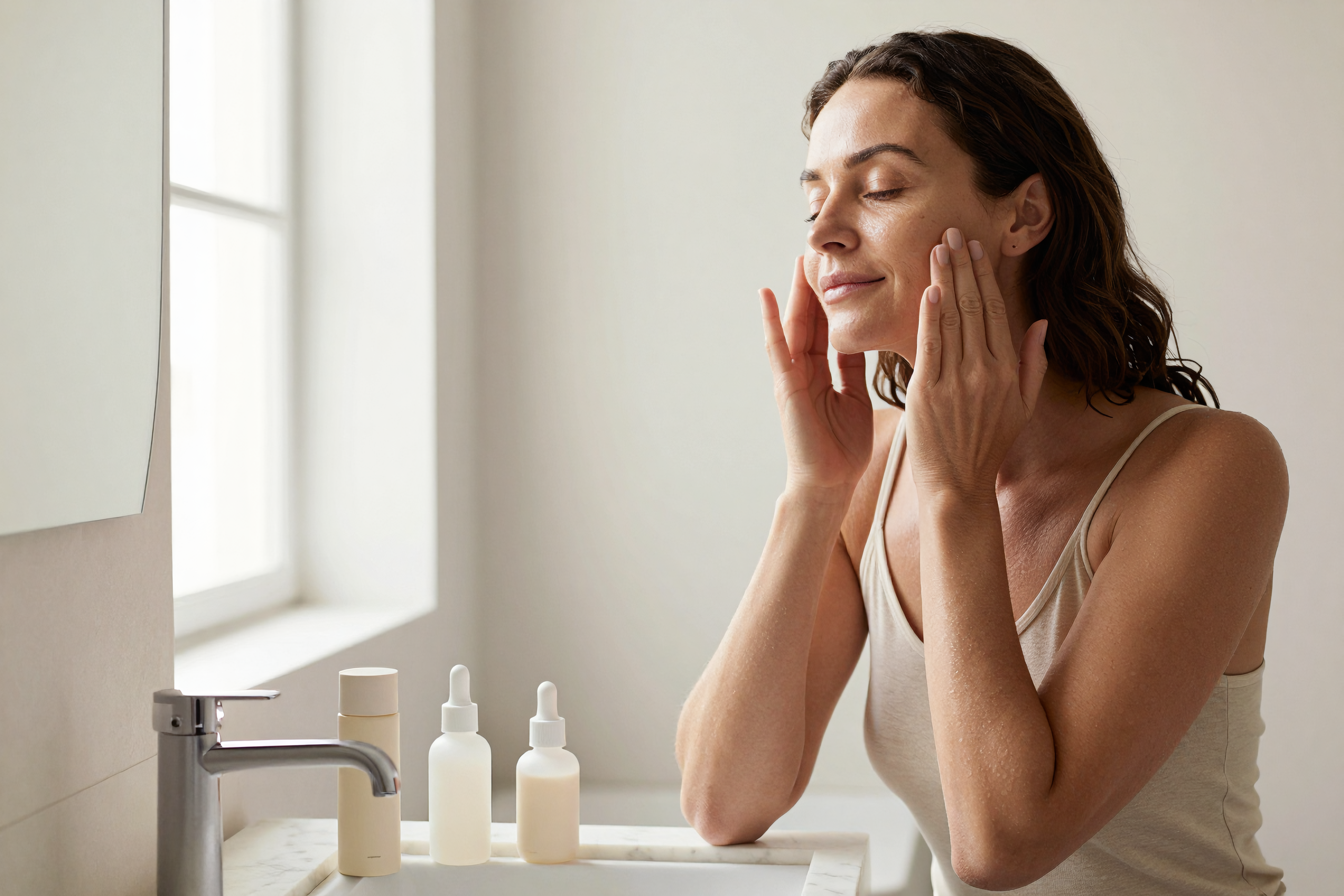
For many people, the morning skincare ritual is the first act of self-care in the day: twenty quiet minutes that belong entirely to them.
Self-perception is not vanity
One of the most stubborn myths our culture perpetuates is that caring about how you look is shallow, as if truly evolved people are somehow above it, or as if spending real time on your appearance means you must be compensating for some inner inadequacy. This is not wisdom. It is, in fact, judgment dressed up as wisdom, and it does real harm.
Human beings have adorned themselves since before recorded history. Indeed, every culture on earth, without exception, has developed rituals, garments, and practices around personal appearance. This is one of the oldest forms of self-expression and identity-marking we have, we communicated who we were and what values we held long before written language existed. To say that caring about your appearance is lesser than other forms of self-development is to deny something deeply human about how we relate to and express ourselves.
When people feel good about how they present, they tend to engage more openly, speak more confidently, and recover more easily from social setbacks. This is not because their value changed. It is because their internal confidence baseline shifted.
Confidence is profoundly self-fulfilling. The person who walks into a room feeling genuinely good about themselves tends to create more positive interactions, which reinforces their confidence further. Neither outcome is destiny. Both are patterns you can understand and work with.
Why inner work and outer care are the same project
There is a tendency in wellness spaces to divide inner work from outer care, placing meditation, therapy, and journaling on one side as the “real” work, while skincare, grooming, and intentional dressing are treated as superficial extras. This divide is false, and we reject it entirely. Your body is not a vehicle carrying around your real self. It is, in fact, part of your real self, and how you feel in it is woven through your psychological and emotional health, not separate from it.
When Belldiva talks about beauty from the inside out, we mean this literally: the way your quality of sleep shows in your skin, the way hydration affects your energy and therefore your mood, and the way a ten-minute skincare ritual in the morning functions as the first signal you send yourself that today you are worth caring for. These things accumulate, over time, into something genuinely real.

Your body is not a vehicle carrying around your real self. It is part of your real self. Beauty from the inside out is not a slogan; it is a way of living.
══════════════════════════════════════ –>
Part Two: The World: How Others See You
Most of us have been told we should not care what others think. The truth is more nuanced and more empowering than that.
Why caring what others think is not a flaw
We are social animals who evolved in groups where belonging was literally a matter of survival. Because of this, the part of you that cares what others think is not a design flaw; it is one of the oldest operating systems you have. You cannot simply decide to uninstall it. What you can do, however, is learn to manage it, understand where it is coming from, and make sure it is working in service of your life rather than against it.
Other people do form impressions of us based on how we present. This happens quickly, often within the first moments of meeting someone, and it influences how they engage with us in ways that compound over time. Rather than being cynical, this is simply how human cognition functions, and understanding it, therefore, is not the same as surrendering to it.
Genuine liberation. Comes from deep self-knowledge and enough internal security to feel stable regardless of external feedback. Built over time through real inner work. A posture of abundance.
Actually a form of defence. Said when the caring would hurt too much, so a decision is made in advance not to try. Not liberation. Protection. And while understandable, it has a cost: a quiet withdrawal from the full possibility of how you might show up.
The professional dimension
Nowhere is the dynamic between personal presentation and external perception more tangible than in professional life. Corporate culture, for instance, carries an enormous amount of visual coding. The way people dress, the way they groom, the precision or deliberate casualness of their presentation: all of these communicate something, and they speak a language that people in that environment read fluently, often without being consciously aware of it.
There are moments when this can feel frustrating. The fact that a person’s ideas, competence, and character can be shaped in someone else’s perception by something as immediate as what they wore to a meeting is a reminder that human beings read signals quickly and not always consciously. Understanding that reality, rather than resenting it, is consequently where the real power lives.
The value of a considered personal aesthetic
The most compelling professional self-presenters are generally not the ones who follow every trend or invest enormous energy into looking the part according to someone else’s script. Instead, they are the ones who have developed a clear personal aesthetic that communicates something authentic and intentional about who they are. As a result, they look considered, like someone who takes themselves seriously. That quality is one of the most underrated professional assets a person can develop.
The most powerful thing you can do inside a culture that wants to define your appearance is to become absolutely clear about the difference between adapting strategically and disappearing entirely. One is skill. The other is loss.
The social dimension
Outside of professional contexts, social settings carry their own visual languages, and they vary enormously. What reads as effortlessly polished in one social circle reads as overdressed in another. The ability to modulate how you present across different contexts is a form of social intelligence, not inauthenticity. You can dress differently for a formal occasion than for a Saturday afternoon, and neither version is more authentically you than the other.
The version that does not serve you, however, is when you lose track of your own preferences entirely in the effort to fit in. When you look at your wardrobe and cannot find yourself in it because every choice was made based on what you thought others would approve of, that is not navigation. That is erasure. And people can invariably sense when someone is performing rather than being present.

Presence is not about meeting a standard. It is about the quality of ease that comes from knowing who you are before you walk into a room.
Part Three: Corporate Culture and Social Norms: What Truly Matters
Most professional environments have visual norms, even the ones that claim to be relaxed about such things. Here is how to navigate them with integrity.
Every organisation has a visual culture
Even a company that says it has no dress code has a visual culture. Founders and leadership tend to look and present in particular ways, and new people entering that environment learn those unspoken norms quickly, partly through observation and partly through the subtle social feedback that guides all human behaviour in groups.
The question worth asking, therefore, is not whether these norms exist, and they do, and they always will, because human groups operate through shared signals. Rather, the question is whether they reflect genuine values or simply inherited assumptions, and whether your response to them is coming from a place of genuine choice or from pressure you have absorbed so thoroughly you have stopped questioning it.
When norms serve you, and when to examine them

The most compelling professional presenters are not the ones who follow every trend. They are the ones who have developed a clear personal aesthetic that communicates something authentic about who they are.
Part Four: Men, Women, and the Different Journeys
The conversation about appearance and self-confidence does not look the same for men and women. The differences reveal a great deal, and they affect everyone.
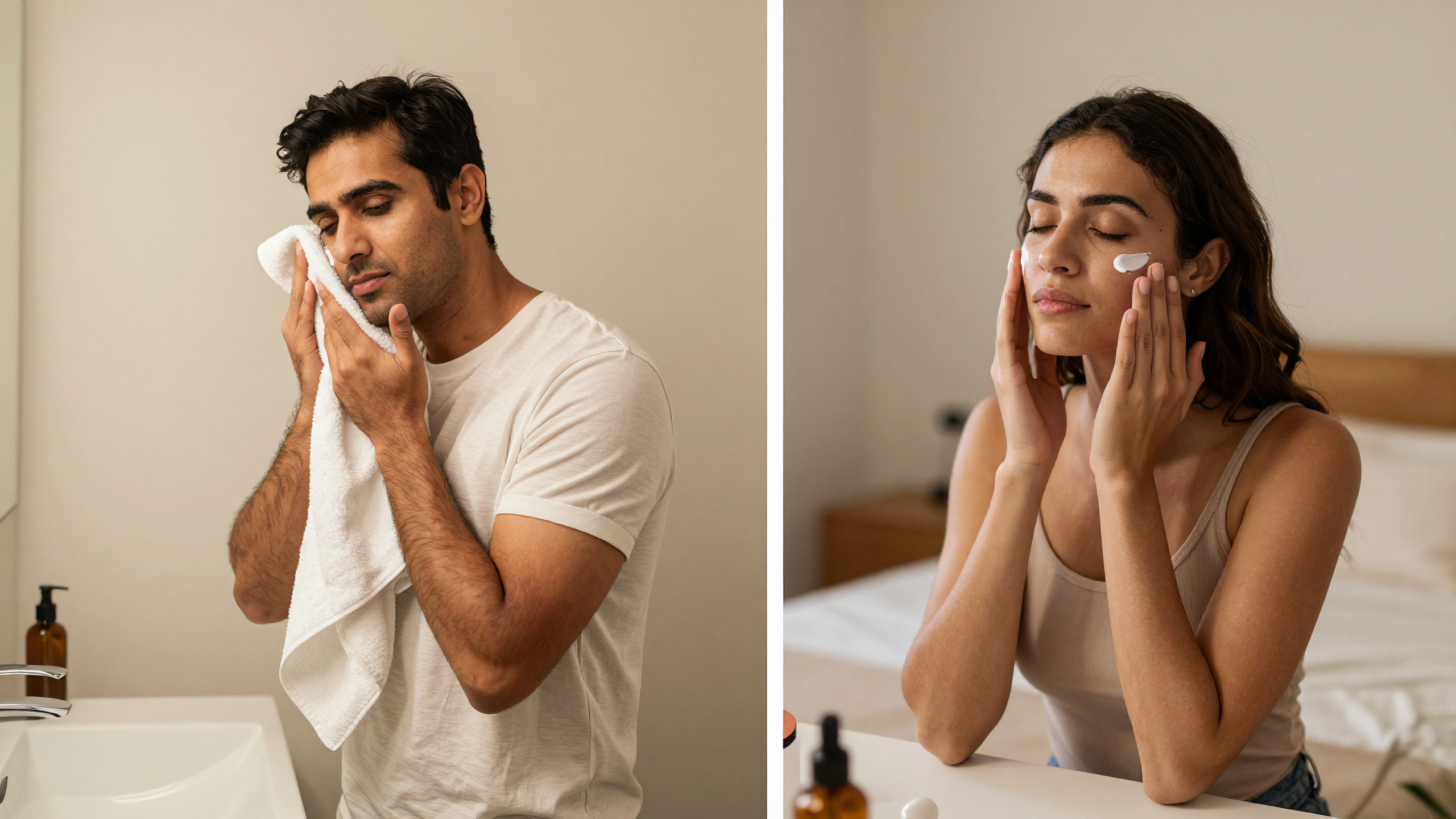
Men and women carry different histories in their relationship with their own appearance. Both deserve to reclaim it on their own terms.
The particular weight women carry
Women have long operated in a space where their appearance is subject to a level of public comment that most men simply do not experience. This starts early and continues throughout life, so that by the time a woman reaches adulthood, she has absorbed thousands of signals about what her appearance means, what it says about her worth, and what standards she needs to meet to be taken seriously. The result is often a complicated, and sometimes painful, relationship with the mirror.
Impossible standards and shifting targets
Many women feel simultaneously too focused on their appearance and not focused enough, criticised for vanity when they care too much, and for letting themselves go when they care too little. The standard shifts constantly and the target moves. Nevertheless, the women who carry their beauty most lightly are not the ones who have achieved some particular standard. They are, instead, the ones who have developed a genuine relationship with their own appearance and know what makes them feel like themselves rather than performing themselves.
What men are rarely told
Men, on the other hand, have historically received a very different message. Caring about appearance, investing in skincare, being deliberate about grooming, and these have often been positioned as somehow excessive. Furthermore, men who take obvious pleasure in their appearance have at times been treated with suspicion, as if caring for oneself were a trait reserved for others entirely.
This is equally limiting, and it does real harm in the opposite direction. Men who are taught that caring for themselves is weakness often end up disconnected from their physical wellbeing in ways that have genuine consequences, for example, neglecting skin health, ignoring early signs of physical decline, and having no framework for the kind of intentional self-care that could genuinely improve their quality of life.
Self-care as foundation, not indulgence
In truth, a man who takes care of his skin, uses quality products, and pays attention to how he presents, from a place of self-respect rather than vanity, is someone who has understood something important: that investing in your own wellbeing is not self-indulgence. It is foundation.
The most honest question anyone can ask about their relationship with their appearance is this: does how I engage with my looks add to my life, or does it subtract from it?
Does my morning routine leave me feeling grounded and ready, or does it leave me feeling inadequate and behind? Does the effort I put into how I look come back to me as energy, or does it drain me? There are no universally correct answers. But they are worth asking regularly, because the answers change as you do.
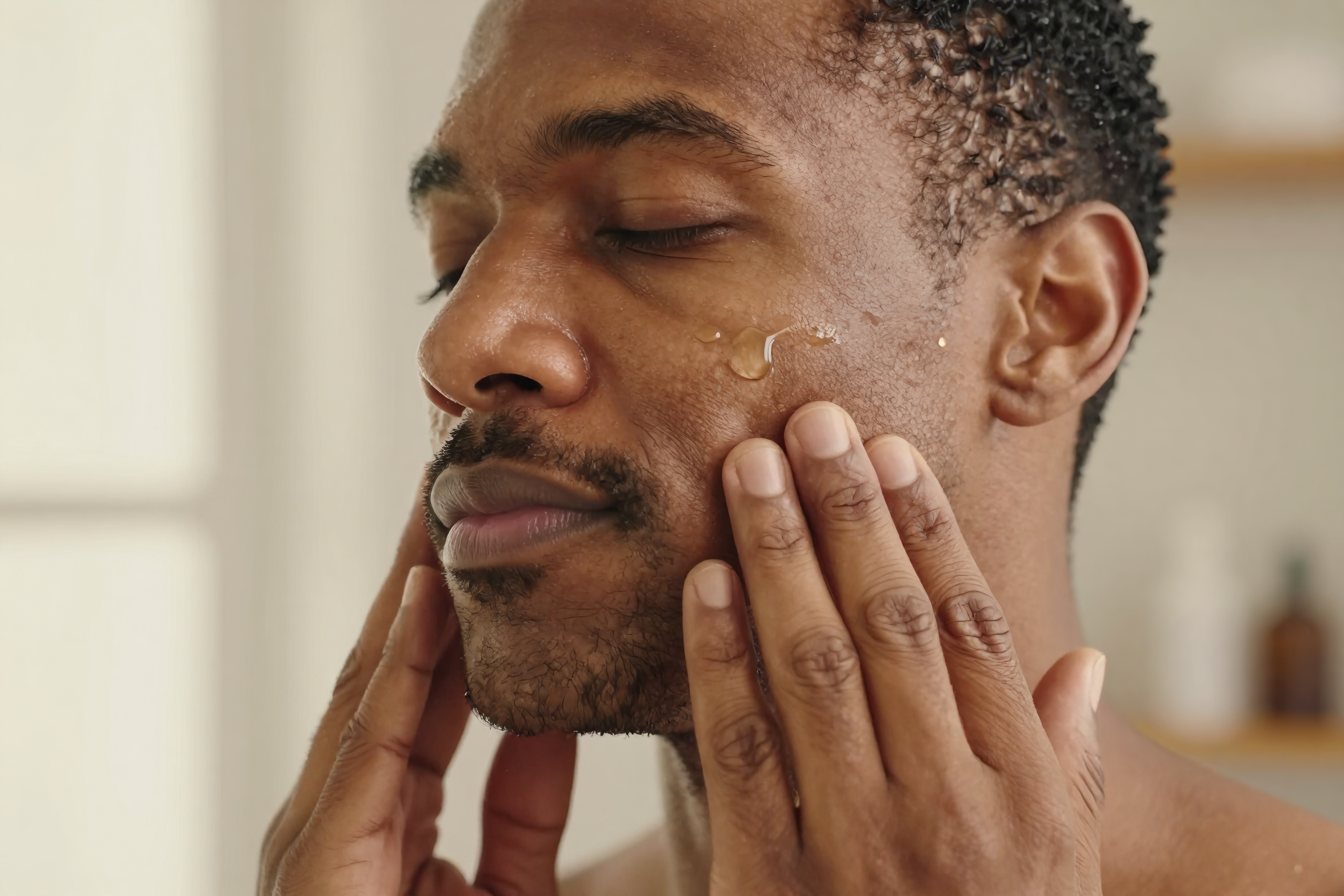
A man who takes care of his skin is not vain. He is someone who has understood that investing in your own wellbeing is not self-indulgence. It is foundation.
Part Five: Should We Be Concerned About Confidence and Appearance?
The most direct version of the question at the heart of everything. It deserves a direct answer.
Yes, and it depends entirely on what you mean by concerned, and where that concern is pointed. Confidence and appearance are genuinely worth attending to. The question is whether you are doing so from a place of self-respect or from a place of anxiety.
If “concerned about your appearance” means being attentive to your physical health and presentation as a form of self-respect and care, then yes, absolutely. Taking that seriously is part of living well, not out of vanity but out of stewardship. Your body is the vehicle through which you experience everything, and caring for it, visually and physically, is maintenance of something irreplaceable.
When concern becomes anxiety
If, on the other hand, being concerned about your appearance means living in a state of anxiety about whether you meet some external standard that you did not set and that changes without warning, then no. That version of concern does not make you look better. Instead, it makes you feel worse, and people who feel worse about themselves generally show it in ways that no product, treatment, or outfit can fully conceal.
A framework for understanding your own standards
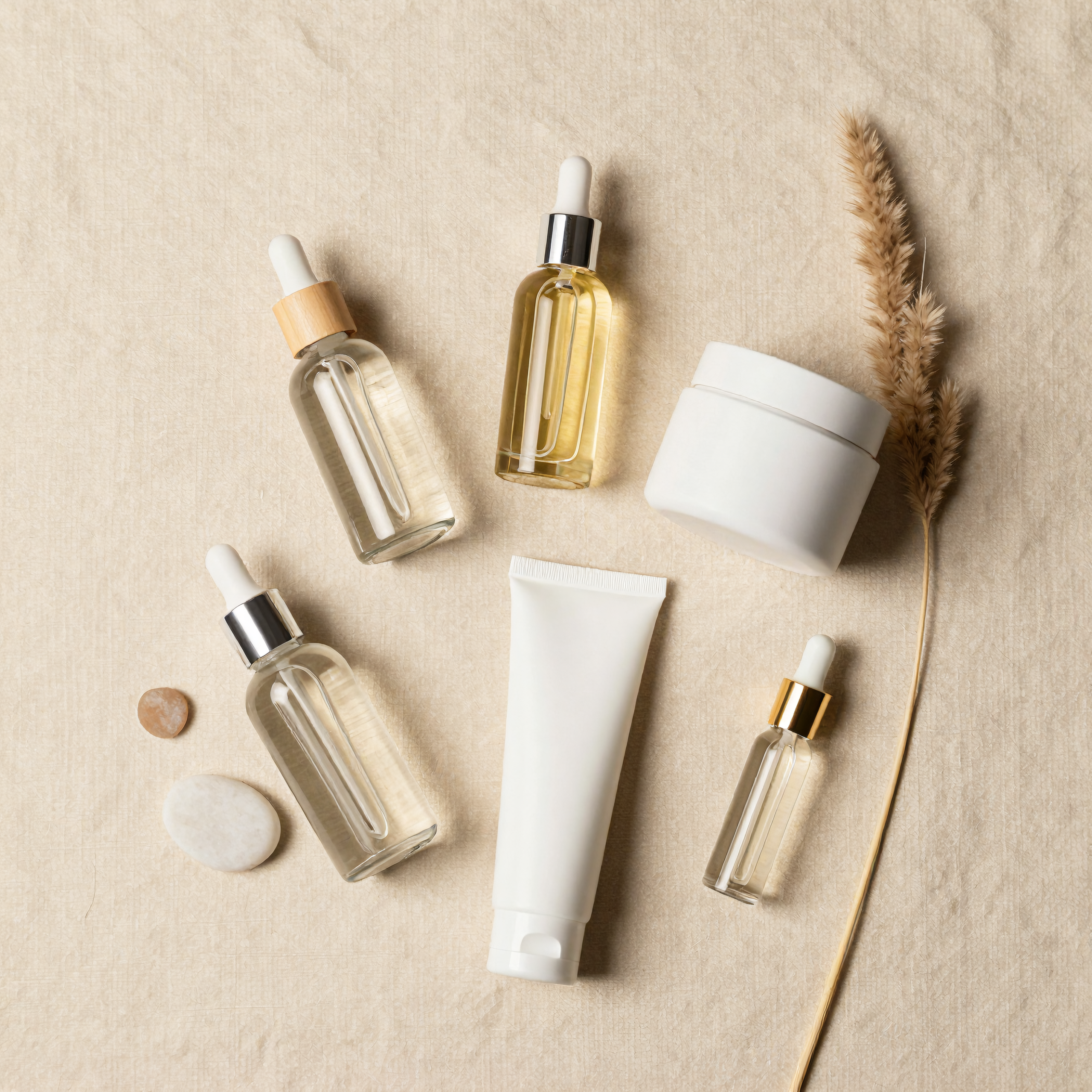
The beauty and wellness world at its best offers products that genuinely enhance your quality of life, when you choose them with awareness and intention.
Overall, the beauty and wellness world at its best is full of products, rituals, and knowledge that can genuinely enhance your quality of life. Engaging with it from a place of self-awareness, knowing what you are choosing and why, is what makes the difference between a routine that enriches you and one that simply keeps you busy.
Part Six: Confidence and Appearance: Feeling Good Without Apology
Many of us want to feel good, look our best, and also stop caring what anyone thinks. These desires are not at war. They just need to be untangled.
Beauty rituals can be enjoyed deeply and personally, without needing external validation for them. Similarly, it is entirely possible to be thoughtful about how you present in professional and social settings without surrendering your identity in the process. It is also possible to notice the beauty standards around you, understand where they come from, and still choose your own direction. All of these things are, in fact, available to you simultaneously.
The word that connects all of this is intentionality, not effortlessness, which is usually a performance of its own, and not indifference, which is often another form of people-pleasing in the opposite direction. Intentionality, by contrast, is the quality of making considered choices about how you show up, based on your own values and your own sense of who you are.
What real confidence actually looks like
Real confidence is quieter than most people expect. It does not announce itself, and it does not need the room to confirm it. Rather, it is the quality of someone who has spent enough time with themselves to know what they value and what they can offer, and who therefore does not need every social interaction to be a referendum on their worth.
Importantly, this kind of confidence is not correlated with meeting a conventional beauty standard. There are people who meet every externally imposed standard and are profoundly insecure. Conversely, there are people who would be dismissed by conventional beauty metrics who carry themselves with a completeness that makes them enormously compelling. The difference is not in the face or the body. It lives entirely in the relationship the person has with themselves.
The embarrassment of wanting to look good
Wanting to look good and feeling almost embarrassed by that wanting. Investing in your appearance and then feeling the need to downplay it, as if the caring makes you less serious or less substantial.
An internalised form of judgment. Somewhere you absorbed the idea that caring about your appearance is at odds with being taken seriously. The relationship that serves you is one where you care for your appearance without apology, because you have decided you are worth that investment.

The most magnetic quality in any person has nothing to do with perfection. It is the ease that comes from showing up as exactly who you are.
Feeling good in yourself and being socially aware are not opposites. The most compelling people tend to be both. They have done the interior work. They know who they are. And because of that, they move through the world with an ease that has nothing to do with perfection and everything to do with presence.
Part Seven: Why This Is the Heart of Belldiva
Everything in this piece connects directly to why Belldiva exists and what we believe it means to live well.

Beauty from the inside out: at Belldiva, the ritual is the message; the choice to care for yourself is its own act of self-respect.
Belldiva is not a beauty brand in the narrow sense. Rather, we are a wellness platform, and that distinction matters deeply. Wellness, in our understanding, is not simply a category of products. It is, above all, a way of relating to yourself, specifically the ongoing commitment to showing up for your own life with the care and attention that life deserves.
This brand was started with a founding belief: that wealth without wellness is incomplete. What we have found, again and again, is that wellness begins in the smallest moments, specifically in how you start your morning, in the ritual you build around your own skin, and in the decision to treat yourself as someone whose comfort and physical experience of the world are worth attending to.
What the right products actually do
A quality skincare product does not change who you are. However, when the formulation is right, when the texture, the scent, and the efficacy all align, something happens in the ritual of using it that goes beyond the clinical function. You are telling yourself something important: that this was chosen deliberately, that thought went into it, and that you decided you were worth this particular level of care. That message, felt consistently, makes a difference.
That feeling accumulates over time. Skin improves, energy shifts, and the morning ritual gradually becomes something you look forward to rather than rush through. As a result, the mirror becomes less of a confrontation and more of a quiet check-in with someone you are getting to know and appreciate better.
Belldiva was built for people at different stages of this understanding, whether you have already done a great deal of internal work and are ready to extend that care outward, or whether you are just beginning to understand that looking after yourself is not indulgence but foundation. It was also built for the person who has spent years putting themselves last and is only now starting to wonder what it would feel like to come first.
We built it for men and women equally, because both deserve access to quality and both carry the same core longing: to feel good in themselves, to show up well in the world, and to have a physical experience of their own life that matches their internal sense of who they are at their best.
Part Eight: What Actually Matters
At the end of this long conversation, a simple truth.
A whole person deserves whole care
Every part of a whole life deserves care, both inner and outer. Your inner world deserves attention, and equally, your physical health deserves investment. Beyond that, your relationship with your own appearance deserves to be examined and, where necessary, reclaimed from everyone who has tried to tell you how it should go.
Permission you do not need to ask for
Caring how you look is allowed. Investing in that caring is equally allowed. Feeling good about the results and letting that feeling be part of how you move through your day, and that is allowed too. Beyond all of this, you are free to define your own aesthetic and evolve your relationship with your appearance as you evolve as a person, which, if you are doing it right, never quite stops.
Beauty from the inside out is not a slogan. Rather, it is a practice: the daily, ongoing act of choosing to show up for yourself. The connection between confidence and appearance is real, and it runs in both directions. In the mirror, in the world, in the skin you are in, with intention, with care, and without apology. That is what Belldiva is here for.
Looking after yourself is not vanity. It is not indulgence. It is the daily act of deciding that you are worth showing up for. Do that consistently, and everything else changes.
Confidence is not a destination. It is a daily practice of self-care, self-knowledge, and self-respect.
Explore Belldiva
Beauty from the Inside Out
Explore the Belldiva Beauty, Skincare & Wellness Collection
Over 70 luxury brands curated for quality, efficacy, and genuine wellness at every stage of life. For men and women who believe their quality of life is worth every bit of attention they give it.
Luxury Beyond Boundaries • Rooted in Care, Refined in You
confidence and appearance
self-image
beauty and wellness
self-confidence
men’s wellness
women’s wellness
beauty from the inside out
Belldiva
luxury skincare
social norms
mindset
authenticity
Explore All Brands on Belldiva
Huda Beauty
Charlotte Tilbury
MAC
Dior
Katini Skin
Ultra Violette
NYX Cosmetics
The Ordinary
Verb Products
BK Beauty
Prada Beauty
Estée Lauder
Vasanti Cosmetics
Brickell
Lumin
Blu Atlas
Liomen
Jaxon Lane
Beardbrand
Scotch Porter
Bevel
SkinCeuticals
Lululemon
Headspace
Calm
Fitbit
Organifi
Ritual
HUM Nutrition
Nike
YSL Beauty
Lancôme
Clinique
NARS
Elizabeth Arden ✦
Victoria Beckham Beauty
Make Up For Ever
Valentino Beauty
Bobbi Brown
Shiseido
Benefit Cosmetics
Smashbox
Kylie Cosmetics
Urban Decay
Sigma Beauty
Stila ✦
Clarins
Tarte Cosmetics
PUR Cosmetics
Glossier
Elemis London
Kiehl’s
Murad
Paula’s Choice
Viori Beauty ✦
Life Extension
Lumen
Fiji Water
Anastasia Beverly Hills
Serious Skincare
Qure Skincare
Armani Beauty
Sephora
✦ Affiliate partnership. Belldiva may earn a commission on purchases made through these links at no extra cost to you.