Belldiva
Luxury Beyond Boundaries • Rooted in Care, Refined in You
Men’s Skincare Routine by Age: Your Complete Decade-by-Decade Guide
What is happening to your skin at every stage, which ingredients are clinically proven to work, and how to build a routine that actually fits your life.
Anti-Ageing
Ingredients
Men’s Wellness
Andropause
Collagen
By Belldiva Editorial • 2026 • 22–25 min read
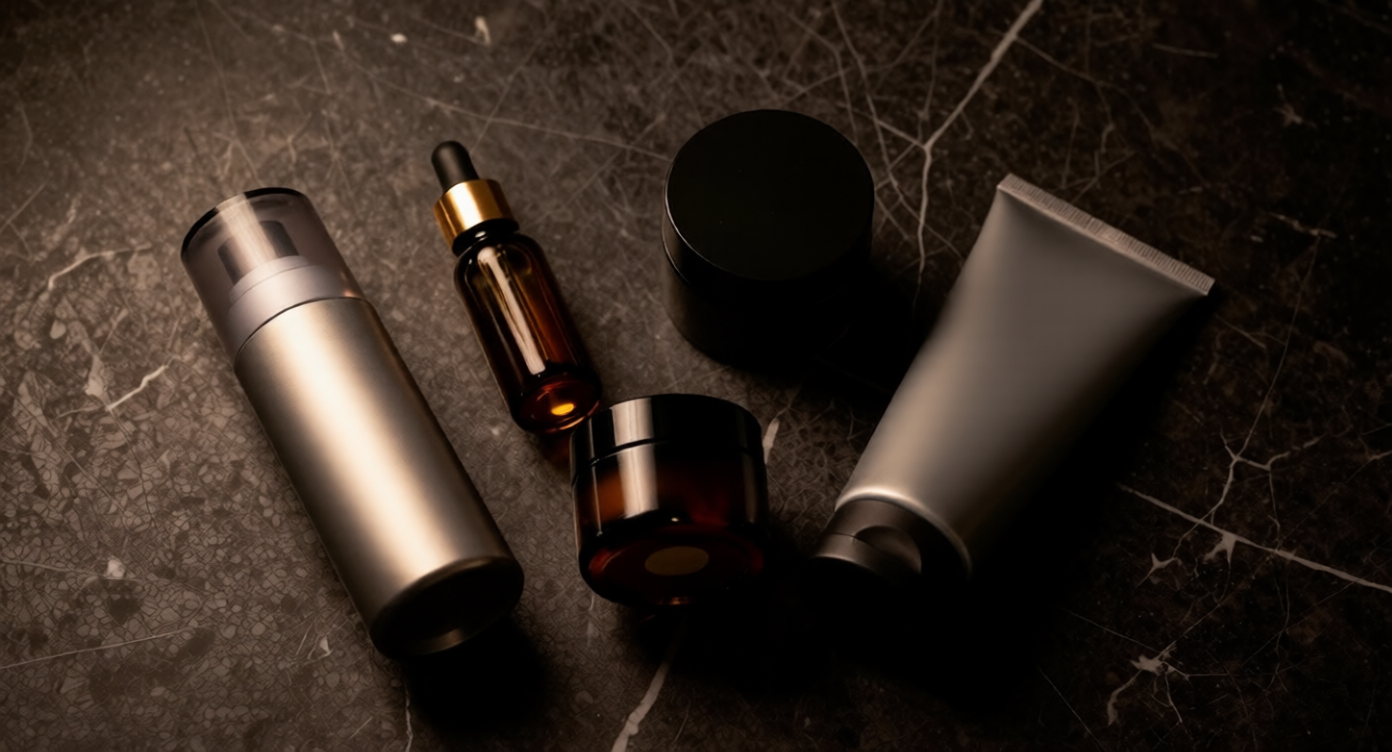
Men’s skin ages differently from women’s. It also responds differently to neglect. This is exactly what the science says about caring for it at every decade.
Why a men’s skincare routine by age matters more than most men realise
Building a men’s skincare routine by age is not about vanity or complexity. It is about understanding what your skin is doing biologically at each stage of life and giving it what it actually needs. For a long time, the skincare conversation was directed primarily at women. Men were told that soap and water was sufficient, that ageing gracefully meant doing nothing at all, and that investing in your skin was somehow unnecessary. That narrative has not aged well. Specifically, the dermatological evidence tells a very different story, and more men are listening.
Male skin is biologically distinct from women’s in several meaningful ways. Thicker by approximately 20 to 25 percent, it produces more sebum, maintains a denser collagen matrix in early adulthood, and responds to hormonal changes on a different timeline. However, “different” does not mean “protected.” By the time testosterone decline becomes measurable in the late 40s and 50s, men who have not maintained a consistent skincare routine often show accelerated structural deterioration compared to women of the same age who have. Furthermore, cumulative UV damage, shaving-related barrier disruption, and higher rates of outdoor occupational exposure mean that men’s skin faces challenges that require an equally considered response. As a result, the case for a properly structured men’s skincare routine by age is grounded in biology, not in trend.
This guide is grounded entirely in peer-reviewed research published between 2023 and 2025, alongside clinical guidance from board-certified dermatologists. It covers the biology of how men’s skin changes decade by decade, the specific ingredients with the strongest current clinical evidence, and a complete morning and evening routine for the 20s, 30s, 40s, and 50s and beyond. No trends. No unnecessary complexity. Just what the evidence actually supports.
What this guide covers
In this complete men’s skincare routine by age guide, you will find the current science behind how male skin differs biologically and how it changes decade by decade, a full breakdown of ingredients supported by recent clinical evidence, morning and evening routines for the 20s, 30s, 40s, and 50s and beyond, dedicated guidance on testosterone decline and its impact on skin from the 40s onward, and Belldiva-recommended brands for each stage. All sources are referenced throughout and listed in full at the end.
Men’s skin does not age more forgivingly than women’s. It ages differently. Understanding that difference is what separates an effective routine from a wasted one.
Thicker than women’s skin due to higher testosterone (Luebberding et al., 2013; confirmed 2024)
Annual collagen decline from the mid-20s onward, accelerating after 40 (Reilly & Lozano, 2021)
Decades of evidence-based men’s routines in this guide
Part One: How Men’s Skincare Routine by Age Begins with Biology
Before building any routine, it helps to understand what men’s skin is actually doing biologically at each stage of life. The structural differences between male and female skin are well documented in dermatological literature, and they have direct implications for how a routine should be constructed and how it should evolve.
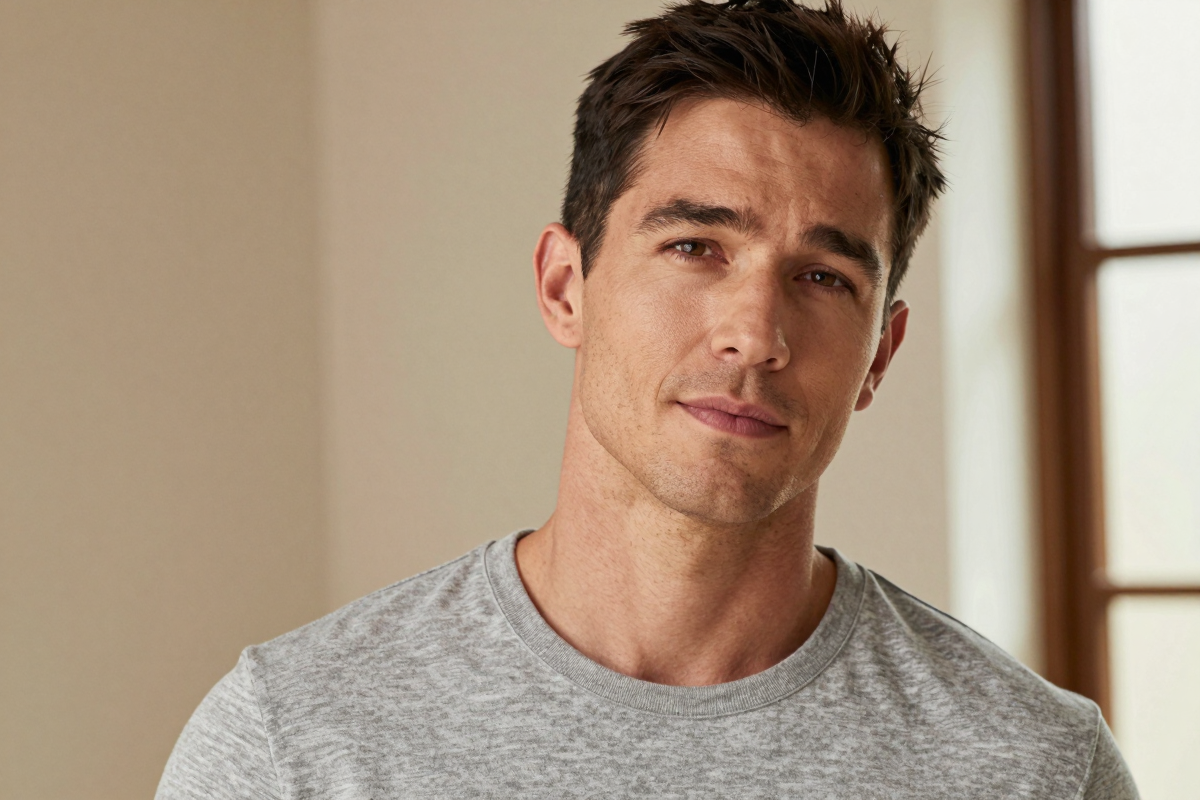
Understanding the biology of how men’s skin ages is the foundation of every effective skincare decision you will make.
What makes men’s skin structurally different
Male skin is approximately 20 to 25 percent thicker than women’s, primarily because of higher circulating testosterone levels. This greater thickness corresponds to a denser collagen network in the dermis and higher sebaceous gland activity, which gives men’s skin a higher natural sebum output. As a result, men tend to experience oilier skin in their 20s and 30s, larger visible pores, and a higher incidence of adult acne that extends beyond adolescence. Additionally, the skin’s pH in men averages slightly lower than in women, which has direct implications for the cleansers and toners that work best.
Shaving is a factor unique to men’s skincare biology. Regular shaving, regardless of whether it is done with a razor or an electric device, constitutes a form of repeated mechanical exfoliation and barrier disruption. A 2023 review published in the Journal of Cosmetic Dermatology noted that daily wet shaving removes the outermost layer of the stratum corneum along with the hair, creating micro-abrasions that compromise barrier integrity and increase transepidermal water loss (TEWL). Over years and decades, this pattern adds up to chronic low-grade barrier compromise that requires active management.
How testosterone shapes the ageing timeline
The higher collagen density in men’s skin during early adulthood is largely driven by testosterone, which supports both collagen synthesis and sebum production. However, testosterone levels begin declining gradually from around age 30 at a rate of approximately 1 to 2 percent per year, a process sometimes referred to as andropause or late-onset hypogonadism. Specifically, this hormonal decline accelerates the structural thinning of the dermis, reduces sebum production, and progressively compromises the skin’s ability to retain moisture. Furthermore, a 2024 review published in Clinical, Cosmetic and Investigational Dermatology confirmed that androgens play a central regulatory role in skin thickness, collagen density, and barrier function, and that their decline is directly associated with the visible signs of ageing in men from the 40s onward.
Why the early advantage of men’s skin eventually runs out
The practical implication is significant. While men in their 20s and 30s often benefit from skin that appears more resilient than their female counterparts of the same age, by the time they reach their 50s and 60s without a consistent skincare routine, they frequently show greater structural deterioration. Notably, this is not because their skin was inherently weaker. Rather, it is because the early advantage of thicker, oilier skin masked the accumulating damage until the testosterone cushion ran out.
A 2024 meta-analysis published in Skin Pharmacology and Physiology confirmed that men’s skin collagen content declines at a rate of approximately 1 percent per year from the mid-20s, and that the decline accelerates in men with high cumulative UV exposure, a history of smoking, or poor sleep quality. The same analysis confirmed that the skin’s hydration capacity decreases progressively with age in men, with the most significant drop occurring between the ages of 40 and 60.
Additionally, a 2023 study in the International Journal of Cosmetic Science found that men are significantly less likely than women to use daily SPF, despite equivalent or greater UV exposure over a lifetime. The study identified this gap as the single largest preventable contributor to accelerated photoageing in men across all age groups.
Part Two: Men’s Skincare in Your 20s — Build the Habits That Will Define Your 40s
Following a men’s skincare routine by age in your 20s is primarily about building protective habits during a decade of biological advantage. The skin is resilient, collagen is still being produced at a healthy rate, and cell turnover is fast. The habits you establish now, particularly around sun protection and barrier care, will determine how your skin looks and behaves twenty years from now.
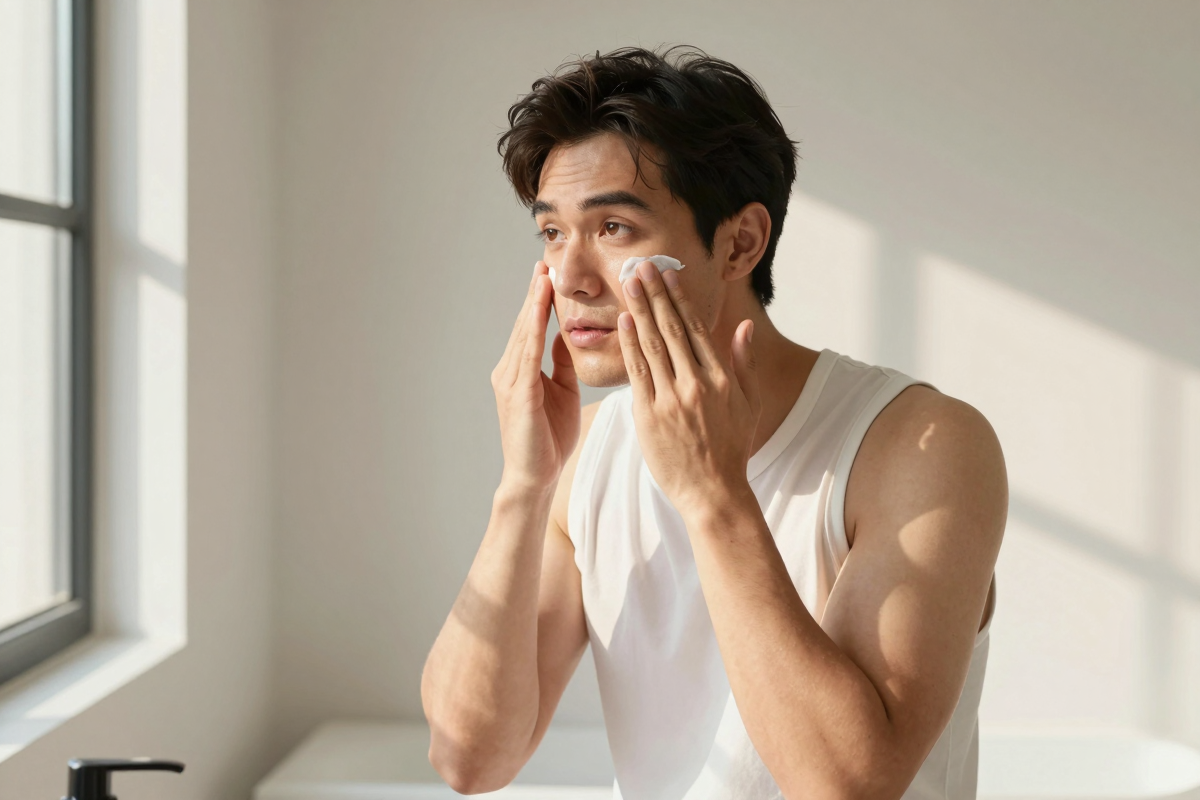
In your 20s, your skin’s resilience is an asset. The question is whether you use that window to build habits that will pay dividends for decades.
What is happening to your skin in your 20s
In your 20s, testosterone is at or near its peak, which means sebum production is high, skin is thick and well-supported by collagen, and cell turnover is fast at approximately 28 days. For many men, this translates to oily or combination skin, enlarged pores, and a tendency toward breakouts, particularly along the jaw and upper back. While the skin looks resilient from the outside, UV damage is accumulating silently beneath the surface with every day spent without sun protection.
Furthermore, if shaving has begun, so has chronic barrier disruption. Most men in their 20s shave without a dedicated post-shave barrier product, relying instead on aftershave alcohol which, while temporarily antiseptic, actively dries and irritates the skin. Consequently, the 20s are an ideal time to establish not just a skincare routine but a shaving care protocol that supports rather than compromises the barrier.
Key ingredients for your 20s
When to introduce retinol in your 20s
Your 20s routine at a glance
Morning: Gentle gel cleanser, lightweight hyaluronic acid moisturiser, broad-spectrum SPF 30 or higher. If shaving: cleanse first, shave, apply post-shave balm, then SPF.
Evening: Gentle cleanser, lightweight moisturiser.
Two nights per week (late 20s): Low-concentration retinol after cleansing, followed by moisturiser to buffer any initial sensitivity.
Part Three: Men’s Skincare in Your 30s — The First Signals Deserve a Considered Response
Adapting your men’s skincare routine by age in your 30s means responding to the first visible changes with intention. Fine lines develop around the eyes and forehead. Skin tone becomes slightly less even. Post-shave redness takes a little longer to settle. These are not signs of damage. They are biological signals that your routine needs to evolve.
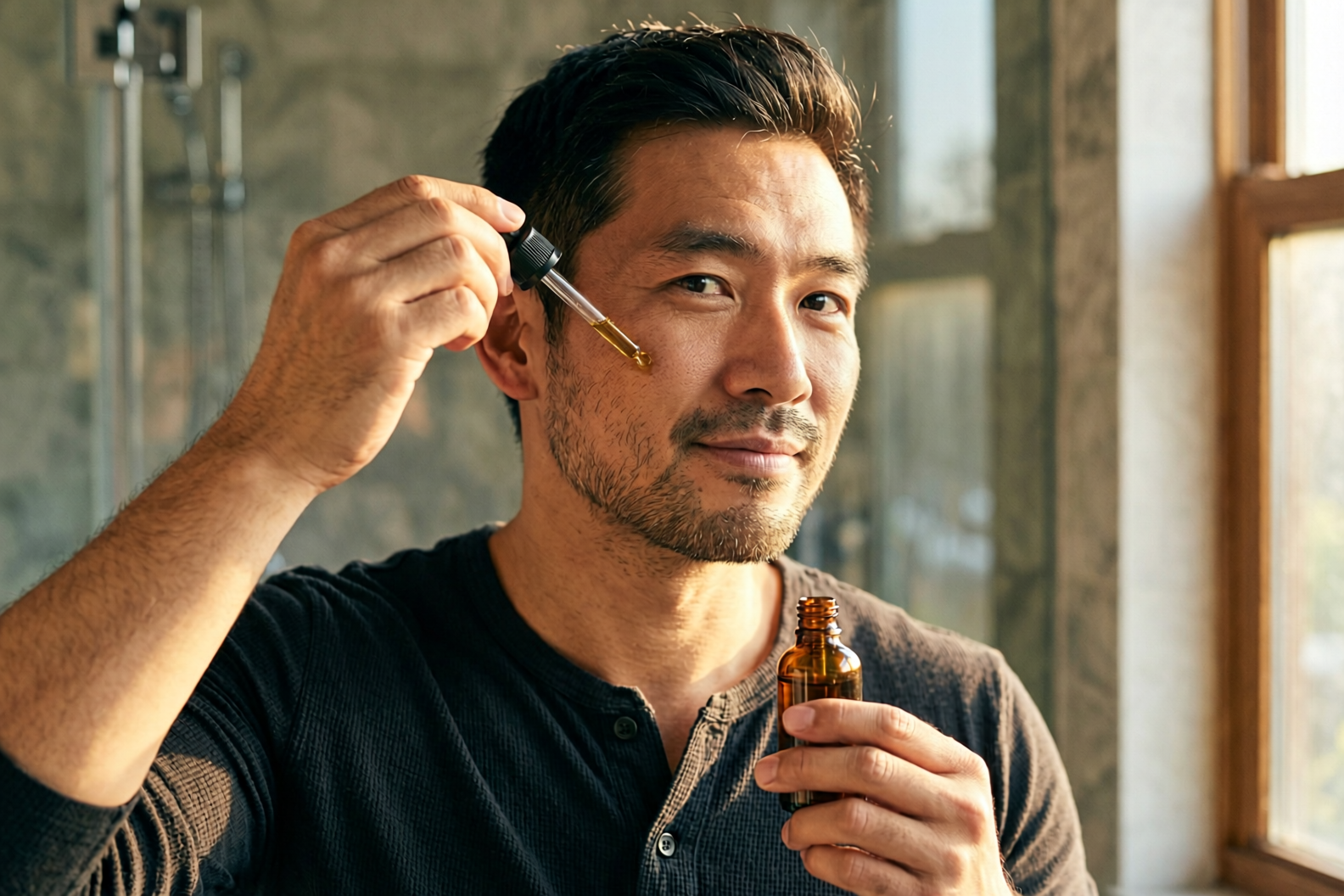
In your 30s, active ingredients earn their place. The skin is still responsive and resilient, which makes this the most productive decade for building a targeted routine.
What is happening to your skin in your 30s
Testosterone begins its gradual decline in the 30s, and collagen production drops at approximately 1 percent per year from the mid-20s. Cell turnover, which was once 28 days, begins to slow toward 35 to 40 days by the mid-30s, meaning that dead skin cells linger on the surface longer and create a subtle dullness that was not there before. Additionally, cumulative UV damage from the 20s begins to surface as minor hyperpigmentation, uneven tone, and fine lines, particularly around the eyes and across the forehead.
For men who have been shaving daily for ten or more years, chronic barrier compromise also begins to show as persistent redness or sensitised patches along the jaw and neck. Notably, the 30s are also when lifestyle factors have more visible consequences. Poor sleep, high stress, and excessive alcohol consumption all show up on the skin more obviously than they did in the previous decade. Cortisol, the primary stress hormone, directly degrades collagen and disrupts barrier function. Therefore, the skincare approach in the 30s needs to address both active correction and ongoing protection.
Key ingredients for your 30s
Exfoliation and hydration in your 30s
Your 30s routine at a glance
Every morning: Gentle cleanser, vitamin C serum, niacinamide serum or moisturiser, eye cream, SPF 30 or higher. If shaving: cleanse, shave, post-shave barrier balm, then serum and SPF.
Monday, Wednesday, Friday evenings: Double cleanse, retinol serum, ceramide moisturiser, eye cream.
Tuesday or Thursday: Double cleanse, AHA or BHA exfoliant, ceramide moisturiser, eye cream. No retinol on this night.
Part Four: Men’s Skincare in Your 40s — Testosterone Decline Requires a Strategic Upgrade
Refining your men’s skincare routine by age in your 40s means responding to the most significant hormonal shift the skin has experienced up to this point. Testosterone decline accelerates. The skin becomes measurably thinner. Sebum production, which was once a source of natural moisture and protection, drops noticeably. This decade calls for a genuine upgrade in both formulation richness and ingredient specificity.
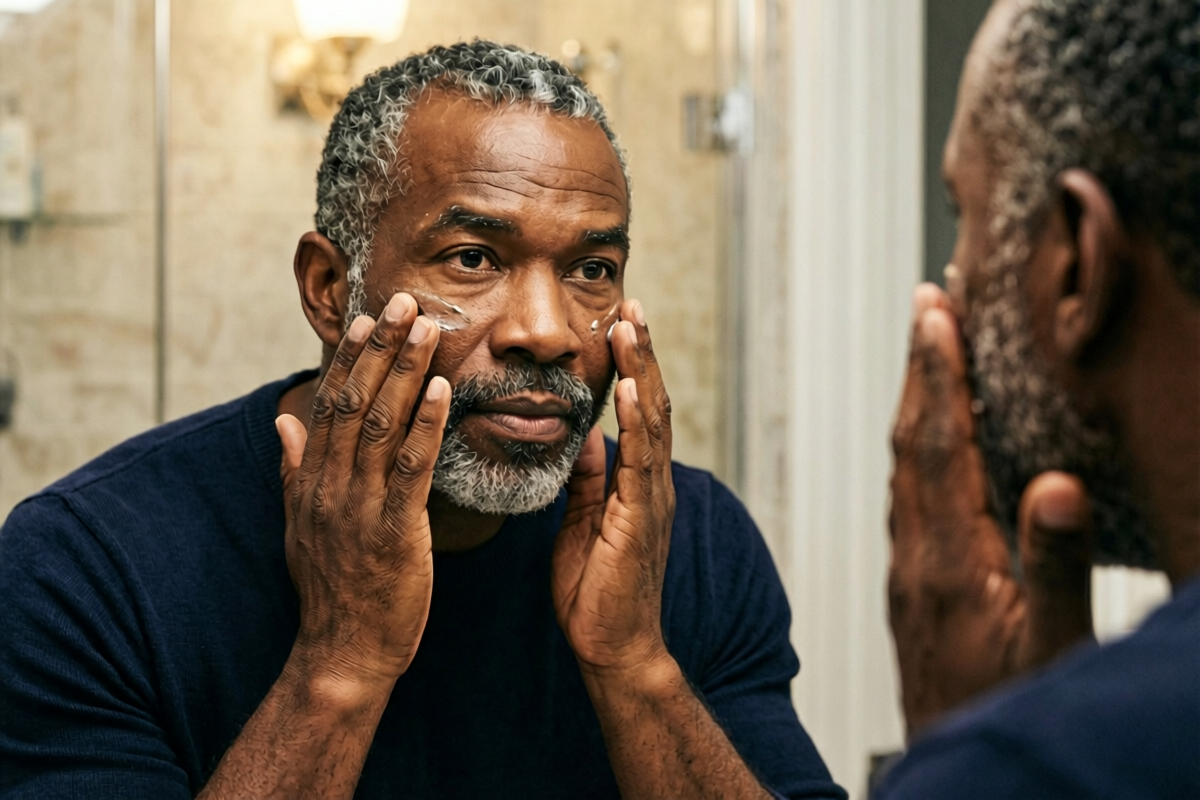
In your 40s, the most impactful thing you can do for your skin is match your routine to your biology rather than the biology you had ten years ago.
What is happening to your skin in your 40s
By the mid-40s, testosterone levels have typically declined by 15 to 20 percent from their peak, and the effects on the skin are becoming visible. A 2024 review in Clinical, Cosmetic and Investigational Dermatology confirmed that androgens are central regulators of dermal collagen density, sebum production, and barrier function, and that their decline is directly associated with measurable structural thinning, increased TEWL, and reduced skin elasticity in men from the 40s onward. Specifically, the skin’s ability to retain moisture drops significantly, the dermis loses volume and structural support, and fine lines deepen into moderate wrinkles.
In addition, cumulative UV damage accumulated over two decades of outdoor exposure begins to surface more visibly in the 40s. Hyperpigmentation, age spots, and uneven texture that were developing silently are now clearly present. Moreover, the skin’s cell turnover has slowed to around 45 to 50 days, meaning the surface appears more dull and textured. As a result, the 40s routine needs to simultaneously address barrier repair, active collagen stimulation, and more consistent exfoliation to support the slowing renewal cycle.
Why barrier repair becomes the priority in your 40s
As testosterone falls, the skin can no longer rely on sebum to maintain its lipid barrier as it once did. Consequently, products that worked in your 30s may begin to feel insufficient, and a morning routine that felt adequate at 36 may leave the skin dry and tight by 44. Rather than a product failure, what you are experiencing is a biological shift that calls for richer formulations, specifically ones built around ceramides, fatty acids, and squalane. Similarly, the shaving protocol needs updating at this stage, since thinner skin with a compromised barrier reacts more intensely to razor abrasion and requires more thorough preparation and post-shave repair.
Priority ingredients for your 40s
Retinol, peptides, and niacinamide: the evidence-based upgrade
Retinol Upgrade (0.5 to 1 Percent) or Prescription Retinoid
By the 40s, increasing retinol concentration is clinically warranted. A 2025 MDPI Cosmetics study on retinal-based concentrates confirmed that cosmetic retinoids demonstrate strong efficacy in reducing photoageing signs including fine lines, wrinkles, and pigmentation, while offering improved tolerability compared to earlier formulations. Retinal, also known as retinaldehyde, requires only one conversion step to become retinoic acid, making it significantly more bioavailable than retinol esters. Consequently, it is an excellent upgrade option for men in their 40s who want stronger results without the irritation profile of prescription tretinoin.
Peptide Serums for Structural Support
Peptides are short amino acid sequences that signal the skin to produce more collagen and elastin. They work synergistically with retinoids and are well-tolerated even on sensitised or post-shave skin. Look for copper peptides, palmitoyl tripeptide-1, and matrixyl 3000 in your serums or moisturisers. While peptides work more gradually than retinoids, a 2024 review in the International Journal of Molecular Sciences confirmed measurable improvements in skin firmness and elasticity from consistent peptide use over six to twelve weeks.
Niacinamide (Continue and Elevate)
The April 2024 PMC review on niacinamide’s mechanistic functions (PMC11047333) confirmed that it contributes to the extracellular matrix by preserving collagen, inhibiting matrix-degrading enzymes, promoting new collagen and elastin production, and strengthening barrier function through ceramide synthesis. In addition, the January 2026 Cosmoderma review confirmed that niacinamide’s combined anti-ageing, anti-hyperpigmentation, and barrier-repair properties make it one of the most clinically valuable ingredients for ageing skin at any concentration between 5 and 10 percent.
Upgrading your moisturiser and SPF in your 40s
Switch to a Richer, Ceramide-First Moisturiser
The lightweight gel moisturiser that suited your oily 20s skin will no longer meet the needs of your 40s skin. As sebum production declines, the skin needs lipid replenishment from outside. Switch to a richer cream formulated with ceramides, squalane, and fatty acids.
Ceramides are the lipid molecules that comprise approximately 50 percent of the skin’s barrier composition, and their natural levels decline with both age and hormonal shifts. Specifically, a ceramide-rich moisturiser seals in moisture, reduces TEWL, and supports the barrier that declining testosterone is progressively compromising.
Upgrade to SPF 50
From the 40s, upgrading from SPF 30 to SPF 50 is clinically advisable. Skin is thinner, slower to repair UV damage, and carrying two decades of cumulative solar stress. The 2025 Scientific Reports network meta-analysis confirmed that UV exposure is the primary driver of photoageing and that consistent sun protection is the most impactful prevention available at any age. Mineral SPF formulations with zinc oxide or titanium dioxide are particularly well-tolerated by sensitised skin in this decade and offer broad-spectrum protection without the hormonal concerns associated with some chemical filters.
Your 40s routine at a glance
Every morning: Creamy cleanser, vitamin C serum, niacinamide serum, rich peptide and ceramide moisturiser, eye cream, SPF 50.
Monday, Wednesday, Friday evenings: Double cleanse, upgraded retinol or retinal, rich overnight ceramide cream, eye cream.
Tuesday or Thursday: Double cleanse, glycolic or lactic acid exfoliant, rich moisturiser, eye cream. No retinol on this night.
Every evening: Extend moisturiser application to the neck. This area ages at the same rate as the face and is consistently the most neglected area in men’s skincare routines.
Part Five: Men’s Skincare in Your 50s and Beyond — Deep Restoration and the Andropause Effect
Committing to a men’s skincare routine by age in your 50s is where the cumulative decisions of the previous thirty years become most visible. For men who have cared for their skin consistently, this decade is characterised by gradual and manageable change. For those who have not, it often brings a more abrupt reckoning. Either way, the same biological principles apply, and the right routine produces genuine, visible results at this age.
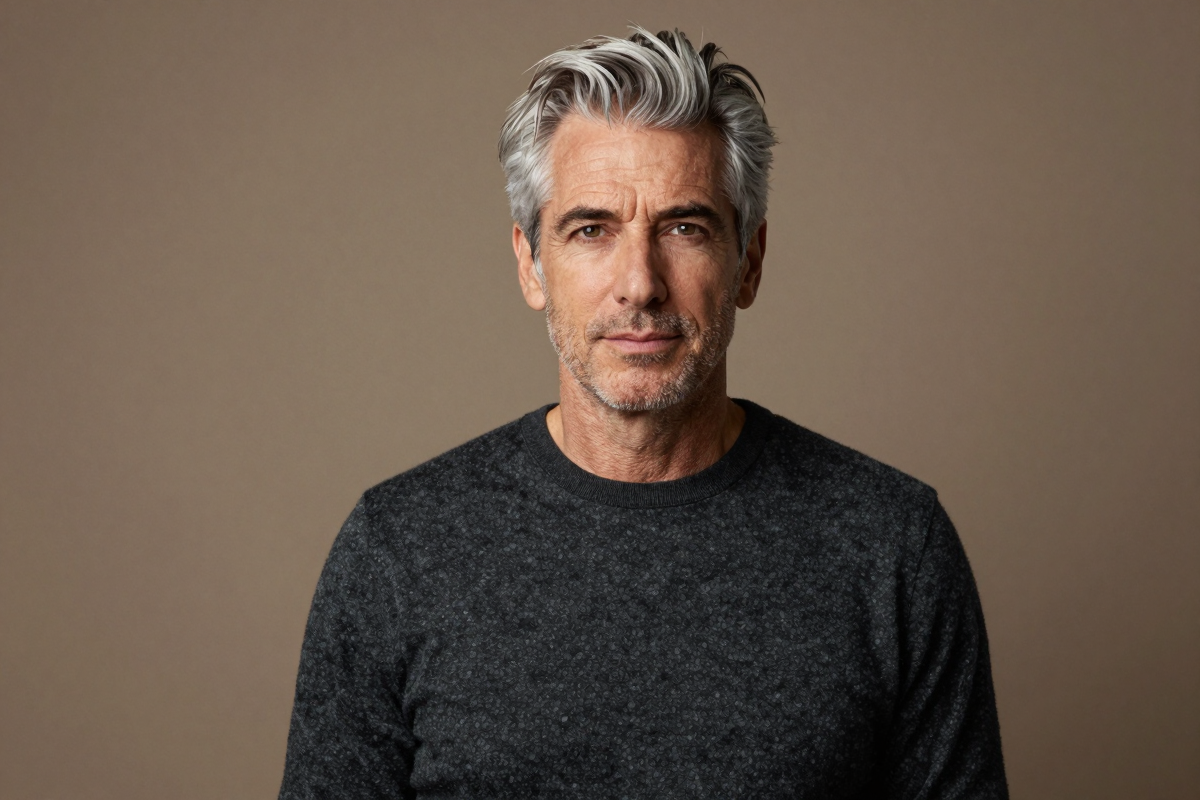
Skin at 50 and beyond responds to consistent, evidence-based care. It is never too late for the biology to work in your favour.
What is happening to your skin in your 50s
By the 50s, testosterone levels in many men have declined by 25 to 35 percent from their peak. The skin is noticeably thinner than it was at 40. Collagen density is significantly reduced, and the dermis has lost structural volume that is now visible as deepened nasolabial folds, jowling along the jaw, and pronounced orbital hollowing around the eyes. Additionally, cell turnover has slowed to approximately 55 to 65 days, which means dead skin accumulates more quickly and the complexion can appear grey and fatigued without active exfoliation and circulation support.
Furthermore, the skin’s natural antioxidant defence system declines with age, leaving it less equipped to neutralise the oxidative stress from UV exposure and environmental pollution. Wound healing slows. Post-shave irritation that would once have resolved in hours may now last a full day. Specifically, the shaving protocol needs updating in this decade, since skin that is thinner and less elastic requires extra preparation, a sharp blade, a hydrating shaving product, and dedicated post-shave repair after every shave.
It is also worth noting that skin cancer risk increases significantly with cumulative UV exposure over a lifetime, and men are statistically more likely than women to be diagnosed with melanoma at later stages because of lower rates of annual skin screening. Therefore, annual dermatology visits become a genuine health recommendation in the 50s, not merely a cosmetic one.
Why antioxidant protection matters more than ever in your 50s
Because the skin’s own antioxidant defences decline with age, topical antioxidants become more rather than less important in the 50s. Vitamin C in the morning provides direct free radical neutralisation and UV damage support. Moreover, coenzyme Q10 and resveratrol have emerging evidence for reducing oxidative stress and supporting mitochondrial skin cell function at the cellular level.
Consequently, applying a multi-antioxidant serum under SPF in the morning provides a meaningful protective layer that the skin can no longer produce adequately on its own. In addition, research published in 2024 confirmed that combining antioxidants with daily SPF produces a compounded protective effect that consistently outperforms either ingredient used alone.
Key ingredients for your 50s and beyond
Retinoids, ceramides, squalane, and annual dermatology care
Your 50s routine at a glance
Every morning: Creamy gentle cleanser, vitamin C and antioxidant serum applied to damp skin, niacinamide serum, rich ceramide and fatty acid moisturiser, eye cream, SPF 50.
Monday, Wednesday, Friday evenings: Double cleanse, retinol or retinoid using the sandwich technique if sensitivity is elevated, rich peptide overnight cream, squalane oil, eye cream.
Once weekly: Lactic acid exfoliant, followed by rich barrier cream. No retinol on this night. Reduce to every ten days if sensitivity is elevated.
Always: Extend every product to the neck and jawline. Schedule an annual skin cancer screening with a board-certified dermatologist.
The most effective skincare routine is not the most expensive one. It is the one that is matched to your biology today, applied consistently enough for the ingredients to do their work.
Part Six: Four Principles That Underpin Every Men’s Skincare Routine by Age
Regardless of which decade you are in, these four principles are consistent across every peer-reviewed study and every dermatologist recommendation reviewed for this guide. Rather than trends, they are the evidence-based fundamentals that underpin every recommendation above.
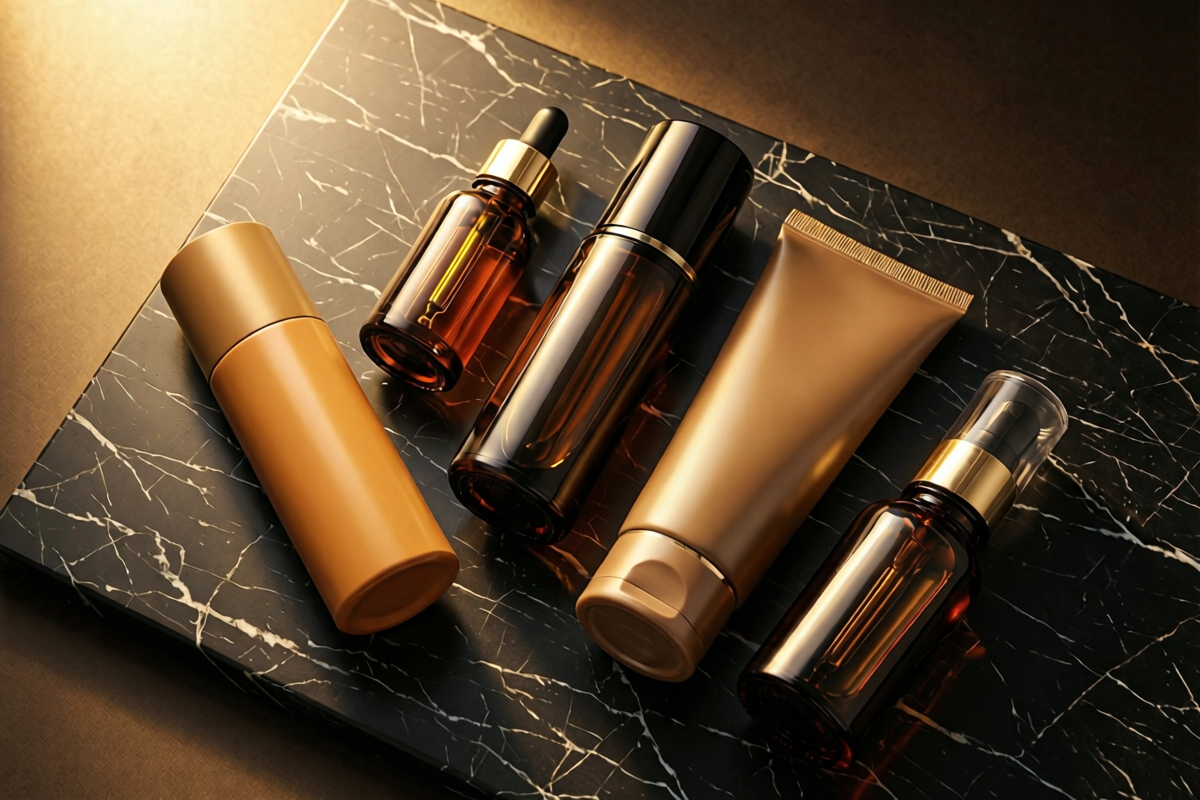
Four products earn their place at every decade: a gentle cleanser, a hydrating serum, a quality moisturiser, and SPF. Everything else builds on this foundation.
Principle one: SPF is the single most evidence-backed anti-ageing measure available
The 2025 Scientific Reports network meta-analysis by Lin and Chen identified UV-induced photoageing as the primary cause of skin deterioration because UV exposure generates reactive oxygen species that accelerate the breakdown of collagen and elastin. Specifically, every board-certified dermatologist cited in this guide identified daily broad-spectrum SPF as the most impactful single anti-ageing measure available. Furthermore, because men apply SPF at significantly lower rates than women, the upside of adopting this habit is correspondingly larger. Starting daily SPF at any age produces measurable benefits, and the earlier it begins the greater the long-term impact.
Principle two: consistency outperforms complexity every time
A four-step routine used consistently every day will always outperform a ten-step routine used three times per week. Every active ingredient in this guide works by accumulating biological effect over time. As the 2024 Bogdanowicz et al. clinical trial demonstrated, eight full weeks of consistent niacinamide and hyaluronic acid application were required before significant improvements in fine lines, wrinkles, and skin plumpness were measurable. Consistency is therefore not a soft recommendation. Instead, it is a clinical requirement for results. Moreover, a simple routine you will actually maintain beats an elaborate one that sits on the shelf unused.
Principle three: lifestyle is the infrastructure beneath every routine
Consistent sleep at seven to nine hours supports the human growth hormone secretion that drives overnight collagen production and skin cell repair. Chronic psychological stress elevates cortisol, which directly degrades collagen and disrupts the skin barrier. Similarly, heavy alcohol consumption dehydrates the skin, increases inflammation, and depletes the vitamins the skin depends on for cellular repair. Dietary patterns rich in omega-3 fatty acids, polyphenols, zinc, and vitamins A, C, and E all measurably support the skin’s structural and antioxidant systems. Overall, no topical product can fully compensate for a lifestyle that is actively undermining the skin from the inside. A consistent routine is the refinement layer. Your lifestyle, consequently, is the foundation on which everything else rests.
Principle four: it is never too late to begin
The 2025 Scientific Reports network meta-analysis confirmed that retinoids produce significant improvements in fine wrinkles regardless of when treatment was initiated. SPF prevents new UV damage from the very first day of consistent use. Niacinamide begins improving barrier function within weeks at any age. Starting a considered, consistent men’s skincare routine by age at 55 or 65 produces measurable and visible results. Indeed, the skin responds to evidence-based care at every stage of life, and the only regret in skincare is the routine that was never started.
Part Seven: How Long Each Ingredient Takes to Work
Managing expectations is just as important as choosing the right ingredients. Every active ingredient in this guide works by accumulating biological effect over time. Here is what current clinical evidence says about realistic timelines for each key active in a men’s skincare routine by age.
Notably, visible plumping and surface hydration appear within 24 to 72 hours. Must be sealed with a moisturiser to prevent evaporation, particularly in dry climates and post-shave skin.
Specifically, barrier improvements appear within 2 to 4 weeks. Measurable wrinkle, radiance, and sebum regulation improvements follow at 8 weeks per Bogdanowicz et al. 2024 clinical trial.
Radiance improves and early pigmentation reduction appears within 3 to 4 weeks of consistent daily morning use before SPF.
Texture and brightness improve within 2 to 3 weeks of twice-weekly use at the appropriate concentration.
Initially, early texture improvements appear from 4 to 8 weeks. Subsequently, significant collagen-related anti-ageing benefits emerge from 12 weeks of consistent use, per the 2025 Scientific Reports meta-analysis.
Above all, SPF prevents new UV damage from day one. Benefits compound over months and years and become most visible as preserved collagen density and even tone from the 40s onward.
Barrier improvement and reduction in transepidermal water loss become measurable within 1 to 2 weeks of daily consistent use.
Firmness and collagen-related improvements become measurable from 6 to 12 weeks of consistent daily application.
Part Eight: Common Questions Men Ask About a Skincare Routine by Age
Practical, evidence-based answers to the questions that come up most consistently when men begin to take their skincare routine by age seriously, regardless of where they are starting from.
Frequently asked questions
Do I really need a separate SPF or is it fine in my moisturiser?
A dedicated SPF applied as the final morning step provides significantly more reliable protection than a moisturiser with SPF added. The reason is straightforward: SPF requires a specific quantity of product to deliver its labelled protection factor, and most people apply moisturiser at a fraction of that amount. Additionally, a dedicated SPF allows you to choose a formula optimised specifically for UV protection rather than one compromised between two different functions. Overall, this single swap is the easiest upgrade you can make to your morning routine.
Shaving, retinol sensitivity, and how many steps you actually need
Can I use retinol if I have sensitive skin from years of shaving?
Yes, with a measured approach. Begin with a low concentration of 0.025 to 0.05 percent used once per week on non-shave nights, and increase frequency slowly over four to six weeks as your skin adapts. The sandwich technique, applying a thin layer of moisturiser before retinol and another on top, significantly reduces irritation without compromising efficacy. Furthermore, do not apply retinol on the same night that you have shaved. Shaved skin is already compromised, and retinol on a disrupted barrier significantly increases irritation risk. Specifically, alternate retinol nights with post-shave recovery nights until your barrier is consistently stable.
How many steps does a realistic men’s skincare routine by age actually need?
In your 20s, three to four products are entirely sufficient: cleanser, lightweight moisturiser, and SPF, with a post-shave balm if you shave. By the 30s, five products deliver strong results: add vitamin C serum and niacinamide to the foundation. From the 40s onward, six to seven products are appropriate as the skin’s needs increase. Regardless of age, a simple routine used every day outperforms a comprehensive routine used inconsistently. The goal is the most effective men’s skincare routine you will realistically maintain.
Professional guidance and starting at any age
Is it worth seeing a dermatologist as a man?
Yes, particularly from the 40s onward, and annually from the 50s onward regardless of cosmetic concerns. Men are statistically diagnosed with melanoma at later and more dangerous stages than women because of lower rates of proactive skin screening. A dermatologist can also prescribe tretinoin if over-the-counter retinol is not producing adequate results, personalise a routine to your specific hormonal profile, and discuss whether testosterone replacement therapy (TRT) may have skin benefits as part of your broader andropause management. In addition, they can recommend in-office treatments including fractional laser, microneedling, or radiofrequency if structural improvement beyond what topical products can deliver is a priority.
Is it too late to start a proper skincare routine in my 50s or 60s?
No, it is not. The 2025 Scientific Reports meta-analysis confirmed that retinoids improve fine wrinkles across a wide age range regardless of when treatment was initiated. SPF prevents new UV damage from the very first day you apply it. Niacinamide improves barrier function within weeks at any age. Starting a considered, consistent men’s skincare routine by age at 55 or 65 produces measurable and visible improvements. Indeed, the skin responds to evidence-based care at every stage of life. Consequently, the only routine that does not work is the one never started.
At Belldiva, we believe that taking care of your skin is one of the most consistent and rewarding forms of self-investment available to you. Not because of how it looks. Because of what it means: the daily decision that you are worth showing up for.
Sources and research references
Peer-reviewed studies and clinical research
Lin L, Chen X et al. Comparative efficacy of topical interventions for facial photoaging: a network meta-analysis. Scientific Reports. July 2025.
|
Marques C et al. Mechanistic Insights into Multiple Functions of Niacinamide. Antioxidants (Basel). March 2024. PMC11047333.
|
Bogdanowicz P et al. Senomorphic activity of a combination of niacinamide and hyaluronic acid. Scientific Reports. July 2024. | Reilly DM, Lozano J. Skin collagen through the lifestages: importance for skin health and beauty. Plastic and Aesthetic Research. 2021. | Luebberding S et al. Skin physiology in men and women. International Journal of Cosmetic Science. 2013, confirmed in 2024 comparative review.
PMC12609848. The Next Generation of Skin Care: Transforming Retinoid Therapeutics. November 2025. | PubMed 41088896. Exploring Niacinamide as a Multifunctional Agent. October 2025. | Huang HY et al. Tretinoin for Photodamaged Facial Skin: Systematic Review and Meta-Analysis. Dermatology Practical and Conceptual. October 2025. PMC12615114. | Cosmoderma. Niacinamide Efficacy in Skin Therapy: A Comprehensive Literature Review. January 2026. | International Journal of Molecular Sciences. Bioactive Peptides in Skin Anti-Ageing. 2024 review.
Dermatologist guidance and clinical practice sources
Clarus Dermatology. Skincare in Your 20s, 30s, 40s and 50s. November 2025. clarusdermatology.com | DermOnDemand. Dermatologist-Recommended Skin Care Routine for the 30s. October 2025. dermondemand.com | Journal of Cosmetic Dermatology. Post-shave barrier disruption in male skin: mechanisms and management. 2023 review. | Clinical, Cosmetic and Investigational Dermatology. Androgens and ageing skin in men. 2024 review. | MDPI Cosmetics. Efficacy and Safety of a Novel Anhydrous 0.1% Retinal-Based Concentrate. October 2025. mdpi.com/2079-9284/12/6/235 | Skin Pharmacology and Physiology. Collagen decline and hydration changes in male skin across the lifespan. 2024 meta-analysis. | International Journal of Cosmetic Science. Sex differences in SPF usage and photoageing outcomes. 2023.
The information in this guide is intended for educational purposes and reflects dermatological research current to early 2026. It does not constitute medical advice. Always consult a qualified dermatologist or healthcare professional before beginning any new skincare regimen, particularly if you have existing skin conditions, sensitivities, or are experiencing hormonal changes.
men’s skincare routine by age
men’s skincare in your 20s
men’s skincare in your 30s
men’s skincare in your 40s
men’s skincare in your 50s
andropause skincare
testosterone decline skin
retinol for men
niacinamide skin benefits
collagen loss men
men’s anti-ageing skincare
best skincare for men over 40
shaving skincare routine
Belldiva men’s grooming
Rooted in Care. Refined in You.
Explore Belldiva’s Curated Men’s Grooming Collection
Over 70 luxury brands in beauty, skincare, health, and wellness. Every brand chosen for genuine excellence and real results.
Luxury Beyond Boundaries • Rooted in Care, Refined in You
Belldiva’s Curated Skincare and Wellness Brands
All 70 Brands on Belldiva
Huda Beauty
Charlotte Tilbury
Sephora
MAC
Dior
Katini Skin
Ultra Violette
NYX Cosmetics
The Ordinary
Verb Products
BK Beauty
Prada Beauty
Estée Lauder
Vasanti Cosmetics
Brickell
Lumin
Blu Atlas
Liomen
Jaxon Lane
Beardbrand
Scotch Porter
Bevel
Menfirst
Atlas
SkinCeuticals
Lululemon
Mindful
Headspace
Calm
Fitbit
MyFitnessPal
Noom
Peloton App
Organifi
Ritual
HUM Nutrition
Nike
YSL (Saint Laurent Beauty)
Lancôme
Clinique
NARS
Elizabeth Arden ✦
Victoria Beckham Beauty
Make Up For Ever
Valentino Beauty
Bobbi Brown
Shiseido
Benefit Cosmetics
Smashbox
Kylie Cosmetics
Urban Decay
Sigma Beauty
Stila ✦
Clarins
Tarte Cosmetics
PUR Cosmetics
Glossier
Elemis London
Kiehl’s
Murad
Paula’s Choice
Viori Beauty ✦
Life Extension
Lumen
Fiji Water
Anastasia Beverly Hills
Serious Skincare
Qure Skincare
Armani Beauty
✦ Affiliate partnership — commission may be earned on purchases made through these links at no extra cost to you.