Belldiva
Luxury Beyond Boundaries • Rooted in Care, Refined in You
Men’s Skincare Over 40: The Complete Science-Backed Guide
What is actually happening to your skin, which ingredients genuinely work, and how to build a routine that changes everything.
Skincare Science
Anti-Aging
Grooming
Andropause
Longevity
By Belldiva Editorial • 2026 • 18–20 min read

Your skin is not simply getting older. It is going through a specific, measurable set of biological changes. Understanding them is where everything begins.
Most men over 40 were never taught about skincare. Nobody pulled them aside at 35 and said, here is what is coming and here is how to handle it. Instead, the changes arrived quietly. A little more dryness. A jawline that looked less defined. Lines around the eyes that seemed to appear overnight. Skin that looked tired even on days when you were not.
Furthermore, the advice available was either aimed at women or so overwhelming that it felt impossible to start. This guide is different. It is written specifically for men over 40 who are ready to take their skin seriously but want the truth, not a marketing pitch. As a result, every recommendation here is grounded in peer-reviewed dermatological science. We explain what is happening to your skin, why it is happening, which ingredients are clinically validated, how to build a five-step morning and evening routine, and what lifestyle factors make or break your results.
Above all, at Belldiva we believe one thing deeply: wealth without wellness is incomplete. That truth belongs to men just as much as it belongs to anyone.
What this guide covers
In short, this is a complete, research-backed guide to men’s skincare after 40. It covers the science of how male skin ages, the ingredients that are clinically proven to work, a full morning and evening routine, shaving guidance, and the lifestyle factors that influence everything. Sources are referenced throughout and listed at the end.
The men who start a considered skincare routine today will look back in six months and wonder why they waited. The skin responds at any age. It is never too late to begin.
of science-backed guidance
collagen lost per year after 40
words of original research
Part One: What Is Actually Happening to Your Skin After 40
Before you can treat something, you need to understand it. Male skin after 40 undergoes a series of specific, measurable biological changes that have been extensively studied and documented.
The testosterone factor
Men’s skin is biologically distinct from women’s. It is approximately 25 percent thicker due to higher testosterone levels and contains greater collagen density, which is why men tend to age more slowly through their 20s and 30s. This is not a myth. In fact, it is established biology, documented in studies published in the Journal of Investigative Dermatology and confirmed by clinical dermatologists at institutions including the London Dermatology Centre.
That advantage, however, has a shelf life. Research confirms that testosterone levels begin declining from around age 30, with the decline accelerating notably after 40. By age 75, the average man retains roughly 65 percent of the testosterone he had as a young adult. Consequently, this hormonal shift, sometimes referred to as andropause, has direct and measurable consequences for skin health. Sebum production decreases, meaning the natural oils that once kept skin hydrated and protected become less abundant. In addition, collagen production slows and existing collagen fibres begin to break down more rapidly.
Furthermore, a 2018 report in the Journal of Investigative Dermatology involving 200 participants found that cheek areas in men exhibit a 15 percent faster collagen decline after age 40 compared to earlier decades. Research published in Clinical, Cosmetic and Investigational Dermatology also confirms that skin hydration in the stratum corneum, the outer protective layer, decreases over time in men beginning at age 40, while remaining stable or even increasing in women during the same period. As a result, men frequently notice ageing suddenly rather than gradually, particularly around the eyes, jawline, and forehead.
Research published in PMC (Modulating the Testosterone Pathway in Male Skin Aging) confirms that after age 40, the capability for sex hormone binding globulin (SHBG) to bind testosterone increases by approximately 40 percent, further reducing the amount of free testosterone available to support skin health.
Moreover, a 2024 PMC narrative review on exercise and skin function published in JMIR Dermatology confirmed that hormonal changes associated with male aging directly affect cutaneous collagen production, skin elasticity, and the skin’s barrier repair capacity. These are not cosmetic concerns. They are measurable biological events.
The visible signs: what you are seeing and why
Understanding the cause behind each visible change is essential, because it allows you to target the right solution rather than guessing. Here is what is behind each sign you may be noticing.
Importantly, none of this is irreversible. All of it can be meaningfully improved with the right approach, consistently applied.
Part Two: The Ingredients That Actually Work
The skincare industry is not short of promises. However, there is a significant difference between an ingredient that is clinically proven and one that merely sounds compelling on a label. Here is what the research actually supports.
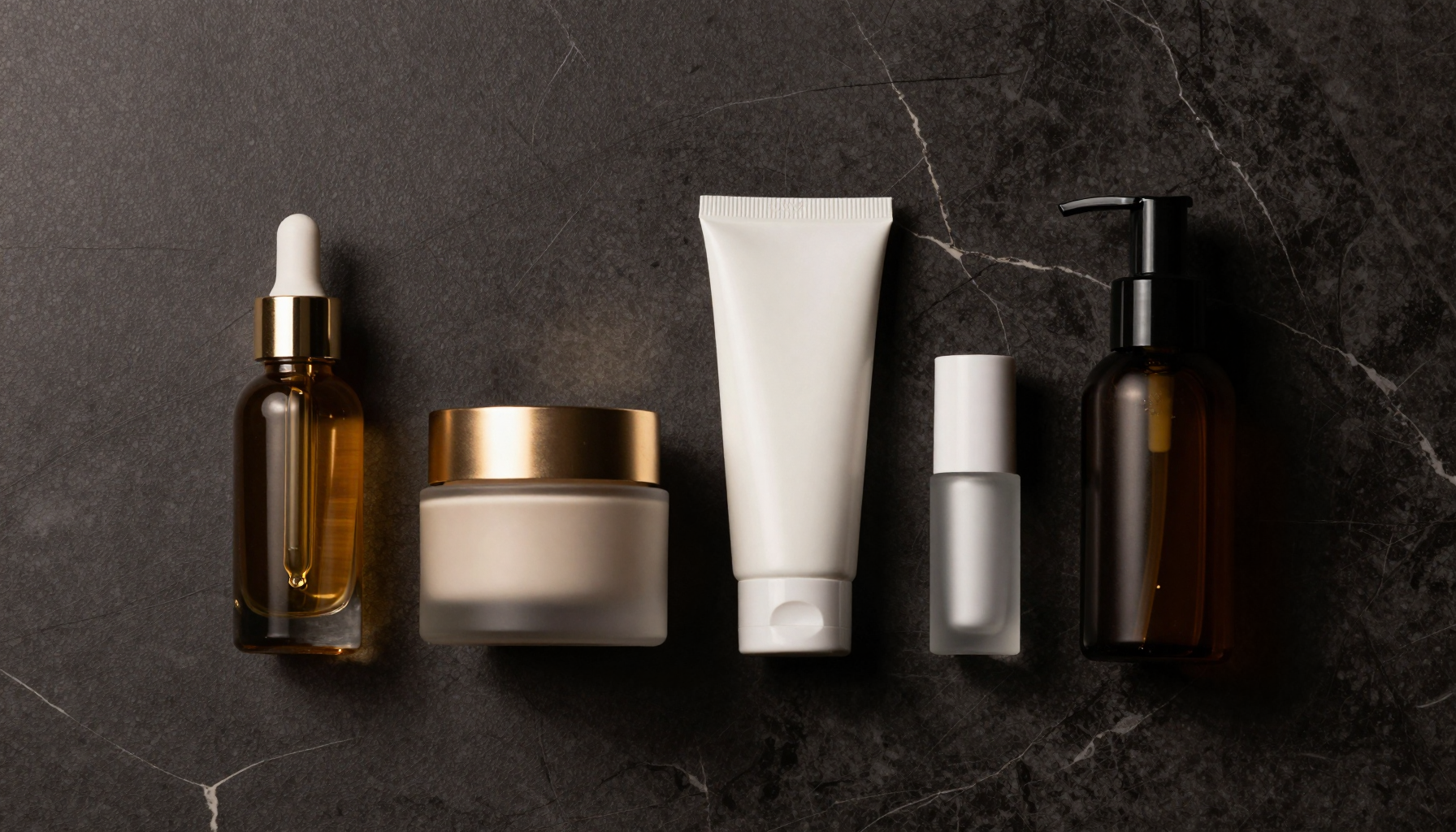
Six clinically validated ingredients separate a routine that works from one that simply fills shelf space. Every product in your routine should earn its place.
Retinol and retinoids: the gold standard
Retinoids, the family of vitamin A derivatives that includes over-the-counter retinol and prescription-strength tretinoin, remain the single most researched and validated anti-aging ingredient in all of dermatology. Indeed, board-certified dermatologists at Nebraska Medicine, Northwestern Medicine, and leading academic dermatology centres consistently place retinoids at the top of their recommendations for aging skin.
The mechanism is well understood. Retinoids accelerate cell turnover, stimulating the skin to shed dead cells faster and generate fresh ones more efficiently. In addition, they inhibit matrix metalloproteinase enzymes, which are responsible for breaking down existing collagen, and they stimulate fibroblasts, the cells that produce new collagen. As a result, research published in peer-reviewed sources confirms that retinol typically shows improvements in skin texture and fine lines within 4 to 8 weeks, with more significant anti-aging benefits building from 8 to 12 weeks of consistent use.
Nevertheless, retinoids must be used at night only. They break down with UV exposure and can cause initial dryness during the adjustment period. Therefore, it is best to begin with a low concentration of 0.1 to 0.25 percent, used two to three nights per week, and increase gradually over four to six weeks.
Vitamin C: your morning antioxidant shield
Vitamin C is consistently ranked among the most evidence-backed antioxidants in skincare. Nebraska Medicine dermatologist Dr. Ronald Sulewski describes it as the most commonly recommended active ingredient for anti-aging in clinical practice. Applied in the morning, vitamin C neutralises free radicals generated by UV exposure and pollution, brightens the skin, and supports collagen synthesis. Furthermore, it reduces existing pigmentation and is particularly valuable for men who have spent decades without consistent sun protection. Look for L-ascorbic acid at 10 to 20 percent concentration, and apply it after cleansing and before SPF.
Peptides: rebuilding what time takes away
Peptides are short chains of amino acids that serve as messenger signals in the skin. When applied topically, specific peptides mimic natural growth factor sequences and signal fibroblasts to produce new collagen types I and III. Notably, a 2020 study published in Clinical, Cosmetic and Investigational Dermatology reported 15 percent gains in collagen density among men over 50 following six months of topical copper peptide use. Matrixyl 3000 and argireline are two of the most clinically studied peptide complexes. Because they cause virtually no irritation and combine well with other active ingredients, peptides are an ideal addition to both morning and evening routines.
Niacinamide, hyaluronic acid, SPF and exfoliating acids
Niacinamide, or vitamin B3, is one of dermatology’s most comprehensively studied ingredients. Research published in the journal News-Medical confirms it strengthens the skin barrier by stimulating the synthesis of ceramides, cholesterol, and fatty acids. In addition, it inhibits the transfer of melanosomes from melanocytes to keratinocytes, which visibly reduces hyperpigmentation. It also controls sebum production, reduces the appearance of enlarged pores, calms redness, and improves overall texture. As a result, visible improvements in barrier function typically appear within 2 to 4 weeks of daily use.
Hyaluronic acid, on the other hand, works primarily as a humectant. It is a molecule naturally produced by the body that can hold up to 1,000 times its weight in water. Applied topically to slightly damp skin, it draws moisture into the skin and holds it there, which helps every other active ingredient perform more effectively. It is exceptionally gentle and suitable for all skin types, including sensitive skin.
Regarding sun protection, dermatologist Dr. Lamb describes SPF as the ultimate anti-aging product, and the research supports this fully. Daily broad-spectrum sunscreen use prevents up to 24 percent of new facial wrinkles, according to studies referenced by the OTS Dermatology Review. UV damage is the leading cause of extrinsic skin aging, so SPF 30 or higher, applied every morning as the final step in your routine, is non-negotiable.
Finally, alpha hydroxy acids such as glycolic and lactic acid dissolve the bonds between dead skin cells, revealing fresher skin beneath. Beta hydroxy acids, primarily salicylic acid, penetrate pores to clear congestion and reduce inflammation. For men over 40 whose cell turnover has slowed considerably, incorporating an exfoliating acid two to three times per week delivers dramatic improvements in texture and clarity.
Visible hydration and plumping within 24 to 72 hours of first use.
Pore refinement and texture improvements within 2 to 4 weeks.
Improved radiance and reduced dullness within 3 to 4 weeks.
Texture improvements from 4 to 8 weeks. Significant anti-aging benefits from 12 weeks onward.
Firmness improvements measurable from 6 to 12 weeks of consistent use.
Prevents new UV damage from day one. Benefits compound invisibly over months and years.
Part Three: The Complete Morning Skincare Routine for Men Over 40
This is not a 12-step routine. Men’s lives are full. Instead, this is a five-step, evidence-based morning practice that takes under five minutes and will produce visible results within weeks. Every step has a specific purpose.
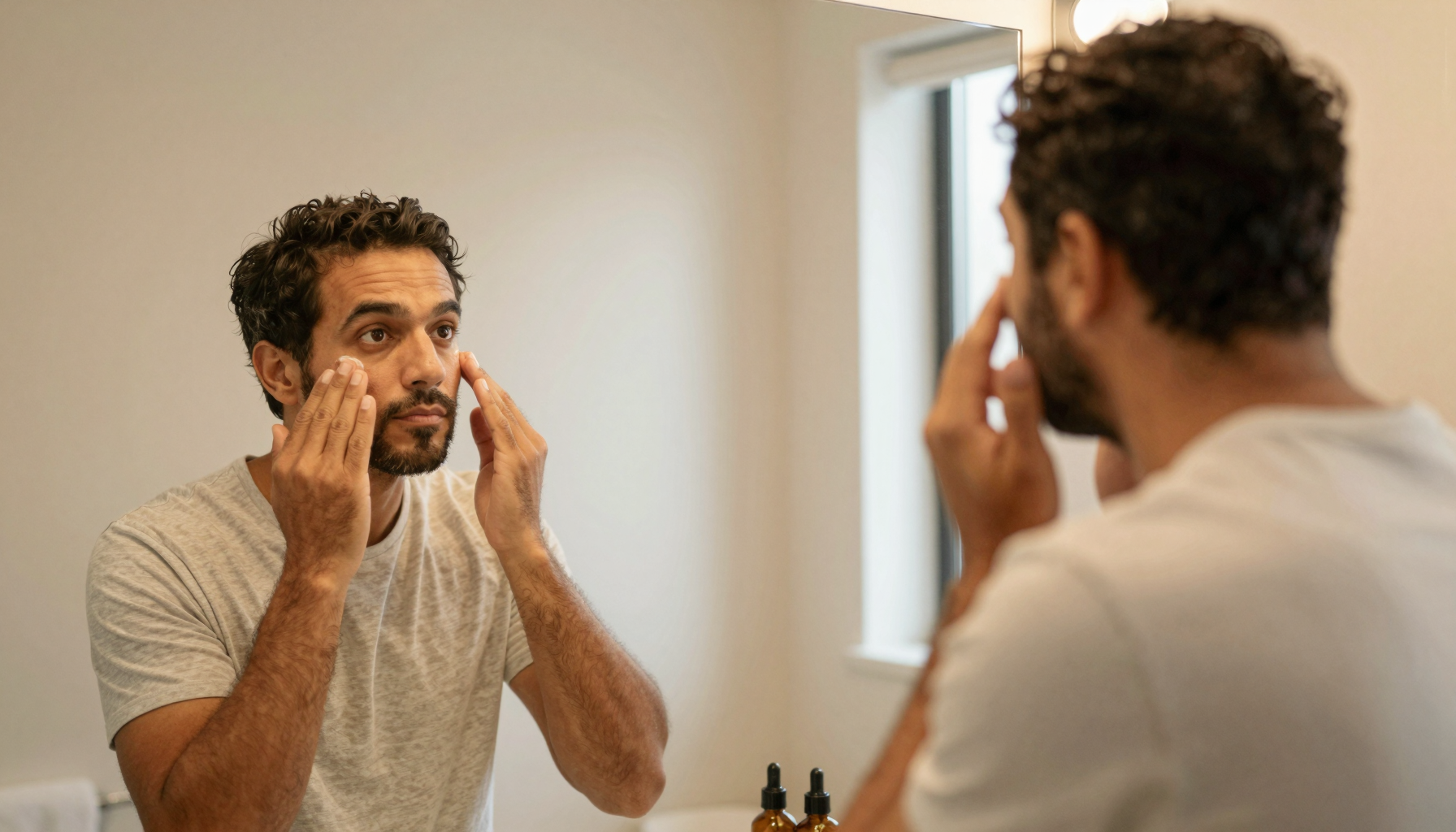
The morning routine is your skin’s first line of defence against the day. Five steps, under five minutes, consistently applied.
Your five morning steps, explained
Part Four: The Complete Evening Skincare Routine for Men Over 40
Evening is where the deep work happens. While you sleep, your skin undergoes its most active repair processes. Blood flow increases, cell turnover accelerates, and growth hormone is released. Your evening routine supports all of this.
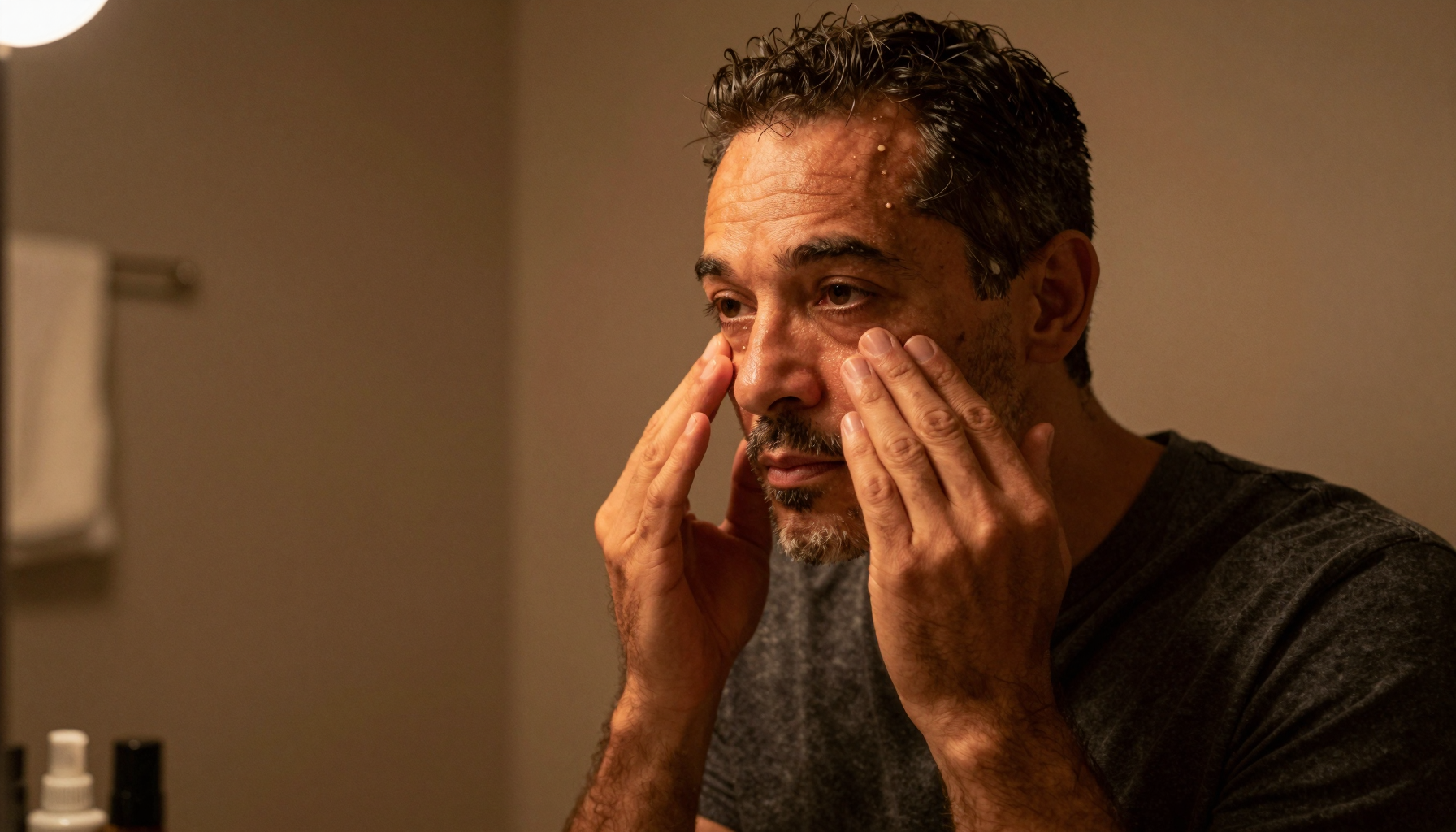
The evening routine is where the real restoration happens. Your skin does its best work while you sleep. Give it what it needs to perform.
Your five evening steps, explained
Consistency is more powerful than complexity. A five-step routine applied every day for three months will outperform a 12-step routine used three times a week.
Part Five: Shaving After 40 and Why It Matters for Your Skin
For men who shave regularly, the razor is one of the most overlooked factors in skin health. After 40, when the skin barrier is more fragile and slower to recover, poor shaving habits compound visibly.

Shaving is the only form of physical exfoliation most men perform daily. After 40, how you do it matters more than it did before.
Shaving does exfoliate the skin, which is a genuine benefit. However, it also creates micro-trauma to the skin barrier, causes micro-inflammation, and produces ongoing irritation that compounds over time. After 40, when the skin barrier is already more fragile and collagen production is slower, the impact of poor shaving practices becomes measurably more pronounced.
Four shaving practices that protect your skin
Part Six: The Five Lifestyle Factors That Make or Break Your Skin After 40
No skincare routine, however well formulated, can fully compensate for a lifestyle that works against your skin. A 2023 peer-reviewed overview published in MDPI Cosmetics identified four primary lifestyle factors that determine skin aging quality in men: nutrition, sleep, exercise, and social connection.

No product in the world can fully compensate for a lifestyle that works against your skin. The most effective skincare is the one lived, not just applied.
Sleep, nutrition and exercise: the skin foundation
During deep sleep, the body releases human growth hormone, which directly stimulates collagen production and skin cell repair. In addition, blood flow to the skin increases measurably overnight, while cortisol, the stress hormone that breaks down collagen, decreases. Consequently, chronic poor sleep is associated with increased transepidermal water loss, reduced barrier function, slower healing, and measurably accelerated visible aging. As a result, seven to nine hours of quality sleep per night is one of the highest-return investments available for skin health after 40.
Research published in Dermato-Endocrinology confirms that extrinsic skin aging is directly influenced by dietary choices. Specifically, vitamins C, D, and E are essential for collagen synthesis and antioxidant defence. Furthermore, zinc, found in oysters and pumpkin seeds, supports wound healing and helps regulate androgen-related sebum production. On the other hand, sugar and refined carbohydrates trigger a process called glycation that directly damages collagen fibres, making them stiff and less resilient. Therefore, prioritise lean protein, coloured vegetables, and omega-3 rich foods, and stay consistently well-hydrated.
Research published in JMIR Dermatology (2024) found that exercise augments cutaneous blood perfusion by approximately eight times compared to a resting state, dramatically increasing oxygen and nutrient delivery to skin cells. In addition, studies show that regular exercise mitigates age-related skin changes by promoting mitochondrial biosynthesis. As a result, men who exercise consistently show measurably better skin structure than sedentary men of the same age. For this reason, target at least 150 minutes of moderate aerobic activity per week, combined with two sessions of resistance training.
Stress management and hydration: the daily habits
Cortisol, the primary stress hormone, is one of the most documented accelerators of skin aging in medical literature. Specifically, it breaks down collagen, increases transepidermal water loss, triggers inflammatory skin conditions, and impairs barrier function. Fortunately, evidence-based stress reduction practices with documented skin benefits include regular exercise, quality sleep, and mindfulness meditation. Notably, as little as 10 minutes of meditation per day shows measurable cortisol reduction. Moreover, the MDPI lifestyle study specifically identified social and community associations as a distinct measurable factor in skin aging outcomes.
Skin hydration is maintained both externally through skincare products and internally through adequate water intake. When you are dehydrated, every visible sign of aging becomes more pronounced: fine lines appear deeper, skin loses its bounce, and the complexion dulls. Eight glasses of water per day is a starting point, though men who exercise or live in dry climates need significantly more. In addition, reducing alcohol and caffeine intake, both of which have diuretic effects, further supports skin hydration from within.
Part Seven: Common Questions Men Over 40 Ask About Skincare
Straightforward answers to the questions that come up most consistently when men start taking their skin seriously.
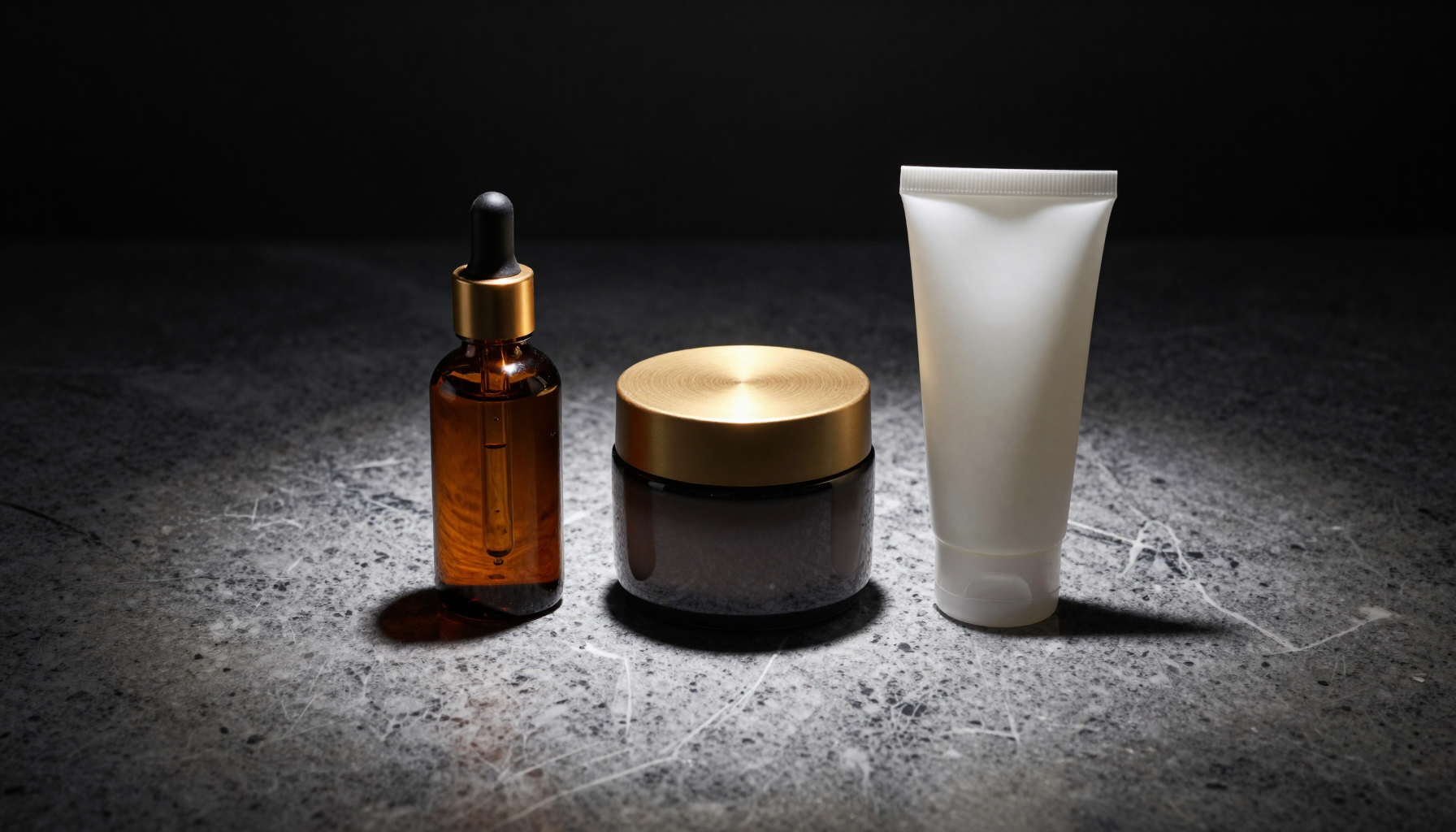
Every product in a considered skincare routine earns its place. Quality over quantity. Consistency over complexity.
The most common questions, answered directly
Is it too late to start at 45, 50, or 55?
No. The research is unambiguous on this point. Collagen stimulation through retinoids and peptides has been clinically demonstrated in men well into their 50s and 60s. In other words, the skin responds to active ingredients and lifestyle improvements at any age. You are not too late. You are exactly on time.
Do I really need a separate face cleanser?
Yes. Body washes are formulated for the thicker, more robust skin of the body and consequently contain surfactants and fragrances that are too harsh for facial skin, particularly after 40 when the barrier is more fragile. As a result, using body wash on your face regularly contributes to dryness, irritation, and accelerated barrier breakdown.
My skin is oily. Do I still need moisturiser?
Yes. Oily skin after 40 is often a sign of a compromised skin barrier producing excess oil as a compensatory response to underlying dehydration. When you correctly hydrate and support the barrier, oil production typically normalises over time. Therefore, choose a lightweight, oil-free moisturiser containing hyaluronic acid and niacinamide rather than skipping this step entirely.
How long before I see real results?
Hyaluronic acid and moisturiser produce visible plumping within days. Subsequently, niacinamide shows pore and texture improvements within 2 to 4 weeks, and vitamin C improves radiance within 3 to 4 weeks. Retinol shows initial texture improvements within 4 to 8 weeks, with significant anti-aging benefits building from 12 to 24 weeks. Meanwhile, SPF prevents future damage from today forward, compounding invisibly over years.
Should I see a dermatologist?
For the routine described in this guide, no prescription or medical visit is required. However, for men with specific concerns such as rosacea, persistent acne, or significant sun damage, an annual dermatology visit is an excellent investment. In addition, annual skin cancer screenings are recommended for all men over 40 with significant sun exposure history.
Your weekly schedule at a glance
Every morning: Cleanser, vitamin C serum, moisturiser with peptides, eye cream, SPF.
Monday, Wednesday, Friday evenings: Cleanse, retinol, rich moisturiser, eye cream.
Tuesday, Thursday evenings: Cleanse, rich moisturiser, eye cream. No retinol.
Tuesday or Thursday (choose one): Add exfoliating acid on a non-retinol night.
Daily lifestyle: 7 to 9 hours of quality sleep, 2 litres of water minimum, exercise, whole-food nutrition, managed stress.

This is what the routine delivers over time: not perfection, but the confidence that comes from showing up for yourself consistently.
Taking care of your skin is not vanity. It is not indulgence. It is the daily decision that you are worth showing up for. Make that decision consistently, and everything else follows.
Sources and research references
Journal of Investigative Dermatology (2018, 2019) | Clinical, Cosmetic and Investigational Dermatology (2020) | JMIR Dermatology, Exercise and Skin Function Narrative Review (2024) | MDPI Cosmetics, Enhancing Skin Anti-Aging Through Healthy Lifestyle Factors (2023) | PMC, Male versus Female Skin: What Dermatologists and Cosmeticians Should Know | PMC, Modulating the Testosterone Pathway in Male Skin Aging | Dermato-Endocrinology, Discovering the Link Between Nutrition and Skin Aging | London Dermatology Centre, Male Skin Ageing Over 40 | Nebraska Medicine Dermatology, Dr. Ronald Sulewski | Forefront Dermatology, Proactive Aging for Men in Their 30s and 40s | OTS Dermatology, Skincare Ingredients That Deliver Real Results | News-Medical, Do Popular Skincare Ingredients Like Niacinamide and Retinol Actually Work (2025)
The information in this guide is intended for educational purposes and reflects current dermatological research. It does not constitute medical advice. Always consult a qualified dermatologist or healthcare professional before starting any new skincare regimen, particularly if you have existing skin conditions or sensitivities.
men’s skincare routine over 40
men’s anti-aging skincare
andropause skin
retinol for men
men’s grooming guide
testosterone skin aging
peptides for men
men’s wellness
Belldiva
luxury grooming
niacinamide benefits
skin collagen after 40
Beauty from the Inside Out
Explore the Belldiva Men’s Wellness Collection
Over 70 luxury brands curated for quality, efficacy, and genuine wellness at every stage of life. For men who believe their quality of life is worth every bit of attention they give it.
Luxury Beyond Boundaries • Rooted in Care, Refined in You
Explore Men’s Wellness Brands on Belldiva
Lumin
Blu Atlas
Jaxon Lane
Beardbrand
Scotch Porter
Bevel
Liomen
Kiehl’s
Murad
SkinCeuticals
Paula’s Choice
The Ordinary
Elemis London
Elizabeth Arden ✦
Life Extension
Lululemon
Nike
Headspace
Calm
Fitbit
Organifi
Ritual
Lumen
Fiji Water
✦ Affiliate partnership. Belldiva may earn a commission on purchases made through these links at no extra cost to you.