How Hormones Affect Your Skin and How to Build a Routine That Works With Them
What estrogen, progesterone, androgens, and cortisol actually do to your skin, and how to build a hormone skincare routine that responds to every phase.
Menopause
Cycle Syncing
Andropause
Men & Women
By Belldiva Editorial • 2026 • 12–15 min read

Your hormones follow a predictable rhythm. A skincare routine built around that rhythm delivers results that no single product can replicate on its own.
There is a reason your skin looks luminous one week and congested or dry the next. Often the products have not changed at all. Hormones are behind almost every significant shift in skin behaviour, and building a hormone skincare routine around those shifts produces clearly better results than a fixed daily approach. This guide covers the biology of how hormones affect your skin and what changes across the menstrual cycle, during perimenopause, menopause, and andropause. It also explains how to build a routine that works with your body’s natural rhythms. All sources are from peer-reviewed research published between 2023 and 2026.
Why hormones influence your skin more than most products do
Estrogen, progesterone, androgens, and cortisol each have direct effects on your barrier, sebum, collagen, and inflammation. Understanding them is the foundation of a hormone skincare routine that actually responds to your biology.
The most skin-protective hormone: estrogen
Estrogen is the most skin-protective of all the hormones. It stimulates collagen production, supports the skin barrier, promotes hydration, and reduces sebaceous gland activity. When estrogen levels are high, the skin appears smoother, more even, and more resilient. Research published in the International Journal of Molecular Sciences (2025) confirmed that estrogen receptors are present throughout the skin. Estrogen directly regulates cell activity, which is the mechanism behind collagen synthesis. When estrogen declines, collagen production slows, the barrier weakens, and the skin becomes drier and more reactive. This decline occurs during the luteal phase, during perimenopause, and permanently after menopause.
Sebum, androgens, and progesterone
Progesterone rises during the luteal phase and increases sebum output through its androgenic activity. Research published in the Journal of Investigative Dermatology (2024) confirmed this mechanism and noted that progesterone-driven sebum changes contribute directly to the congestion and pre-menstrual breakouts many people experience. Additionally, androgens including testosterone are present in all people regardless of gender. They are the primary drivers of sebaceous gland activity. Higher androgen activity produces more sebum, larger pores, and a greater tendency toward follicle congestion. Chronically elevated cortisol also disrupts the skin barrier and accelerates collagen breakdown. It operates through inflammation pathways that act separately from the reproductive hormones.
What hormonal fluctuations look and feel like
The practical result of these interactions is a skin that behaves differently across a monthly cycle, across life stages, and under sustained stress. You are not imagining the differences. They are documented and addressable with a responsive approach. Rather than wondering why the same products produce different results at different times, a hormone-aware routine uses the predictability of these fluctuations as a planning tool.
Your skin is not random. It follows a rhythm. A routine built around that rhythm delivers results that no single product can replicate alone.
Reduction in dermal collagen in the years following menopause (Climacteric, 2024)
Menstrual cycle phases, each shaping skin behaviour in its own distinct way
For retinoid-driven skin improvements to fully show during hormonal transitions
The menstrual cycle and your hormone skincare routine, phase by phase
For those who experience a menstrual cycle, the skin follows a consistent and predictable pattern across four phases. Knowing each one turns your routine from reactive to intentional.
Each phase has a distinct hormonal profile that shapes how the skin behaves and which products it responds to most effectively. The four phases together form a complete cycle, and a routine that accounts for each one produces more consistent results than a single daily approach applied regardless of where you are in that cycle.
Menstrual
Days 1–5
Menstrual phase: barrier repair and recovery
Both estrogen and progesterone are at their lowest. As a result, the skin barrier is at its most reactive. Sensitivity, redness, and dryness are common. This is not the time for aggressive actives. Instead, focus on gentle cleansing, ceramides, peptides, and niacinamide.
Products: Kiehl’s and Clarins suit this phase well, with barrier-focused formulas built for comfort rather than correction.
Follicular
Days 6–13
Follicular phase: the window for actives
Rising estrogen drives the skin’s most productive period. The barrier strengthens, collagen synthesis increases, and the skin becomes more tolerant of potent actives. This is the ideal time to use your retinoid, apply a chemical exfoliant, and run a high-potency vitamin C serum.
Products: Paula’s Choice BHA exfoliants and SkinCeuticals C E Ferulic are well suited to this phase.
Ovulatory
Days 14–16
Ovulatory phase: maintain, protect, and let the skin shine
Estrogen reaches its monthly peak and skin looks its best. The barrier is strong and the skin is well-hydrated. The focus is on maintaining what the body produces naturally. Continue with antioxidants and daily SPF. This is the phase to protect, not to intervene.
Products: Ultra Violette and Elizabeth Arden ✦ both produce daily SPF suited to continuous use across all skin types.
Luteal
Days 17–28
Luteal phase: manage oil, congestion, and pre-menstrual sensitivity
Progesterone and androgens rise together, increasing sebum and creating the congested skin many people notice before menstruation. A BHA exfoliant used once or twice weekly keeps follicles clear. Niacinamide regulates sebum without stripping the barrier. Keep actives light and deliberate rather than cumulative.
Products: Murad and The Ordinary both offer targeted products for sebum control and congestion during this phase.
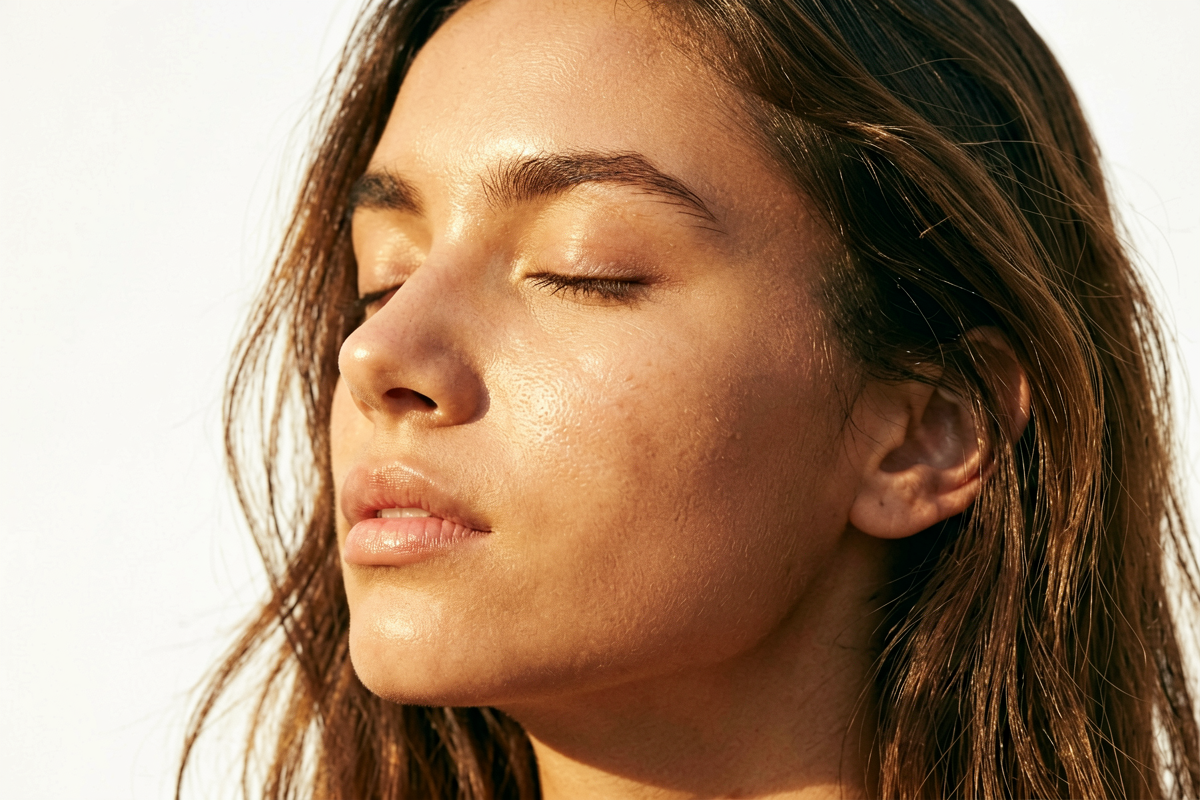
The follicular phase is the skin’s most productive window. Rising estrogen strengthens the barrier and supports collagen, making it the ideal time to introduce or intensify your active ingredients.
Perimenopause, menopause, and the hormone skincare routine that responds
The decline of estrogen during perimenopause and its permanent reduction after menopause produces some of the most significant shifts in skin behaviour across a lifetime.
What changes and why
Research published in Climacteric (2024) confirmed that estrogen loss reduces dermal collagen by approximately 30 percent in the years following menopause, contributing to thinning skin, reduced elasticity, and a compromised barrier. Furthermore, sebum production declines alongside estrogen, which increases dryness and skin reactivity. Many people find that products which worked well before begin causing irritation during perimenopause. This reflects real changes in barrier sensitivity, not product failure. Breakouts can also increase during perimenopause. As estrogen and progesterone fall, androgens temporarily become relatively more dominant, creating a skin that combines dryness and sensitivity with congestion at once.
Barrier first. Ceramide and peptide-rich moisturisers address the barrier compromise that estrogen loss produces. Estée Lauder and Lancôme both produce products with dense hydration suited to these changes.
Retinoids, consistently. They remain the most proven topical ingredient for this transition, addressing collagen loss, surface texture, and pigmentation at once. As the Belldiva collagen banking guide covers, building collagen reserves during hormonal transitions is the most smart skincare investment available. RoC ✦ produces accessible retinoid products across multiple strengths for precisely this purpose.
SPF, every morning. UV exposure accelerates the collagen loss that hormonal changes already drive. Daily broad-spectrum SPF is essential during and after the transition. As the Belldiva daily SPF guide covers, consistent sun protection compounds the investment of everything else in the routine.
The barrier is most capable when estrogen is rising. Use that window with intention, and protect it carefully when estrogen falls.
Andropause and men’s hormone skincare routine
Hormonal skin changes are not exclusive to those who menstruate or experience menopause. Testosterone decline in men produces significant and often overlooked shifts in skin behaviour.

Andropause unfolds gradually, which can make its effects feel like simply getting older. Understanding the biology behind it opens up specific, targeted ways to respond.
The specific skin changes to expect
Testosterone decline reduces sebum production, which causes the skin to become drier and less naturally lubricated than before. Furthermore, lower testosterone correlates with decreased collagen density and skin thickness, producing the textural changes and loss of firmness many men notice over time. Research in the Journal of Cosmetic Dermatology (2024) confirmed that androgen decline in men produces clear reductions in skin elasticity and barrier function. The mechanism is similar to estrogen-driven changes, though the timeline differs. Retinoids, peptide serums, and consistent SPF use are the most proven approaches for men navigating these shifts. Brickell, Lumin, and Jaxon Lane all offer products developed for men at this phase of hormonal transition.
The practical hormone skincare routine: principles and products
A hormone-aware approach does not require a separate product for every phase. It requires knowing which ingredients to prioritise, which to scale back, and when.
Align your active use with hormonal resilience
Use retinoids and exfoliants when estrogen is rising or at its peak, since the barrier can handle them most effectively at those points. During low-hormone phases, scale back actives and focus on barrier support. This approach is consistent with the evidence behind skin cycling: planned recovery periods produce better long-term outcomes than uninterrupted daily active use. Consistency matters more than intensity, and a routine you maintain through every phase delivers more than one you abandon during difficult weeks.
Prioritise barrier support throughout all phases
Ceramides, niacinamide, peptides, and gentle cleansers belong in the routine at every phase. They become the primary focus during barrier-vulnerable periods. Elemis London and Dr. Brandt ✦ both produce barrier-focused products that support skin resilience without adding unnecessary actives. Additionally, barrier health during low-estrogen phases protects the results built during high-estrogen phases, making it a strategic investment rather than a passive step.
Treat nutrition as part of the routine
No topical routine fully compensates for what the body is not receiving internally. Zinc supports sebum regulation, omega-3 fatty acids maintain barrier integrity, and B vitamins support cell repair throughout the cycle. HUM Nutrition, Ritual, Organifi, and Life Extension all offer products that support hormonal balance and skin health from within. Fiji Water, with its naturally high silica content, is a consistent and simple way to support skin health from the inside out.
Common questions about a hormone skincare routine
Direct answers to the questions that come up most often when people begin building a routine around their hormonal cycle.
Questions about adapting the routine
Can I follow a hormone-aware routine if I use hormonal birth control?
Yes, with some adjustments in expectations. Hormonal contraceptives suppress the natural cycle and flatten the fluctuations that drive phase-based skin changes. Many people on hormonal contraception notice more consistent skin behaviour across the month. However, the type of contraceptive matters greatly: progesterone-dominant types can increase sebum and congestion in some people, while combined oestrogen-progesterone types often improve acne. The core principles of barrier support, regular active use, and daily SPF still apply regardless of contraceptive method.
My skin is both dry and breaking out. What is happening?
This is one of the most common concerns during perimenopause and during the luteal phase. It reflects a skin in which estrogen has declined enough to compromise the barrier, while androgens remain sufficient to drive sebum activity. Focus on barrier repair with ceramides and niacinamide, use a single BHA exfoliation night rather than daily exfoliation, and avoid products that over-strip. The Ordinary and Paula’s Choice both offer products that address congestion without compromising the barrier.
Questions about results and timelines
How long does it take to see results from a hormone-aware routine?
Surface improvements in congestion and dryness typically become visible within two to four weeks of consistent phase-appropriate care. Deeper changes in skin density, collagen, and pigmentation require three to six months of consistent active use during the appropriate phases. Therefore, commit to the approach for at least one full cycle before evaluating whether adjustments are needed. The biology moves slowly, and patient consistency steadily outperforms reactive product switching.

Hormonal skin changes affect everyone. The biology differs by hormone type and timeline, but the core principles of barrier support, active use, and consistent SPF apply across all genders and life stages.
At Belldiva, we believe that understanding your skin means understanding your body. When your routine works with your biology rather than against it, the results are not just better. They are lasting.
Sources and research references
Raine-Fenning NJ, Brincat MP, Muscat-Baron Y. Skin aging and menopause: implications for treatment. Climacteric. 2024 | International Journal of Molecular Sciences. Estrogen receptors and skin barrier function: mechanisms and clinical implications. 2025 | Chen WC, Zouboulis CC. Hormones and the pilosebaceous unit. Dermatoendocrinology. 2024 | Journal of Investigative Dermatology. Progesterone and sebaceous gland activity across the menstrual cycle. 2024 | Journal of Cosmetic Dermatology. Androgen decline and skin changes in men: a comparative study. 2024 | Arck P et al. Neuroimmunology of stress: skin takes centre stage. Journal of Investigative Dermatology. 2023 | Dermatology and Therapy. Cortisol-mediated inflammation pathways in chronic skin conditions. 2025
The information in this guide is for educational purposes and reflects research current to mid-2026. It does not constitute medical advice. Please consult a qualified dermatologist or healthcare professional before beginning any new skincare regimen, particularly if you are managing a diagnosed skin condition or hormonal health concern.
Rooted in Care. Refined in You.
Explore Belldiva’s Curated Skincare Collection
Over 70 luxury brands in beauty, skincare, hair, and wellness. Every brand chosen for genuine excellence and real results.
Luxury Beyond Boundaries • Rooted in Care, Refined in You
Belldiva’s Curated Beauty and Wellness Brands
All Belldiva Brands
Huda Beauty
Charlotte Tilbury
Sephora
MAC
Dior
Katini Skin
Ultra Violette
NYX Cosmetics
The Ordinary
Verb Products
BK Beauty
Prada Beauty
Estée Lauder
Vasanti Cosmetics
Brickell
Lumin
Blu Atlas
Liomen
Jaxon Lane
Beardbrand
Scotch Porter
Bevel
Menfirst
Atlas
SkinCeuticals
Lululemon
Mindful
Headspace
Calm
Fitbit
MyFitnessPal
Noom
Peloton App
Organifi
Ritual
HUM Nutrition
Nike
YSL (Saint Laurent Beauty)
Lancôme
Clinique
NARS
Elizabeth Arden ✦
Victoria Beckham Beauty
Make Up For Ever
Valentino Beauty
Bobbi Brown
Shiseido
Benefit Cosmetics
Smashbox
Kylie Cosmetics
Urban Decay
Sigma Beauty
Stila ✦
Clarins
Tarte Cosmetics
PUR Cosmetics
Glossier
Elemis London
Kiehl’s
Murad
Paula’s Choice
Viori Beauty ✦
Life Extension
Lumen
Fiji Water
Anastasia Beverly Hills
Serious Skincare
Qure Skincare
Armani Beauty
Dr. Brandt ✦
hormone skincare routine
hormonal skin changes
cycle syncing skincare
menopause skincare
hormonal acne
estrogen and skin
andropause skincare
perimenopause skin
skincare routine
Belldiva skincare