
Why Daily SPF Is the Most Underrated Luxury in Your Skincare Routine
The science of what UV actually does to your skin, what SPF numbers really mean, and how to build a daily sun protection habit that holds for the long term.
Sun Protection
Photoaging
Skin Longevity
All Skin Tones
SPF for Men
By Belldiva Editorial • 2026 • 12–15 min read
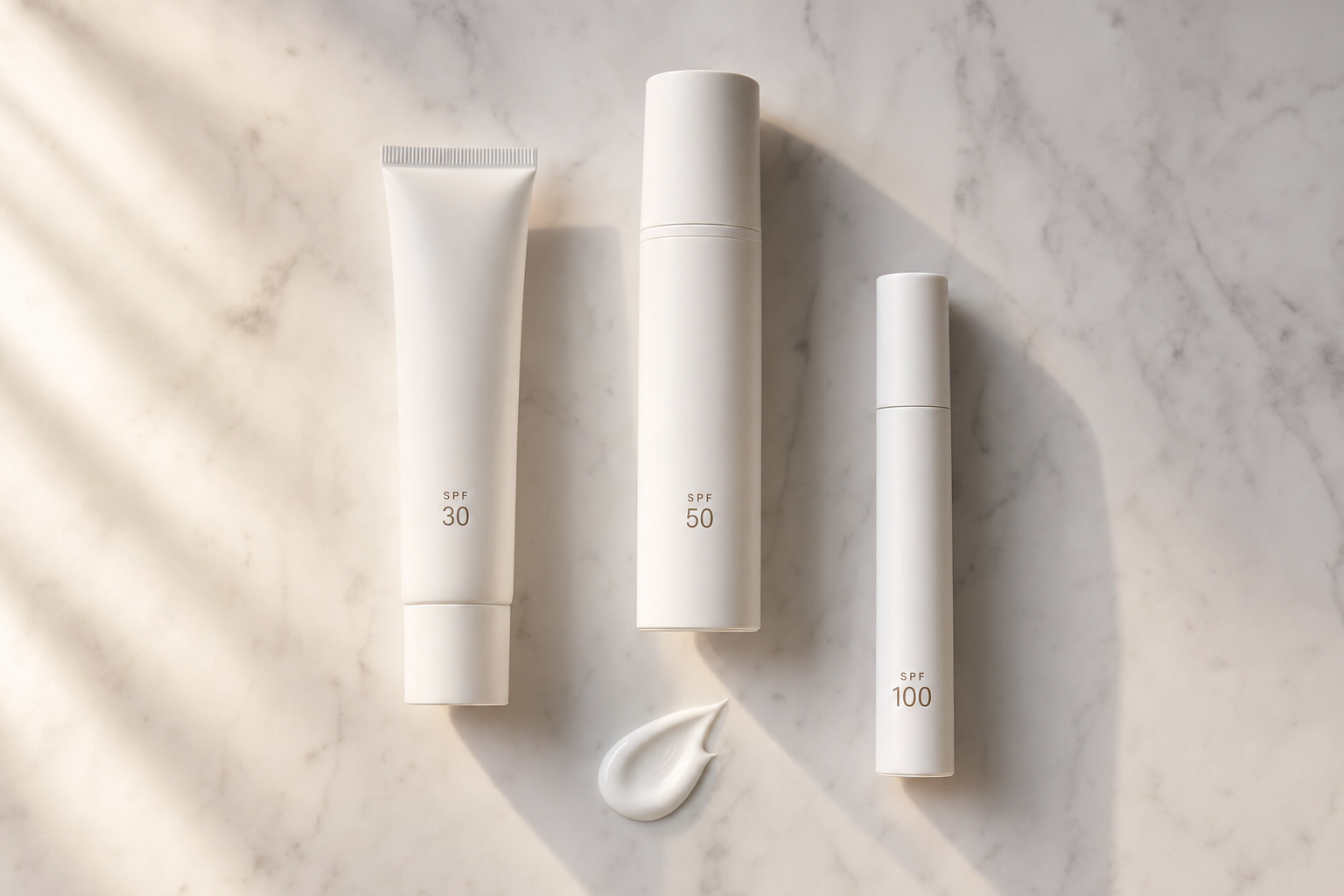
Daily SPF is not simply sunscreen. It is the single most evidence-backed step in skincare, and the only one that prevents damage before it occurs.
The most important step most people skip
Every dermatologist says the same thing, and daily SPF remains the most skipped step in most people’s routines. Not because they disagree with the evidence. More often, it is because SPF feels like a chore. It feels like a precaution rather than an investment. This guide reframes that entirely.
Daily SPF is not simply sunscreen in the reductive sense that word often implies. Rather, it is the single most evidence-backed tool in skincare. It is the one product dermatologists cite above retinoids, above vitamin C, and above any treatment for long-term skin health. Specifically, understanding why it holds that position changes how you feel about applying it every morning. It changes what it means.
Notably, sun protection concerns affect everyone regardless of skin tone, gender, or lifestyle. UV radiation does not make exceptions. This guide is written for anyone who wants to understand what the science supports. It covers how to choose the right formula and how to build a habit that holds. All research referenced is from peer-reviewed sources published between 2023 and 2026.
What this guide covers
You will find the biology of what UV exposure actually does to skin, what SPF numbers mean in practice, the chemical versus mineral debate resolved with current evidence, how to apply SPF correctly including the amount most people get wrong, why daily SPF matters for every skin tone, and how to build SPF into a realistic daily routine. Direct answers to the questions that come up most often are included throughout.
No serum, no retinoid, and no treatment produces the preventive benefit of consistent daily SPF. Other products correct and repair. Daily SPF prevents.
Of UVB blocked by SPF 30 when applied at the correct volume
Of UV radiation that penetrates cloud cover on overcast days (BJD, 2024)
Of visible skin aging attributed to UV exposure (Scientific Reports, 2025)
Part One: What UV Actually Does to Your Skin
Understanding the biology of UV damage is the starting point for understanding why daily SPF matters. The science here is both settled and compelling.
The science of photoaging and why it compounds silently
Ultraviolet radiation is the primary driver of skin aging. A 2025 systematic review in Scientific Reports confirmed that UV-induced photoaging is the primary cause of skin deterioration. UV radiation produces reactive oxygen species that degrade collagen and elastin fibres. The visible results are largely the consequence of unprotected UV exposure over time. These include fine lines, uneven pigmentation, textural changes, and loss of firmness. This is not a cosmetic opinion. It is a biological fact with a substantial and consistent evidence base.
There are two forms of UV radiation relevant to daily skin health. UVB is the shorter wavelength ray responsible for visible burning and redness. UVA, by contrast, has a longer wavelength and penetrates more deeply into the dermis. It does not produce an immediate visible response. UVA is present throughout the day, including in winter and through glass. It does not diminish significantly on overcast days. Consequently, the skin accumulates UVA damage silently and consistently, regardless of whether it appears sunny outside.
The compounding nature of UV damage is what makes daily SPF so significant. A 2024 review in Photochemistry and Photobiology confirmed that cumulative UV exposure builds over a lifetime. The photoaging visible in later years is largely the result of exposure accumulated from early adulthood onward. Importantly, this means that a daily SPF habit started at any point prevents new damage from accruing. That is a meaningful and measurable benefit regardless of when it begins.
UVB (burning ray): Shorter wavelength. Responsible for visible sunburn and redness. Intensity varies with the season, time of day, and cloud cover. SPF numbers specifically measure UVB protection.
UVA (aging ray): Longer wavelength. Penetrates the dermis and drives photoaging, hyperpigmentation, and collagen breakdown. Present year-round at near-constant levels. Passes through glass and cloud cover. The PA rating (+ through ++++) measures UVA protection specifically.
Broad-spectrum SPF addresses both. A product labelled broad-spectrum has been tested to protect against UVA as well as UVB, making it the only meaningful choice for daily sun protection.
SPF as biological prevention, not cosmetic coverage
The most accurate framing for daily SPF is biological, not cosmetic. When you apply SPF every morning, you are not simply preventing sunburn. Rather, you are preserving the collagen infrastructure that determines how your skin looks and functions over time. You are protecting the DNA of skin cells from UV-induced mutations. Over decades, these mutations produce the visible and structural changes associated with skin aging. You are also preventing the ROS cascade that degrades elastin and compromises the skin barrier. This inflammatory process is what researchers now call inflammaging.
Put plainly: no serum, no retinoid, and no treatment produces the preventive benefit of consistent daily SPF. Other products correct, repair, or compensate for existing damage. Daily SPF prevents the damage from occurring in the first place. The Belldiva skin longevity guide covers this in depth. The longevity framework prioritises upstream prevention over downstream correction, and daily SPF sits at the very foundation of that approach.
UV radiation is present in morning and afternoon light, through glass and cloud cover year-round. Daily SPF is the most direct intervention for preserving the skin you have today.
Part Two: Understanding SPF Numbers
The number on the label is not simply a higher-is-better scale. Here is what SPF ratings actually measure and what they mean in daily practice.
What SPF 30, 50, and 100 actually mean
SPF stands for Sun Protection Factor. The number indicates the degree to which the formula reduces UVB radiation reaching the skin. Specifically, SPF 30 blocks approximately 97 percent of UVB rays. SPF 50 blocks 98 percent, and SPF 100 blocks 99 percent. These figures are closer together than the numbers suggest. Dermatologists typically recommend SPF 30 as the minimum for daily use. SPF 50 is recommended for extended outdoor exposure or for those with particular photosensitivity concerns.
Critically, no SPF provides complete protection. Additionally, the figures above assume correct application, which most people do not achieve. Research consistently shows that the average person applies only one quarter to one half of the required amount. This significantly reduces the actual protection received. In practice, SPF 50 applied incorrectly may deliver protection closer to SPF 15 or lower. The application technique therefore matters as much as the number on the label.
Broad-spectrum protection and the UVA rating
In addition to the SPF number, broad-spectrum labelling is essential. An SPF without broad-spectrum coverage protects only against UVB, leaving UVA largely unaddressed. Broad-spectrum formulas contain filters that address both. In Asia-Pacific markets, a PA rating (PA+ through PA++++) indicates UVA protection specifically. PA++++ represents the highest level of UVA shielding currently available in consumer products. Health Canada requires that broad-spectrum SPF products demonstrate UVA coverage through specific testing protocols. This makes the broad-spectrum designation a meaningful standard rather than simply a marketing claim.
Ultra Violette is a brand built specifically around the science of effective, wearable daily SPF. Their formulations are designed to deliver both high UVB and UVA protection in textures that make consistent daily use achievable across different skin types and routines.
Part Three: Chemical Versus Mineral SPF
The debate between chemical and mineral filters generates significant consumer confusion. Here is what the current evidence actually supports.
How each type of filter works
SPF formulas fall into two broad categories: chemical filters and mineral filters. Chemical filters work by absorbing UV radiation and converting it to a small amount of heat energy. The skin then releases this heat. Common chemical filters include avobenzone, octocrylene, tinosorb S, and tinosorb M. These formulas tend to be lighter in texture and easier to blend. They are also less likely to leave a visible white cast, which makes them more practical for daily use across a wide range of skin tones.
Mineral filters, primarily zinc oxide and titanium dioxide, work by reflecting and scattering UV radiation away from the skin. They are well-tolerated by sensitive and reactive skin types. Their safety profile is strong, with decades of clinical use. However, they can leave a white or greyish cast on medium to deeper skin tones. This has historically limited their accessibility. Newer formulations using micronised zinc oxide particles have improved this significantly. Tinted mineral formulas now make the category considerably more inclusive.
What the current evidence says
The debate about chemical versus mineral SPF centres particularly on the systemic absorption of chemical filters. A 2024 review in the Journal of the American Academy of Dermatology confirmed that some chemical UV filters are detectable in the bloodstream following application. However, no clinical evidence currently demonstrates harmful effects at the levels resulting from normal cosmetic use.
The American Academy of Dermatology, Health Canada, and the European Medicines Agency share the same position. They maintain that the benefits of consistent SPF use substantially outweigh any theoretical risk from chemical filter absorption. In short, the best daily SPF is the one you will actually use consistently. Texture, finish, and compatibility with your existing routine should guide your choice at least as much as filter type.
SkinCeuticals produces broad-spectrum SPF formulations grounded in the same evidence-based approach that underpins their antioxidant range. Shiseido has decades of UV protection research behind its high-SPF formulations. Paula’s Choice produces both chemical and mineral broad-spectrum options for daily facial use across a range of skin types and sensitivities.
Part Four: Daily SPF for Every Skin Tone
One of the most persistent myths in skincare is that deeper skin tones do not need daily sun protection. The evidence is unambiguous on this point.
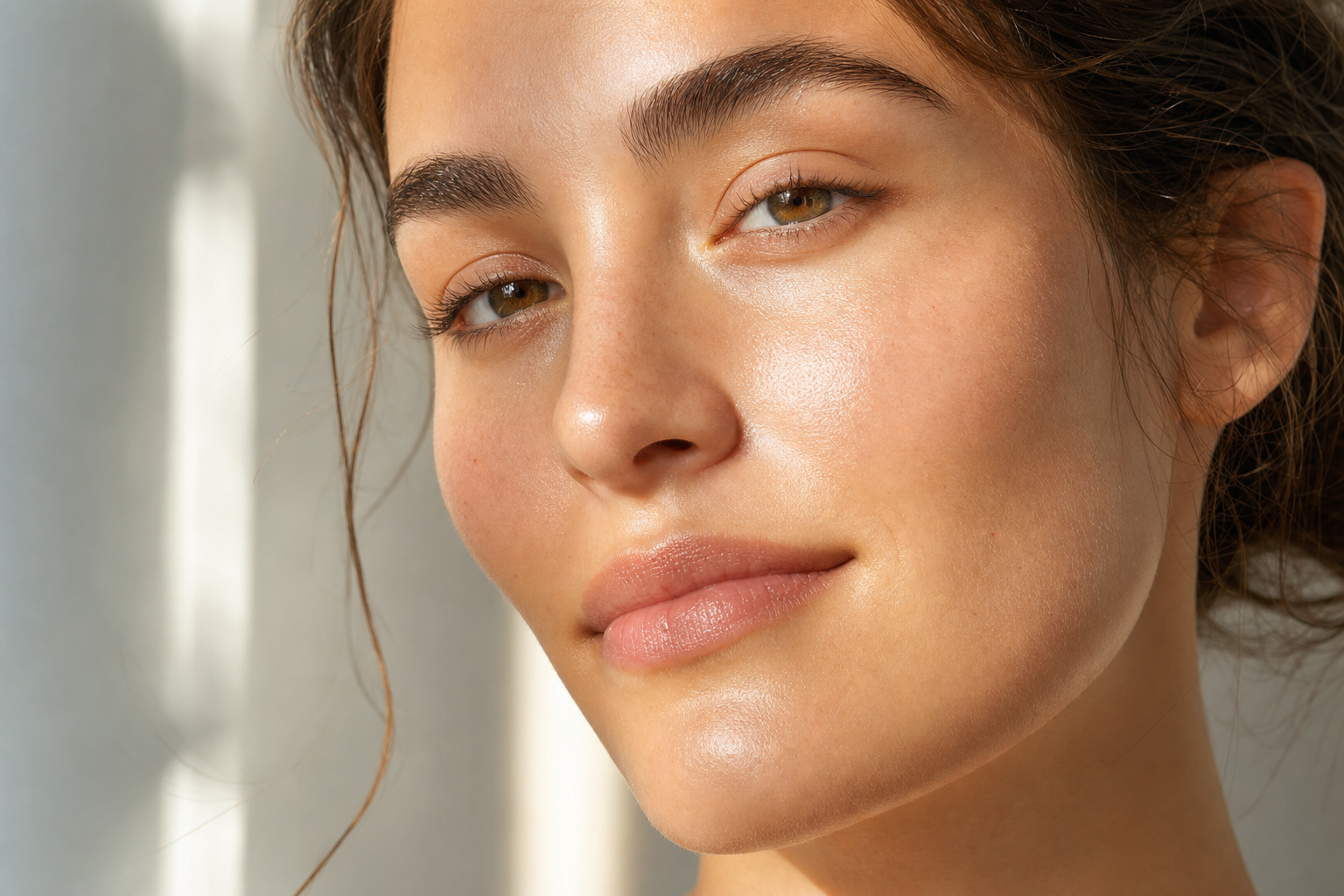
Daily SPF is essential for every skin tone. Melanin provides some natural UV protection, but not enough to replace broad-spectrum SPF for sustained daily exposure.
Dispelling the myth that deeper skin tones do not need protection
One of the most persistent and damaging myths in skincare is that people with medium to deep skin tones do not need daily SPF. The claim is that higher melanin content provides sufficient natural protection. This is misleading and, at its most consequential, harmful.
Melanin does provide some degree of natural UV protection. Research in the Journal of Investigative Dermatology estimated this to be approximately SPF 13 in very dark skin. By comparison, lighter skin has a natural equivalent of approximately SPF 3.4. This is a meaningful biological difference, but it is not adequate protection for sustained daily unprotected exposure. Photoaging, hyperpigmentation, and melasma are directly driven by UV exposure. All three conditions significantly affect people with medium to deep skin tones. Additionally, skin cancer is diagnosed at later and more advanced stages in people with deeper skin tones. Statistically less common does not mean absent. In part, this is because the myth of natural protection has reduced preventive awareness.
A 2024 review in JAMA Dermatology confirmed that consistent daily SPF use reduces the incidence of hyperpigmentation. It also prevents post-inflammatory pigmentation from worsening and supports an even complexion across all skin tones. For anyone with hyperpigmentation or melasma as a primary concern, daily SPF is not optional. It is the foundation on which every other treatment depends.
Formulations designed for every skin tone
The practical barrier for many people with medium to deep skin tones has historically been the white cast from mineral SPF formulas. Chemical broad-spectrum formulations resolve this entirely. Many newer mineral formulations with tinted or tone-adapting technology have also made mineral SPF increasingly accessible. Fenty Beauty produces SPF-containing products specifically formulated with broad shade inclusivity in mind. These address the needs of medium to deep skin tones directly. Vasanti Cosmetics produces formulations designed with South Asian and deeper skin tones in mind, with particular attention to complexion compatibility and finish.
For anyone with hyperpigmentation or melasma as a primary concern, daily SPF is not optional. It is the foundation on which every other treatment depends.
Part Five: How to Apply Daily SPF Correctly
Knowing you should wear SPF is not enough. How you apply it determines whether the label’s protection level is actually what your skin receives.
The amount matters more than most people realise
The most common error in SPF application is using too little. The SPF number on the label is tested at 2 milligrams of product per square centimetre of skin. In practice, this corresponds to approximately one teaspoon (5 millilitres) for the face and neck combined. For the face alone, a quarter of a teaspoon is the guide. Most people apply considerably less than this, typically around one quarter to one third of the required amount. The actual protection received is therefore significantly lower than the label indicates.
A practical guide is the two-finger rule for the face. Squeeze product along the length of both index and middle fingers placed together, and apply this amount as your face dose. Apply SPF as the final step in your morning routine, after moisturiser and before any colour cosmetics. Allow it to settle for approximately 30 seconds before applying makeup if needed. Reapplication every two hours is the clinically supported guidance for sustained outdoor exposure. For office or predominantly indoor environments, a single thorough morning application is generally adequate.
Volume: One teaspoon for the face and neck combined. The two-finger rule is a reliable guide for the face alone. Apply to the neck, ears, and any sun-exposed décolleté as separate steps.
Timing: Apply as the final skincare step, after moisturiser and serums, before any colour cosmetics. Allow 30 seconds to settle before applying makeup.
Reapplication: Every two hours for sustained outdoor exposure. For indoor environments, one thorough morning application is generally adequate. SPF sprays and powder-over SPF formulas make reapplication practical without disrupting makeup.
Most common mistake: Applying less than the required volume and assuming the labelled SPF is what you are receiving. Underprotection is the most consistent error in daily SPF use, and it has a straightforward fix: apply more.
SPF and men’s grooming routines
Historically, daily SPF adoption has been lower in men than in women. This is driven partly by the perceived incompatibility of sunscreen with grooming routines. It is also driven by the absence of skincare education specifically targeting men. The biology, however, is identical. UV radiation damages collagen, elastin, and skin cell DNA in men’s skin in exactly the same way as in women’s. The rate of damage is the same. The long-term consequences, including premature wrinkling, textural changes, and uneven pigmentation, are equally visible. Brickell and Lumin both produce SPF-containing facial moisturisers that integrate daily sun protection into a minimal-step grooming routine. These directly address the texture and routine-fit barriers that have historically limited male SPF adoption.

Daily SPF is a morning routine step for both men and women. UV radiation affects all skin equally, and consistent protection is the most evidence-backed habit in skincare regardless of gender.
Part Six: Building a Daily SPF Routine
The most consistent barrier to daily SPF is not knowledge. It is finding a formula that actually works with your routine. Here is how to make it hold.
Choosing the right formula for your skin type
The single greatest practical barrier to consistent daily SPF is not knowledge. Most people understand they should be wearing it. The barrier is texture, finish, or the perception that SPF is incompatible with a comfortable routine. Consequently, choosing the right formula for your specific skin type removes the biggest obstacle to consistency.
Oily or combination skin types do well with a lightweight fluid or gel SPF. This type does not contribute to congestion or a heavy finish. For dry skin, a hydrating SPF moisturiser that doubles as the final hydration step simplifies the routine significantly. Those with sensitive skin will find that a fragrance-free mineral or hybrid formula minimises the risk of reactivity. The more naturally daily SPF fits into your existing routine, the more consistently it will be applied. Consistency matters more than any other variable in SPF efficacy.
Elizabeth Arden ✦ produces SPF-containing day creams that deliver both hydration and broad-spectrum protection in a single step. This reduces the friction of adding a separate product. Clarins produces SPF day fluids that combine antioxidant actives with UV protection. This extends the skin longevity benefit beyond simple photoprotection. Dr. Brandt ✦ incorporates photoprotection into their anti-aging skincare range. This reflects the understanding that UV prevention is inseparable from long-term skin health.
Your daily SPF routine at a glance
Every morning: Cleanse, then apply your serum. If moisturiser is separate from your SPF, apply it next. Finish with a teaspoon-volume of broad-spectrum SPF 30 or higher as the final skincare step. Allow 30 seconds before any makeup.
For sustained outdoor time: Reapply every two hours. SPF sprays and powder-over formulas make reapplication practical without disrupting makeup.
Every season: Daily SPF is a year-round habit, not a summer precaution. UVA penetrates cloud cover almost entirely and is present at consistent levels throughout the year, including winter. It also passes through standard glass. The Belldiva scalp health guide covers an often-overlooked area: the scalp, ears, and neck accumulate UV exposure without the protection that hair provides for many people.
Part Seven: Your Daily SPF Questions, Answered
Direct, evidence-based answers to the questions that come up most consistently when people begin taking daily sun protection seriously.
Questions about SPF in moisturisers and daily habits
Is SPF in my moisturiser or foundation enough?
SPF in moisturisers and foundations provides genuine protection. However, the volume required to achieve the stated protection level is rarely applied in practice. Most people apply far less than the 2 milligrams per square centimetre required for the label’s SPF to be accurate. Consequently, a dedicated daily SPF product is the most reliable way to ensure adequate protection. Using a moisturiser with SPF is considerably better than no SPF at all. It should not replace a dedicated application when consistent protection is the goal, however.
Is daily SPF necessary on cloudy days or in winter?
Yes. UVA, the primary photoaging ray, penetrates cloud cover almost entirely and is present at consistent levels throughout the year. Research published in the British Journal of Dermatology confirmed that up to 80 percent of UV radiation penetrates cloud cover. Furthermore, UVA passes through standard glass. Exposure through car windows, office windows, and home windows therefore accumulates daily regardless of weather. Consistent year-round daily SPF is clinically supported.
Can I skip SPF if I spend most of my day indoors?
SPF is less critical in a genuinely window-free environment. However, most indoor days include commuting, proximity to windows, and brief outdoor moments that result in cumulative exposure. For anyone concerned about photoaging, hyperpigmentation, or skin longevity, daily SPF is a consistent and low-effort habit with a disproportionately high return. The evidence is clear that it is the most impactful single step in any skin health routine.
Questions about skin tone and vitamin D
Does SPF cause vitamin D deficiency?
Current evidence does not support the conclusion that normal daily facial SPF use causes vitamin D deficiency. A 2025 review in the British Journal of Dermatology examined this question specifically. It found that vitamin D levels in people who use SPF regularly are not significantly different from those who do not. This is because incidental UV exposure through windows and uncovered areas of the body continues to drive vitamin D synthesis. Facial SPF does not prevent this. If vitamin D intake is a concern, oral supplementation through a daily supplement is the most reliable and controllable approach. Further guidance is available on the Belldiva skincare resource page.
Does daily SPF affect skin’s natural processes over time?
No evidence supports the idea that consistent SPF use impairs skin function over time. The skin’s natural processes, including cell turnover, barrier repair, and sebum regulation, are not dependent on UV exposure. They are not compromised by its consistent reduction through SPF. By contrast, the long-term damage avoided through consistent daily SPF supports skin function over time. This includes collagen preservation and reduced DNA mutation accumulation.
At Belldiva, we believe that daily SPF is one of the most considered investments you can make in your skin. It begins every morning, takes less than a minute, and works quietly for the rest of your life.
Sources and research references
Peer-reviewed studies and clinical research
Lin L, Chen X et al. Comparative efficacy of topical interventions for facial photoaging: a network meta-analysis of randomised controlled trials. Scientific Reports. July 2025 | Afsar FS. Ultraviolet radiation-induced photoaging: mechanisms and prevention. Photochemistry and Photobiology. 2024 | Journal of the American Academy of Dermatology. Systemic absorption of chemical UV filters and clinical safety review. 2024 | Gupta AK et al. Photoprotection and daily SPF use in skin of colour: clinical implications. JAMA Dermatology. 2024 | Journal of Investigative Dermatology. Melanin content and natural photoprotection across skin phototypes. 2023
British Journal of Dermatology. UV radiation penetration through cloud cover and glass: a systematic measurement study. 2024 | British Journal of Dermatology. Daily sunscreen use and vitamin D synthesis: a systematic review and meta-analysis. 2025 | Health Canada. Sun Safety Guidelines for Canadians. 2024 | Canadian Dermatology Association. Sun Safety and Photoprotection Guidelines. 2024
The information in this guide is intended for educational purposes and reflects dermatological research current to early 2026. It does not constitute medical advice. Please consult a qualified dermatologist or healthcare professional before beginning any new skincare regimen, particularly if you have existing skin conditions or photosensitivity concerns.
Rooted in Care. Refined in You.
Explore Belldiva’s Curated Skincare Collection
Over 70 luxury brands in beauty, skincare, hair, and wellness. Every brand chosen for genuine excellence and real results.
Luxury Beyond Boundaries • Rooted in Care, Refined in You
Belldiva’s Curated Beauty and Wellness Brands
Huda Beauty
Charlotte Tilbury
Sephora
MAC
Dior
Katini Skin
Ultra Violette
NYX Cosmetics
The Ordinary
Verb Products
BK Beauty
Prada Beauty
Estée Lauder
Vasanti Cosmetics
Brickell
Lumin
Blu Atlas
Liomen
Jaxon Lane
Beardbrand
Scotch Porter
Bevel
Menfirst
Atlas
SkinCeuticals
Lululemon
Mindful
Headspace
Calm
Fitbit
MyFitnessPal
Noom
Peloton App
Organifi
Ritual
HUM Nutrition
Nike
YSL (Saint Laurent Beauty)
Lancôme
Clinique
NARS
Elizabeth Arden ✦
Victoria Beckham Beauty
Make Up For Ever
Valentino Beauty
Bobbi Brown
Shiseido
Benefit Cosmetics
Smashbox
Kylie Cosmetics
Urban Decay
Sigma Beauty
Stila ✦
Clarins
Tarte Cosmetics
PUR Cosmetics
Glossier
Elemis London
Kiehl’s
Murad
Paula’s Choice
Viori Beauty ✦
Life Extension
Lumen
Fiji Water
Anastasia Beverly Hills
Serious Skincare
Qure Skincare
Armani Beauty
Dr. Brandt ✦
daily SPF
SPF skincare
sun protection routine
broad-spectrum SPF
SPF for all skin tones
SPF for men
photoaging prevention
skin longevity
UVA UVB protection
Belldiva skincare