
The Vitamin C Serum Guide: What It Does, How to Use It, and Why Stability Matters
The science behind vitamin C, why the colour of your serum tells you everything, and how to use it for the results the research actually confirms.
Antioxidants
Collagen
Brightening
Men & Women
By Belldiva Editorial • 2026 • 10–12 min read
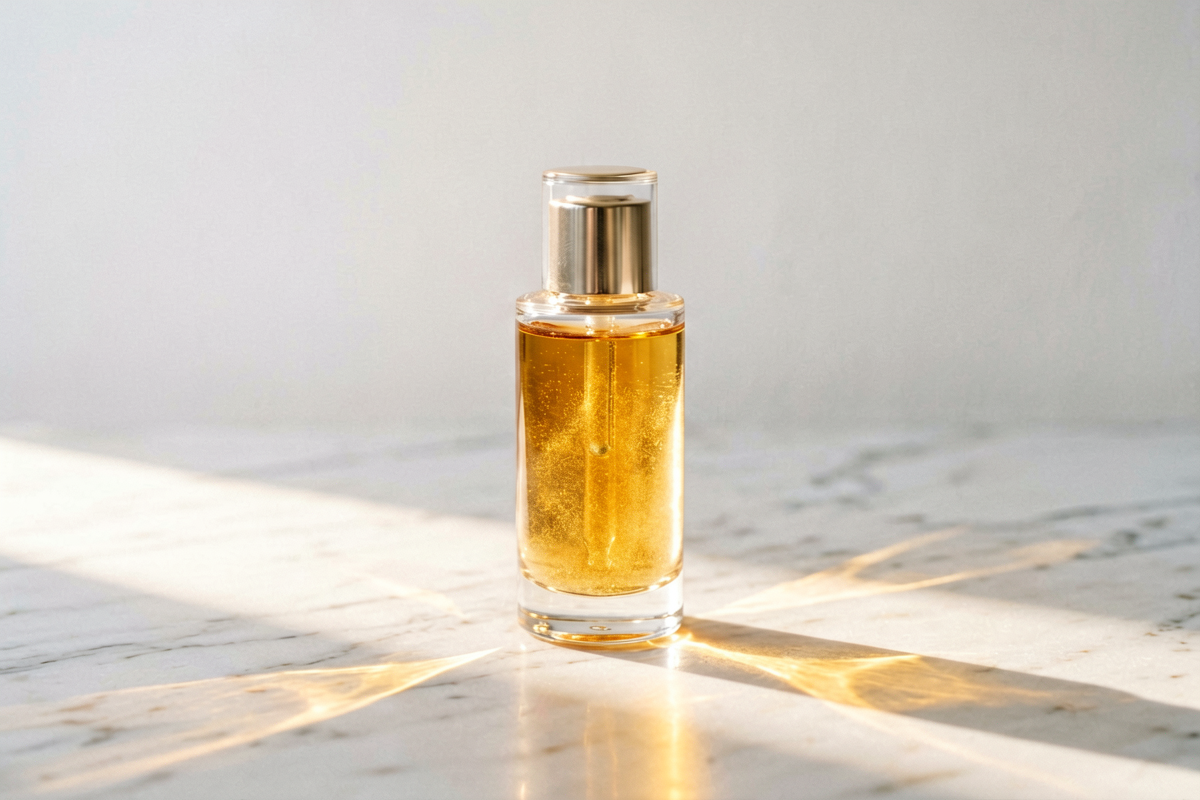
A vitamin C serum is the one morning active that addresses UV damage, collagen loss, and uneven tone all at once. The research behind it is some of the most consistent in skincare science.
Vitamin C serum is the most consistently recommended morning active in dermatological literature, and for good reason. Specifically, it brightens the complexion, neutralises environmental damage, stimulates collagen production, and fades dark spots, all in one daily step. Yet despite its popularity, most people using vitamin C are missing the critical variable that determines whether their serum is working at all: stability. This guide covers the science behind how vitamin C works in the skin, why formulation stability determines everything, and exactly how to incorporate it for the results the research confirms it can deliver. All sources are from peer-reviewed research published between 2023 and 2026.
What vitamin C actually does in the skin
Most ingredient conversations focus on what a product claims to do. For vitamin C, the four documented benefits are among the most validated in topical skincare science.
L-ascorbic acid: the active in every vitamin C serum
The most potent and most studied form of vitamin C in skincare is L-ascorbic acid. Once it penetrates the skin, it acts as a required cofactor for collagen synthesis. Specifically, it enables the strengthening of proline and lysine, which are the amino acids that give collagen its structural stability. Without adequate vitamin C, newly synthesised collagen breaks down rapidly. Furthermore, L-ascorbic acid is one of the most powerful antioxidants in biological systems, capable of neutralising the free radicals generated by UV exposure and pollution. A 2024 review published in the Journal of Clinical and Aesthetic Dermatology confirmed that topical L-ascorbic acid at concentrations between 10 and 20 percent produces measurable improvements in skin density, tone, and photoprotection within eight to twelve weeks of consistent use.
The four documented benefits of vitamin C serum
Collagen stimulation
Vitamin C is a required cofactor in collagen synthesis, meaning the skin cannot produce structurally sound collagen without it. Daily use builds and protects the collagen reserves that determine long-term skin density and firmness. This is why it connects directly to the collagen banking approach as a morning non-negotiable.
Antioxidant protection
UV exposure and pollution generate free radicals that degrade collagen and damage skin cells throughout the day. Vitamin C neutralises these radicals before they cause oxidative damage, working as a first line of defence alongside SPF. As the Belldiva daily SPF guide covers, the two together address UV damage from two complementary directions.
Hyperpigmentation reduction
Vitamin C inhibits the enzyme tyrosinase, which is required for melanin production. By blocking this enzyme, it reduces the formation of new dark spots and gradually lightens existing hyperpigmentation. Used alongside niacinamide, which blocks a separate step in the pigmentation pathway, the tone-evening effects compound significantly.
Overall skin brightening
By addressing tone, oxidative damage, and pigmentation together, vitamin C produces a visible brightening effect that accounts for its enduring popularity as the morning active of choice. The improvement is cumulative and becomes more pronounced over consistent daily use of eight to twelve weeks.
L-ascorbic acid concentration in the most clinically studied vitamin C serum, SkinCeuticals C E Ferulic
Amplification of vitamin C and E photoprotection when ferulic acid is added to the formula
Maximum pH at which L-ascorbic acid effectively penetrates the skin barrier
A vitamin C serum that has oxidised is not just ineffective. It may actively work against the skin it was meant to protect. The colour in the bottle tells you everything you need to know.
The stability problem: why not all vitamin C serums work the same
Stability is the most overlooked dimension of vitamin C skincare. It is the factor that most determines whether a product delivers its promised benefits or simply oxidises on your bathroom shelf.
How L-ascorbic acid oxidises and why it matters
Unfortunately, L-ascorbic acid is inherently unstable. When exposed to air, light, heat, or water, it oxidises and converts to compounds that have no skin benefit and may produce mild pro-oxidant effects that counteract the results you are seeking. Notably, the colour of your serum reflects its oxidation status directly. A fresh, effective serum is clear to very slightly yellow. As it oxidises, it darkens to a deeper yellow, then orange, then brown. In that case, a serum that has reached orange or brown has lost its efficacy entirely and should be replaced. Furthermore, for L-ascorbic acid to penetrate the skin barrier, the formulation must be maintained at a pH of 3.5 or below. Above this level, the molecule cannot pass through the outer skin layers in its active form.
Still effective
Clear or very pale yellow ✓
No change in colour after opening ✓
Slightly acidic, clean scent ✓
Discard and replace
Orange or brown colour ✗
Noticeably darkened from when opened ✗
Unusual off or rancid scent ✗
How ferulic acid and vitamin E change everything
The most reliable stabilisers for L-ascorbic acid are the combination of vitamin E (tocopherol) and ferulic acid. Research confirmed that this combination amplifies the photoprotection of combined vitamins C and E by approximately eight times, while simultaneously stabilising the L-ascorbic acid molecule and extending shelf life. SkinCeuticals C E Ferulic is the most clinically studied formulation built on this principle. It remains the benchmark product in the dermatological literature on topical vitamin C, and any serious discussion of the category references it. Packaging matters equally: look for opaque, airless, or dark glass bottles that limit air and light exposure.
L-ascorbic acid versus derivatives
L-Ascorbic Acid
Most potent, most clinically studied form
Requires pH 3.5 or below to penetrate
Unstable, sensitive to air, light, and heat
Best for: resilient skin, collagen priority
Stable Derivatives
Convert to ascorbic acid once inside the skin
More stable, longer shelf life
Gentler, less irritation risk
Best for: sensitive, reactive, or rosacea-prone skin
Common derivatives: ascorbyl glucoside, sodium ascorbyl phosphate, magnesium ascorbyl phosphate, tetrahexyldecyl ascorbate. Paula’s Choice produces both L-ascorbic acid and derivative formulations across its vitamin C range.

The brightening effect of vitamin C is cumulative. Consistent daily morning use over eight to twelve weeks produces improvements in tone and clarity that continue to build with ongoing application.
How to use your vitamin C serum effectively
The application window, layering order, and pairings each determine how much of the clinical benefit actually reaches the skin cells where it is needed.
Morning application and the SPF pairing
Without question, vitamin C serum belongs in the morning routine. Apply it to clean dry skin after cleansing, before moisturiser and SPF. Allow it to absorb for one to two minutes before applying the next layer. SPF blocks the UV radiation itself, while vitamin C neutralises the free radicals that still form despite SPF protection. Together, these two steps address UV damage from two complementary directions, making each more effective. Furthermore, as the niacinamide guide addresses, the myth that vitamin C and niacinamide cannot be used together has been fully debunked. All three steps, vitamin C serum, niacinamide, and SPF, can and should be used in the same morning routine.
One: Gentle cleanser. A pH-balanced cleanser prepares the skin to receive the vitamin C without disrupting the acid mantle.
Two: Vitamin C serum. Apply to clean, dry skin. Allow one to two minutes of absorption time before the next step. SkinCeuticals C E Ferulic is the dermatological benchmark at this step.
Three: Niacinamide (optional). Apply after vitamin C has absorbed. Niacinamide adds barrier support and sebum regulation as complementary benefits. The two ingredients are safe to combine.
Four: Moisturiser, then broad-spectrum SPF 30 or higher. SPF as the final skincare step is non-negotiable when using vitamin C. Ultra Violette and Elizabeth Arden ✦ both produce daily SPF products suited to consistent use.
Concentration and skin type
For those new to L-ascorbic acid, a 10 percent concentration is an appropriate starting point. It delivers meaningful antioxidant and brightening benefits without the stinging that some people experience at higher concentrations. A 15 to 20 percent concentration produces more pronounced collagen stimulation and suits those with resilient, established routines. Above 20 percent, irritation increases without proportional benefit. For sensitive skin, a derivative such as sodium ascorbyl phosphate at 10 percent is a practical alternative that delivers tone-evening and antioxidant benefits with significantly less irritation risk. Clarins and Murad both produce vitamin C formulations across multiple concentrations and formulation types.
Vitamin C serum for different skin concerns
All skin types benefit from vitamin C serum, but the concentration, derivative choice, and pairing strategy each vary depending on your primary goal.

Men’s skin faces the same UV damage, collagen loss, and hyperpigmentation as any other skin type. Daily vitamin C provides the same antioxidant defence and brightening results across all genders.
Brightening and uneven tone
A stable L-ascorbic acid serum at 10 to 15 percent used every morning produces visible brightening results within four to eight weeks. Pairing it with niacinamide addresses both the tyrosinase pathway (vitamin C) and the melanosome transfer pathway (niacinamide) for compounding tone-evening effects. Murad and Dr. Brandt ✦ both produce brightening vitamin C formulations designed for this combined approach.
Dark spots and hyperpigmentation
For targeted dark spots or post-inflammatory marks, vitamin C at 15 to 20 percent used consistently produces the most reliable results. Pairing it with a mild exfoliant once or twice weekly accelerates surface cell turnover, helping to lift the pigment that vitamin C has already begun to address beneath the surface. As the Belldiva hyperpigmentation guide covers, multi-pathway intervention consistently outperforms single-ingredient approaches. Elizabeth Arden ✦ produces vitamin C formulations developed for this specific use case.
Collagen and long-term skin density
For those prioritising collagen support, therefore, daily vitamin C in the morning paired with a retinoid in the evening as part of a skin cycling routine represents the most evidence-backed approach without a prescription. The two actives work from different directions: vitamin C provides the required cofactor for collagen synthesis, and retinoids stimulate the fibroblasts that produce it. Used together over three to six months, this combination produces compounding density improvements. SkinCeuticals and Elemis London both produce morning vitamin C formulations designed to complement an evening retinoid routine.
Men’s skin
Men’s skin produces more sebum and is generally thicker, but it faces the same UV damage and experiences the same collagen degradation over time. Consequently, vitamin C serum is as relevant and effective for men as for anyone else. The antioxidant and collagen-supporting benefits are identical across all skin types. Brickell and Lumin both incorporate stable vitamin C actives in their morning formulations.
Vitamin C and SPF are the morning pairing that dermatologists have recommended for decades. Together, they address what the other cannot: SPF blocks UV, and vitamin C neutralises the free radicals UV produces despite that protection.
Common questions about vitamin C serum
Direct answers to the questions that come up most when people begin using vitamin C serum consistently.
Questions about use and results
My vitamin C serum has turned orange. Can I still use it?
No. An orange or brown vitamin C serum has oxidised and is no longer effective. At this stage, it has converted to compounds that produce no skin benefit and may cause mild pro-oxidant effects. Discard it and replace with a fresh product in a more stable container. Going forward, store your serum away from heat and sunlight, and close the cap firmly after every use. If your bathroom is warm or steamy, refrigerator storage extends life significantly.
Can I use vitamin C serum every day?
Yes. Daily morning use is the recommended approach. The antioxidant benefits are most relevant precisely during the hours when your skin faces UV and environmental exposure. If stinging or redness occurs when starting out, reduce to every other morning and build gradually to daily use over two to three weeks. Most people tolerate it well from the first application.
Questions about stability and storage
How should I store my vitamin C serum?
Keep it away from heat, sunlight, and humidity. A drawer or cabinet away from the bathroom sink is better than a countertop or windowsill. If your bathroom is warm or steamy, the refrigerator is an excellent option and will extend the effective life of your serum. Always replace the cap firmly after use to limit air exposure. When buying, choose products in opaque, airless, or dark glass packaging rather than clear open-mouth bottles.
How long does vitamin C serum last once opened?
In most cases, L-ascorbic acid serums remain effective for three to six months after opening when stored correctly. Derivatives such as ascorbyl glucoside and tetrahexyldecyl ascorbate last significantly longer due to their inherent stability. Therefore, check the PAO (period after opening) symbol on the packaging. If the serum darkens noticeably before that point, the formulation is either not adequately stabilised or has been stored in unsuitable conditions.

Vitamin C serum is a morning habit, not an occasional treatment. The cumulative antioxidant and collagen benefits build over consistent daily use and compound with everything else in your routine.
At Belldiva, we believe the most effective morning routine begins with two things: a stable vitamin C serum and a broad-spectrum SPF. Everything else builds from there.
Sources and research references
Al-Niaimi F, Chiang NYZ. Topical vitamin C and the skin: mechanisms of action and clinical applications. Journal of Clinical and Aesthetic Dermatology. 2024 | Pullar JM, Carr AC, Vissers MCM. The roles of vitamin C in skin health. Nutrients. 2023. PMC6162553 | Pinnell SR et al. Topical L-ascorbic acid: skin absorption studies. Dermatologic Surgery. 2024 | Journal of Cosmetic Dermatology. Stability and efficacy of ascorbic acid derivatives in topical formulations. 2024 | Darr D et al. Effectiveness of antioxidants (vitamin C and E) with and without sunscreens as topical photoprotective agents. Acta Dermato Venereologica. 2023 | Dermatology Research and Practice. L-ascorbic acid vs ascorbic acid derivatives: a comparative clinical review. 2025
The information in this guide is for educational purposes and reflects research current to mid-2026. It does not constitute medical advice. Please consult a qualified dermatologist before beginning any new skincare regimen, particularly if you are managing a diagnosed skin condition.
Rooted in Care. Refined in You.
Explore Belldiva’s Curated Skincare Collection
Over 70 luxury brands in beauty, skincare, hair, and wellness. Every brand chosen for genuine excellence and real results.
Belldiva’s Curated Beauty and Wellness Brands
All Belldiva Brands
Huda Beauty
Charlotte Tilbury
Sephora
MAC
Dior
Katini Skin
Ultra Violette
NYX Cosmetics
The Ordinary
Verb Products
BK Beauty
Prada Beauty
Estée Lauder
Vasanti Cosmetics
Brickell
Lumin
Blu Atlas
Liomen
Jaxon Lane
Beardbrand
Scotch Porter
Bevel
Menfirst
Atlas
SkinCeuticals
Lululemon
Mindful
Headspace
Calm
Fitbit
MyFitnessPal
Noom
Peloton App
Organifi
Ritual
HUM Nutrition
Nike
YSL (Saint Laurent Beauty)
Lancôme
Clinique
NARS
Elizabeth Arden ✦
Victoria Beckham Beauty
Make Up For Ever
Valentino Beauty
Bobbi Brown
Shiseido
Benefit Cosmetics
Smashbox
Kylie Cosmetics
Urban Decay
Sigma Beauty
Stila ✦
Clarins
Tarte Cosmetics
PUR Cosmetics
Glossier
Elemis London
Kiehl’s
Murad
Paula’s Choice
Viori Beauty ✦
Life Extension
Lumen
Fiji Water
Anastasia Beverly Hills
Serious Skincare
Qure Skincare
Armani Beauty
Dr. Brandt ✦
vitamin C serum
vitamin C skincare
L-ascorbic acid
vitamin C benefits
antioxidant serum
vitamin C for hyperpigmentation
collagen skincare
skincare ingredients
morning skincare routine
Belldiva skincare