

Active Body Care: Why Your Body Deserves the Same Ingredients as Your Face
Retinol, niacinamide, peptides, and lactic acid are no longer face-only. Here is why body skin needs the same ingredient intelligence and how to build a routine around it.
Active Ingredients
Routine Building
Skin Texture
Men & Women
By Belldiva Editorial • June 2026 • 11–13 min read
For years, the most sophisticated skincare ingredients stayed firmly above the jawline. Retinol lived in serums and eye creams. Niacinamide appeared in toners and face moisturisers. Peptides were reserved for anti-ageing concentrates. Meanwhile, the rest of the body made do with basic lotion, a bar of soap, and the occasional exfoliating scrub. That separation is now ending. In 2026, the active body care routine is one of the fastest-growing categories in skincare, driven by a growing recognition that the skin below the neck is the same organ as the skin above it and deserves the same level of formulation intelligence. This guide covers why it matters, which ingredients are most relevant, and how to build an active body care routine that actually works. All research cited is from peer-reviewed sources published between 2023 and 2026.

The skin below the neck covers the vast majority of the body’s surface area. It ages, it reacts, and it responds to active ingredients just as readily as facial skin.
Why your active body care routine matters: the case for better body skin
The face receives daily attention, professional treatments, and a multi-step routine. The body gets rinsed, dried, and forgotten. Here is why that imbalance matters.
Body skin is not simpler skin. It is just different skin.
Body skin shares the same fundamental structure as facial skin: epidermis, dermis, barrier function, sebaceous glands, and all. However, it differs in several meaningful ways. The skin on the trunk, arms, and legs is generally thicker, with a more robust stratum corneum, but it also has fewer sebaceous glands, which means it produces less natural oil and is more prone to dryness. Furthermore, body skin is exposed to friction from clothing, UV through everyday wear, and the cumulative effects of hot showers and harsh body washes on a daily basis. A 2024 paper in the Journal of Cosmetic Dermatology confirmed that body skin shows the same measurable decline in ceramide content, skin thickness, and natural moisturising factor over time as facial skin, and that topical active ingredients produce comparable improvements in both locations.
The areas body care most commonly neglects
Certain areas of the body age faster and show texture changes earlier than others, yet receive almost no targeted attention. The hands, in particular, lose collagen and volume at a rate comparable to the face and are exposed to UV and environmental damage constantly. The neck and chest are frequently included in sun damage discussions but rarely addressed in moisturising or active ingredient routines. The elbows, knees, and heels develop chronic thickening and roughness from pressure and friction. The upper arms and thighs commonly develop keratosis pilaris, a condition caused by a build-up of keratin blocking hair follicles, which responds well to targeted acid exfoliation. Addressing these areas requires nothing more complicated than redirecting some of the ingredient intelligence already applied to the face.
Approximate surface area of skin on the average adult body
Body care named the fastest growing skincare category in 2026 (Cosmetics Business Trend Report)
Time to measurable texture improvement with consistent active body care use (JCAD, 2025)

The skin on arms, legs, and hands responds to active ingredients in the same way facial skin does. The difference is simply that nobody told body care to catch up until now.
The active ingredients that belong in your body care routine
The same ingredients that transformed face routines over the last decade are now being formulated specifically for body application. Here are the five most impactful.
01
Lactic acid: the best starting point for body exfoliation
Lactic acid is an alpha hydroxy acid that loosens the bonds between dead skin cells and accelerates their shedding, revealing smoother skin beneath. On the body, it is particularly effective for keratosis pilaris on the upper arms, rough texture on the shins and thighs, and chronic dryness on the elbows and heels. It is gentler than glycolic acid, making it a better choice for body skin, which tends to be more reactive to acids than the face because it is less accustomed to them. A 2024 clinical review in the British Journal of Dermatology confirmed that 10 to 12 percent lactic acid applied twice weekly produced significant improvements in keratosis pilaris texture within eight weeks. Brands like Paula’s Choice and The Ordinary carry lactic acid body formulations that work well as a twice-weekly treatment layered under your regular body moisturiser.
02
Niacinamide: barrier support and tone evening for the body
Niacinamide, or vitamin B3, is as valuable on the body as it is on the face. It supports barrier function, reduces surface redness, helps even out skin tone on areas prone to discolouration, and regulates oil production in areas where congestion occurs. On the body, niacinamide is particularly useful for the back, chest, and shoulders, where breakouts driven by heat, sweat, and friction are common. It is also beneficial for the neck and chest where UV-related uneven tone tends to develop over time. Murad and SkinCeuticals both carry niacinamide-containing body formulations that address tone and barrier health simultaneously.
03
Retinol: collagen support from neck to toe
Retinol accelerates cell turnover and stimulates collagen production, two mechanisms that are just as relevant below the jawline as above it. Body retinol is now available in wash-off and leave-on formats, with leave-on body lotions proving most effective in clinical settings. Because body skin is less accustomed to retinoids than facial skin, starting at a low concentration once or twice per week and building gradually is the right approach. The neck and chest are the priority areas for retinol on the body, given how much UV damage accumulates there over time. Additionally, the hands benefit significantly from a low-concentration retinol applied at night, supporting collagen density in skin that loses volume visibly and quickly. RoC ✦ and Elizabeth Arden ✦ both carry retinol-containing formulations suitable for neck, chest, and hand application.
04
Peptides: firming and structural support for body skin
Peptides are short chains of amino acids that signal the skin to produce collagen and elastin. On the face, they are a staple of anti-ageing serums and moisturisers. On the body, they are increasingly included in targeted firming lotions and body serums, particularly for the inner arms, thighs, and abdomen. A 2025 review in the International Journal of Cosmetic Science found that body lotions containing signal peptides produced measurable improvements in skin firmness and density within twelve weeks of daily use. Because peptides work gradually and cumulatively, they reward consistent daily application more than periodic intensive use. Elemis London and Clarins both carry peptide-containing body formulations designed specifically for areas prone to loss of firmness over time.
05
Body SPF: the most neglected active of all
Body SPF is not glamorous, but it is the single highest-impact habit in any active body care routine. UV damage is the leading driver of uneven tone, collagen loss, and surface texture changes on the chest, hands, arms, and legs, and yet most people apply SPF only to the face. A 2024 study in the Journal of the American Academy of Dermatology confirmed that consistent daily SPF use on the hands and neck visibly reversed UV-related skin changes within twelve months. Lightweight body SPF formulations that absorb quickly and leave no white cast have improved considerably, making the barrier to daily use lower than ever. Ultra Violette and Katini Skin both carry body SPF formulations that sit comfortably under clothing and do not interfere with the rest of the body care routine.
Your face does not stop at your jawline. Neither should your skincare.

Building a body care routine does not require a complete product overhaul. Starting with two or three targeted additions to what you already use is enough to see a meaningful difference.
Active body care for men: the same logic, a different starting point
Men’s skin on the body has specific characteristics that shape which ingredients to prioritise and how to introduce them.
Where men’s body skin needs the most attention
Men’s body skin tends to be thicker and produces more sebum than women’s, but it faces several specific challenges that basic body wash and lotion do not address. Back and chest breakouts from sweat and friction are common and benefit directly from a niacinamide-containing body wash or lotion. Rough texture on the upper arms and back responds well to a gentle lactic acid treatment used twice weekly. The neck and chest, frequently exposed to sun and overlooked in SPF application, develop uneven tone and texture over time that a targeted SPF and niacinamide routine can visibly address. Men-focused body care brands including Brickell and Lumin have expanded into body formulations that address these concerns directly, without the multi-step complexity of a full face routine.
The simplest effective body routine for men
Morning: a gentle body wash that does not strip natural oils, followed by a niacinamide or peptide body lotion applied while skin is still slightly damp, finished with SPF on exposed areas including the neck, chest, hands, and forearms. Evening: a lactic acid body lotion twice per week on rough areas, otherwise the same niacinamide or peptide moisturiser. That is four products, applied in under three minutes, producing results that compound over weeks. The principle is the same as a well-designed face routine: consistency over complexity.
The most effective body care routine is not the longest one. It is the one you actually do every day.
How to build an active body care routine step by step
The principle of layering actives on the body follows the same logic as the face: exfoliate, hydrate, protect. The timing and frequency differ slightly.
The morning body routine
Begin with a gentle, low-surfactant body wash that preserves rather than strips the skin’s natural lipids. Pat dry rather than rubbing, and apply your body lotion or serum while the skin still holds some moisture. This damp-skin application significantly improves how deeply moisture-drawing ingredients absorb. Apply niacinamide or peptide body lotion from neck to ankle, paying particular attention to the chest, hands, and any areas with visible texture or tone concerns. On days when skin will be exposed to sun, apply a broad-spectrum body SPF last on those areas before dressing. This morning sequence takes roughly two minutes once it becomes habitual.
The evening body routine and active nights
Most evenings, a nourishing body lotion or oil applied after showering is sufficient. However, two evenings per week, introduce an active treatment. On exfoliation nights, apply a lactic acid body lotion to rough or congested areas such as upper arms, back, thighs, and heels, and allow it to absorb before sleeping. On retinol nights, apply a low-concentration retinol product to the neck, chest, and hands, the three body areas that age most visibly and respond most readily to retinoid stimulation. Do not use lactic acid and retinol on the same evening on the same area. Stagger them across the week to avoid over-irritating body skin that is just beginning to adapt to actives. The skin barrier repair principles from Monday’s post apply here too: if irritation appears, scale back and focus on barrier support before reintroducing the active.
Targeted treatments for specific body concerns
Keratosis pilaris on the upper arms responds best to lactic acid twice weekly, followed by a ceramide-rich lotion to restore barrier function after the exfoliation. Rough heels and elbows respond to a higher-concentration urea or lactic acid treatment used two to three times per week, ideally applied at night under cotton socks or gloves to increase absorption. Uneven tone on the chest and neck responds to a combination of niacinamide daily and SPF every morning, with a retinol treatment on two evenings per week. Hands benefit from the same retinol and SPF approach, with a richer ceramide hand cream applied after any water exposure throughout the day. The beta-glucan guide published yesterday covers barrier-supportive ingredients that work well alongside all of these active treatments.
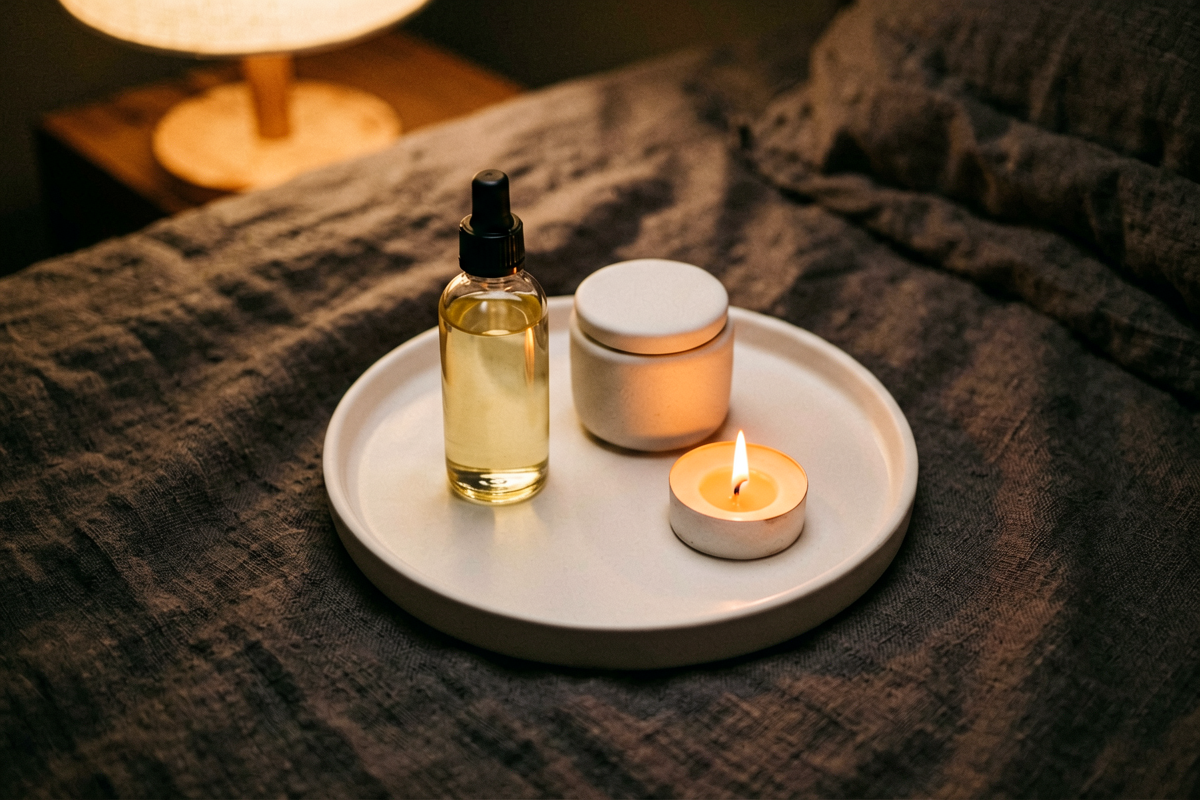
Body skin responds to consistent care in the same way facial skin does. The results are not instant, but after six to eight weeks of a targeted active routine, the difference in texture and tone is visible.
Your active body care questions answered
Common questions about using actives on the body
Can I use my face retinol on my body?
Yes, particularly for the neck, chest, and hands, where the skin is thinner and closer in nature to facial skin. Using a small amount of your existing face retinol on these areas is a practical starting point. For larger body areas such as arms and legs, a dedicated body retinol lotion is more practical and cost-effective. Start with one application per week on each area and build from there as tolerance develops.
Will lactic acid make my body skin sun-sensitive?
Yes, alpha hydroxy acids including lactic acid increase sun sensitivity for a period after application. This is why using lactic acid body products in the evening is strongly recommended, and why applying body SPF every morning is an essential companion habit. If you use lactic acid on your arms or legs two evenings per week, applying SPF to those areas every morning provides the protection needed to prevent UV-related irritation or uneven tone from developing.
How long before I see results from an active body routine?
Texture improvements from lactic acid are often noticeable within two to three weeks of consistent use. Tone improvements from niacinamide and SPF typically become visible after six to eight weeks. Firming and collagen-related results from peptides and retinol build more gradually over three to four months. The pattern mirrors what happens on the face: faster results from exfoliating ingredients, slower but more structural results from collagen-supporting ones.
More body care questions
Should I exfoliate before or after showering?
Chemical exfoliation, meaning lactic acid or glycolic acid body lotions, is applied after showering to clean, dry skin. This allows the acid to work without being diluted by water and gives it time to absorb properly overnight. Physical exfoliation with a scrub or exfoliating cloth is done during the shower on softened skin. Combining both in the same session is not recommended as it over-strips the skin barrier. Choose one approach per session and alternate them across different evenings.
Is an active body care routine necessary if I already have good skin?
Active body care is as much about maintaining what you have as it is about correcting existing concerns. Daily SPF prevents the UV damage that drives tone changes and collagen loss over time. Consistent moisturising with barrier-supportive ingredients preserves the skin’s resilience. A gentle lactic acid treatment every week keeps texture from gradually coarsening. These are preventative habits that are far easier to maintain than results to reverse. Starting earlier, before concerns become visible, is always the more effective strategy.
Your active body care routine starts with a decision
The shift toward active body care is not a fad. It reflects a more complete understanding of what good skincare actually means. The skin is a single organ. It ages across its entire surface. It responds to damage and care with equal consistency whether the area in question is the face or the forearm. The idea that only the face merited serious ingredient attention was always a limitation of product marketing rather than a reflection of biology.
Where this fits in the Belldiva philosophy
At Belldiva, the founding conviction is that wealth without wellness is incomplete. Part of that wellness is feeling at ease in your own skin, all of it, not just the part that shows above a collar. Active body care is not about chasing a particular aesthetic. It is about giving the largest organ in the body the same consistent attention the face has always received. That is a practical act of self-respect, and it requires nothing more than a few well-chosen products used with intention.
Tomorrow, the Belldiva weekly series continues with a look at red light therapy for skin: what the science actually confirms, what it does not, and how to use it effectively at home.
Wealth without wellness is incomplete. Rooted in Care. Refined in You.
Sources and research references
Draelos ZD. The science of body skin care. Journal of Cosmetic Dermatology. 2024 | Kircik LH. Lactic acid in the treatment of keratosis pilaris and rough skin texture. British Journal of Dermatology. 2024 | Fiume MM et al. Safety assessment of retinol and retinyl esters as used in cosmetics. International Journal of Toxicology. 2024 | Gorouhi F, Maibach HI. Role of topical peptides in preventing or treating aged skin. International Journal of Cosmetic Science. PMC2701610 | Hughes MCB et al. Daily sunscreen application and the prevention of photoageing. Journal of the American Academy of Dermatology. 2024 | Cosmetics Business. Body Care: The fastest growing skincare category in 2026. Trend Report. March 2026
The information in this guide is intended for educational purposes and reflects research current to June 2026. It does not constitute medical advice. If you are managing a diagnosed skin condition, please consult a qualified dermatologist before making changes to your skincare routine.
Rooted in Care. Refined in You.
Explore Belldiva’s Curated Skincare Collection
Over 70 luxury brands in beauty, skincare, hair, and wellness. Every brand chosen for genuine excellence and real results.
Belldiva’s Curated Beauty and Wellness Brands
All Belldiva Brands
Huda Beauty
Charlotte Tilbury
Sephora
MAC
Dior
Katini Skin
Ultra Violette
NYX Cosmetics
The Ordinary
Verb Products
BK Beauty
Prada Beauty
Estée Lauder
Vasanti Cosmetics
Brickell
Lumin
Blu Atlas
Liomen
Jaxon Lane
Beardbrand
Scotch Porter
Bevel
Menfirst
Atlas
SkinCeuticals
Lululemon
Mindful
Headspace
Calm
Fitbit
MyFitnessPal
Noom
Peloton App
Organifi
Ritual
HUM Nutrition
Nike
YSL (Saint Laurent Beauty)
Lancôme
Clinique
NARS
Elizabeth Arden ✦
Victoria Beckham Beauty
Make Up For Ever
Valentino Beauty
Bobbi Brown
Shiseido
Benefit Cosmetics
Smashbox
Kylie Cosmetics
Urban Decay
Sigma Beauty
Stila ✦
Clarins
Tarte Cosmetics
PUR Cosmetics
Glossier
Elemis London
Kiehl’s
Murad
Paula’s Choice
Viori Beauty ✦
Life Extension
Lumen
Fiji Water
Anastasia Beverly Hills
Serious Skincare
Qure Skincare
Armani Beauty
Dr. Brandt ✦
RoC ✦
active body care routine
body care
body skincare
lactic acid body
body retinol
keratosis pilaris
body SPF
niacinamide body
men’s body care
Belldiva skincare