
Andropause: The Hormonal Transition No One Told Men About
This is the hormonal transition behind the fatigue, mood changes, and slow physical shifts that so many men quietly write off as normal.
Testosterone
Men’s Health
Hormonal Wellness
By Belldiva Editorial • 2026 • 13–15 min read
The hormonal transition men move through later in life rarely gets a name, let alone a conversation. Women are handed a whole vocabulary for menopause, along with routines built around it. Men mostly get silence, even though the underlying biology is well documented and increasingly well understood.
Clinicians call it andropause, or more precisely, late-onset hypogonadism. It describes a slow, gradual decline in testosterone that unfolds over years rather than months. Unlike menopause, there is no single defining event.
Instead, energy fades and mood shifts. Body composition changes quietly enough that many men assume it is simply stress or a busy season.
This guide walks through what is actually happening hormonally and what a genuine diagnosis requires. It also explains what current research says about testosterone replacement therapy and its risks.
The lifestyle factors with real evidence follow after that. Every claim comes from peer-reviewed research published between 2023 and 2025. That includes one of the largest cardiovascular safety trials ever run on testosterone therapy.

Andropause rarely announces itself. It shows up first as fatigue, a shorter fuse, or a slower recovery than before.
This Hormonal Transition, and What Is Actually Happening in the Body
Before anything else, it helps to understand the biology driving this shift, since that context changes how each symptom should be read.
Why this transition rarely gets named
Andropause has gone by several names over the decades. Clinicians have called it male menopause, androgen decline, and partial androgen deficiency. Today, late-onset hypogonadism is the preferred term, since it describes the biology precisely.
A 2025 review places the prevalence at roughly two to eight percent of adult men. The rate climbs the longer the decline continues. That is a meaningful number of men living with unrecognized symptoms. Largely, that is because nothing about this transition looks dramatic from the outside.
The hormonal mechanism behind the shift
Testosterone production is governed by a feedback loop between the brain and the testes, called the hypothalamic-pituitary-gonadal axis. As men age, this signalling gradually weakens. Consequently, testosterone output slows by roughly one to two percent a year once the decline sets in.
Unlike menopause, this is not a single hormonal cliff. Instead, it is a long, gradual slope, and the pace varies considerably between individuals. This is exactly why andropause resists a tidy checklist, and why a real diagnosis matters more than symptom-spotting alone.
01
Energy and mood
Persistent fatigue, low motivation, and a flatter mood are among the most commonly reported changes. As the Belldiva stress and skin connection guide explains, chronic cortisol elevation compounds this fatigue further.
02
Muscle and body composition
Reduced muscle mass, slower recovery, and rising visceral fat frequently accompany declining testosterone. Notably, this relationship also runs in reverse, since carrying more visceral fat further suppresses testosterone.
03
Libido and sexual function
Reduced sex drive and erectile difficulty are among the most consistently documented symptoms in the research. Studies report a clear correlation between lower testosterone levels and greater severity of erectile difficulty.
04
Sleep and bone density
Lower testosterone is linked to disrupted sleep and gradual bone density loss. Both compound the fatigue the hormonal shift already causes. Sleep and testosterone affect each other in both directions, which the lifestyle section below covers in detail.
Estimated prevalence of andropause among adult men, according to a 2025 clinical review
Annual rate of testosterone decline once the hormonal transition begins
Total testosterone, in ng/dL, generally used as the clinical threshold for biochemical hypogonadism
Unlike menopause, andropause has no single defining moment. That absence of a clear starting line is exactly why so many men live with it for years before anyone gives it a name.
Getting a Real Diagnosis, Not Just a Guess
Symptoms alone cannot confirm andropause. A proper diagnosis needs bloodwork, context, and a clinician who understands the nuance involved.
What true testosterone deficiency looks like on paper
Clinical guidance generally treats a total testosterone level under 300 ng/dL as biochemically low. A level of 300 to 1000 ng/dL sits within the typical reference range. However, a single blood draw rarely tells the full story.
Testosterone naturally fluctuates throughout the day and peaks in the morning. Endocrine Society guidelines call for fasting morning blood draws. Ideally, this is confirmed on two separate occasions before any diagnosis is made.
Why symptoms alone are not enough
Fatigue, low mood, and reduced libido overlap heavily with depression, thyroid conditions, sleep disorders, and simple overtraining. For that reason, a thorough workup should rule these out before landing on andropause as the explanation.
This is also where self-diagnosis tends to go wrong. A man who assumes low testosterone and starts an unsupervised protocol may be masking something else entirely. He risks missing the actual condition driving his symptoms.
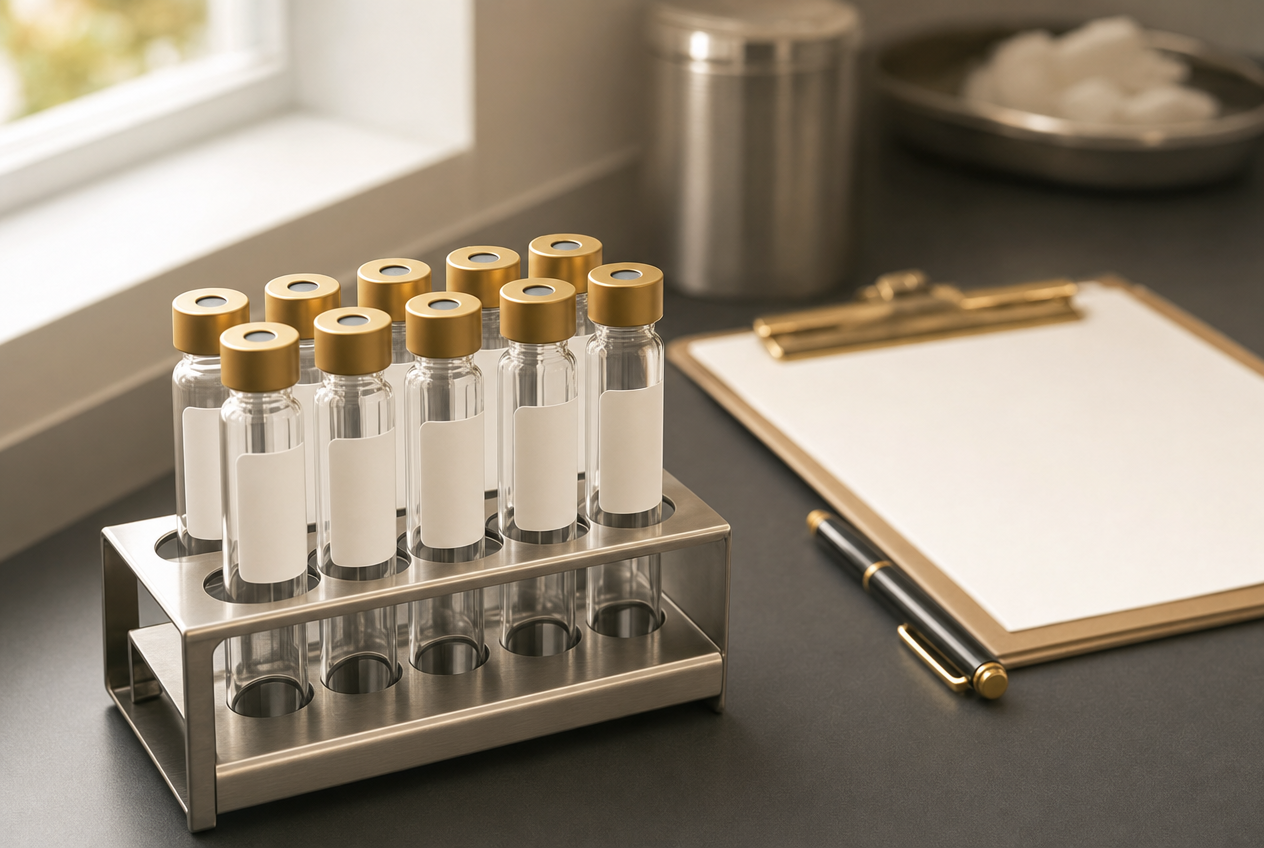
A confirmed diagnosis rests on repeated morning bloodwork, not on symptoms alone. That distinction changes everything that follows.
Testosterone Replacement Therapy: What the Evidence Actually Shows
TRT has been debated for decades, largely over cardiovascular safety. A landmark trial has finally given clinicians a clearer answer.
The cardiovascular safety question, settled by the largest trial yet
In 2023, the TRAVERSE trial delivered the most rigorous answer available on this question. Researchers followed a large group of hypogonadal men with existing cardiovascular risk. Half received testosterone gel, and half received a matched placebo.
The result was reassuring on the point that mattered most. Testosterone therapy proved noninferior to placebo for major adverse cardiovascular events. In plain terms, it did not raise the risk of heart attack, stroke, or cardiovascular death. That finding alone shifted years of cautious clinical guidance.
What TRT does not resolve, and the risks worth weighing
The same trial also surfaced real risks that deserve honest attention. Men on testosterone had a higher rate of nonfatal arrhythmias, including atrial fibrillation. They also had more blood clots and fractures than the placebo group.
A related substudy found something more encouraging. Testosterone therapy appeared to slow the progression from prediabetes toward full type 2 diabetes. Meanwhile, a separate 2023 analysis found no meaningful increase in prostate safety events.
What the TRAVERSE Trial Actually Found
Reassuring Findings
No increase in major cardiovascular events
No meaningful rise in prostate safety events
Slower progression from prediabetes to diabetes
Real Risks to Weigh
Higher rate of nonfatal arrhythmias, including atrial fibrillation
Increased venous thromboembolism risk
More fractures despite improved bone density
TRT is a legitimate medical decision for confirmed hypogonadism. It works best with a clinician who reviews your history and monitors you closely.
The largest trial ever run on testosterone therapy found real benefit alongside real risk. Honest evidence rarely hands you a clean verdict, and this is exactly that kind of finding.
Three Things the Evidence Says Actually Move the Needle
Medication is not the only lever. Several everyday factors have genuine, measured effects on testosterone, and the data behind them is strong.
✦
Weight management
Of every lifestyle factor studied, weight loss shows the strongest and most consistent effect. A 2024 meta-analysis found that low-calorie diets raised total testosterone by roughly 2.5 nmol/L. Bariatric surgery raised it by about 7.2 nmol/L on average.
A separate large-scale study found that nearly half of men with low testosterone reached a normal range afterward. The Belldiva active body care routine guide covers how to support this kind of change sustainably.
✦
Resistance training
A recent systematic review of controlled trials found that resistance training raises testosterone more than aerobic exercise. It also holds the effect longer. Separately, a randomized trial in hypogonadal men tested combining testosterone therapy with structured resistance training. The combination improved mobility and quality of life more than either approach used alone.
✦
Sleep quality
A 2024 analysis of national health survey data found that testosterone patterns shift with both sleep duration and quality. That relationship varies with a man’s stage of life. Earlier controlled research found that one week of restricted sleep measurably lowered testosterone in healthy young men. Sleep debt shows up hormonally faster than most people expect.

Of the three lifestyle factors covered here, resistance training has some of the clearest and most repeatable evidence.
Living Through This Hormonal Transition
Beyond bloodwork and treatment decisions, andropause also touches daily energy, confidence, and how a man shows up in his own life.
What this looks like day to day
Many men notice the visible signs before they notice the hormonal cause. Skin can lose some of its resilience, hair may thin, and recovery after a hard week takes longer. None of these changes are dramatic on their own.
Still, together, they add up to a real shift worth acknowledging rather than pushing through silently. A grooming routine built around barrier support can help address the visible surface. Brands like Brickell or Lumin are a reasonable place to start. The hormonal picture itself is worth sorting with a doctor.
When a conversation with a doctor is worth having
Persistent fatigue that rest does not fix is a reasonable prompt to ask for bloodwork. So is a noticeable drop in libido, ongoing low mood, or new difficulty maintaining muscle despite consistent training.
Worth a Blood Test vs Worth Urgent Care
Worth requesting bloodwork
Persistent fatigue ✓
Reduced libido or erectile changes ✓
Low mood alongside physical changes ✓
Seek urgent medical care
Chest pain or irregular heartbeat ✗
Sudden severe leg swelling or pain ✗
Any symptom that feels acute rather than gradual ✗
Wealth without wellness is incomplete, and that includes the parts of wellness men are rarely encouraged to talk about out loud.

Recovery is not passive. Consistent, quality sleep is one of the few genuinely free levers available in this entire picture.
Common Questions About This Hormonal Transition
Straightforward answers to the questions this hormonal transition raises most often once a man starts looking into it seriously.
Questions about symptoms and diagnosis
Is andropause the same as menopause?
No. Menopause involves a defined, relatively abrupt end to reproductive hormone production. Andropause is a slow, gradual decline that varies enormously between individuals, with no single defining event marking its start.
What blood test confirms low testosterone?
A fasting, morning total testosterone test is standard, ideally repeated on a separate day to confirm the result. A reading consistently under 300 ng/dL, alongside real symptoms, is generally what supports a diagnosis.
Questions about treatment and lifestyle
Does testosterone replacement therapy increase heart attack risk?
The largest trial to date found no increase in major cardiovascular events. It did find a higher rate of irregular heartbeats and blood clots. Ongoing monitoring with a doctor still matters.
Can lifestyle changes alone raise testosterone naturally?
For many men, yes, to a meaningful degree. Weight loss and resistance training both show measurable, well-documented effects. That said, lifestyle changes may not fully resolve confirmed hypogonadism. At that point, medical treatment becomes part of the conversation.
Sources and research references
A Narrative Review of Evidence-Based Benefits, Safety Considerations, and Clinical Recommendations for Testosterone Replacement Therapy. PMC12535424, 2025 | Lincoff AM, Bhasin S, Flevaris P, et al. Cardiovascular Safety of Testosterone-Replacement Therapy. New England Journal of Medicine. 2023;389:107-117 | Snyder PJ, Bauer DC, Ellenberg SS, et al. Testosterone Treatment and Fractures in Men with Hypogonadism. New England Journal of Medicine. 2024;390(3):203-211 | Bhasin S, Travison TG, Pencina KM, et al. Prostate Safety Events During Testosterone Replacement Therapy in Men With Hypogonadism. JAMA Network Open. 2023;6(12):e2348692
Ken-Dror G, et al. Meta-analysis and construction of simple-to-use nomograms for approximating testosterone levels gained from weight loss in obese men. Andrology. 2024 | Midttun M, Overgaard K, Zerahn B, et al. Beneficial effects of exercise, testosterone, vitamin D, calcium and protein in older men, a randomized clinical trial. Journal of Cachexia, Sarcopenia and Muscle. 2024;15(4):1451-1462 | Hernández-Pérez JG, et al. Association of sleep duration and quality with serum testosterone concentrations among men and women, NHANES 2011-2016. Andrology. 2024;12:518-526
The information in this guide is for educational purposes and reflects research current to mid-2026. It does not constitute medical advice. Please consult a qualified physician or endocrinologist before pursuing testosterone testing or treatment.
Rooted in Care. Refined in You.
Explore Belldiva’s Wellness and Grooming Collection
Over 70 luxury brands across skincare, grooming, and wellness. Every brand chosen for genuine excellence and real results.
Belldiva’s Curated Beauty and Wellness Brands
All Belldiva Brands
Huda Beauty
Charlotte Tilbury
Sephora
MAC
Dior
Katini Skin
Ultra Violette
NYX Cosmetics
The Ordinary
Verb Products
BK Beauty
Prada Beauty
Estée Lauder
Vasanti Cosmetics
Brickell
Lumin
Blu Atlas
Liomen
Jaxon Lane
Beardbrand
Scotch Porter
Bevel
Menfirst
Atlas
SkinCeuticals
Lululemon
Mindful
Headspace
Calm
Fitbit
MyFitnessPal
Noom
Peloton App
Organifi
Ritual
HUM Nutrition
Nike
YSL (Saint Laurent Beauty)
Lancôme
Clinique
NARS
Elizabeth Arden ✦
Victoria Beckham Beauty
Make Up For Ever
Valentino Beauty
Bobbi Brown
Shiseido
Benefit Cosmetics
Smashbox
Kylie Cosmetics
Urban Decay
Sigma Beauty
Stila ✦
Clarins
Tarte Cosmetics
PUR Cosmetics
Glossier
Elemis London
Kiehl’s
Murad
Paula’s Choice
Viori Beauty ✦
Life Extension
Lumen
Fiji Water
Anastasia Beverly Hills
Serious Skincare
Qure Skincare
Armani Beauty
Dr. Brandt ✦
andropause
hormonal transition
low testosterone
testosterone replacement therapy
men’s health
late-onset hypogonadism
male hormonal health
Belldiva wellness