Serum Foundations and the Skinification of Makeup
A serum foundation promises makeup that treats your skin while it wears. Here is what the evidence genuinely supports, and where the marketing runs ahead of it.
Skinification
Complexion
Men & Women
By Belldiva Editorial • 2026 • 12–14 min read
The serum foundation is the product everyone in beauty is talking about right now. It promises the coverage of makeup and the benefits of skincare in a single step. For once, the trend is built on something real, though not quite as much as the marketing implies.
This shift has a name. The industry calls it skinification, meaning the movement to judge makeup by skincare standards. A serum foundation sits right at the centre of it. It blends pigment with actives such as niacinamide, hyaluronic acid, and peptides.
This guide separates what the research supports from what gets oversold. It explains which actives do something meaningful in a pigmented base. It also covers why a serum foundation cannot replace your actual serum, and how to choose one honestly. Every study cited here is peer-reviewed and named, so you can check the work yourself.
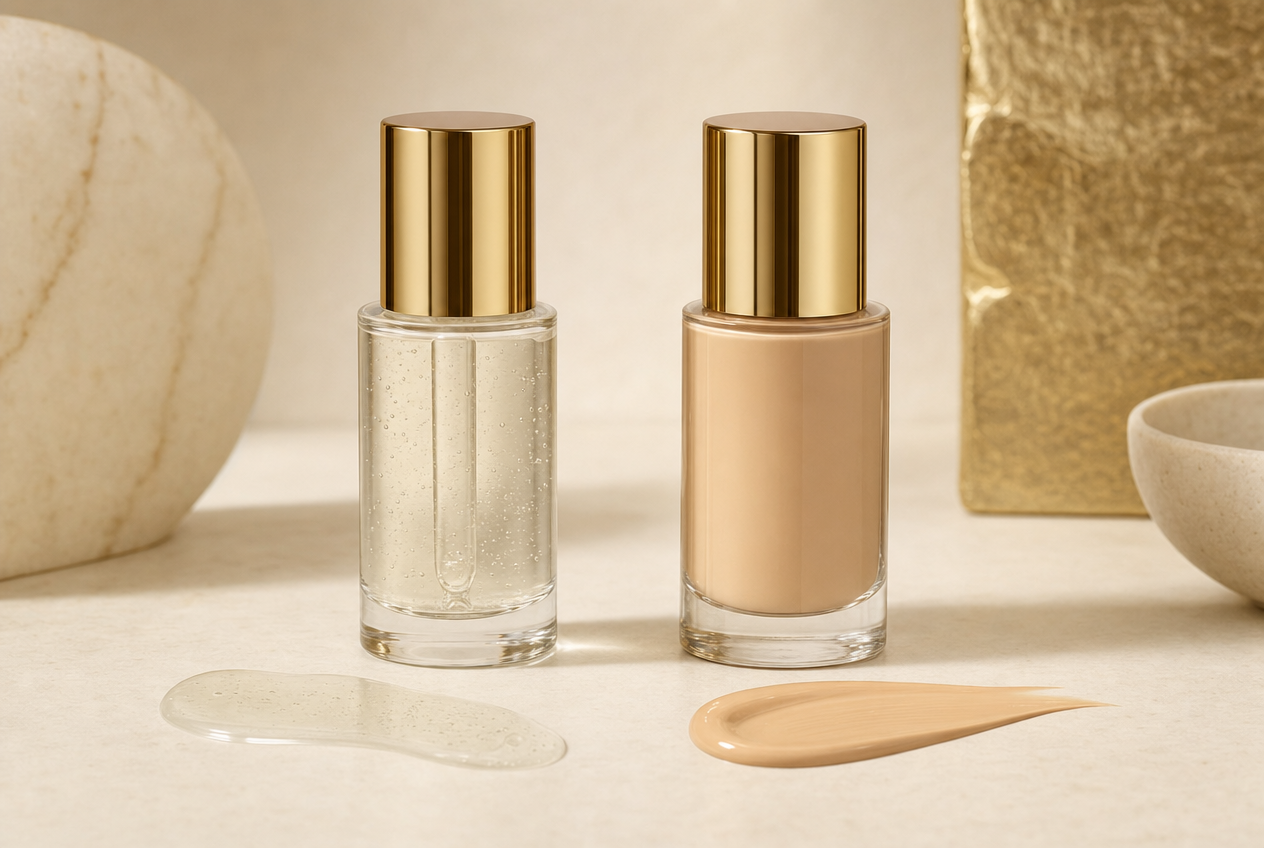
A serum foundation blends pigment and active ingredients into one step. The interesting question is how much of the skincare half genuinely delivers.
What a Serum Foundation Actually Is
The category is newer than the buzz suggests, and the distinction from a regular foundation is worth understanding clearly.
The difference from a regular foundation
A traditional foundation is built from three things. There is pigment for colour, film-formers to help it stay put, and emollients for spread and feel.
A serum foundation adds a fourth category. It includes active ingredients at concentrations meant to actually do something. That is different from a token amount added for the label.
That last distinction matters more than it sounds. Foundations have carried trace actives for marketing purposes for decades. What defines the current category is the claim that those actives now sit at genuinely functional percentages.
Why skinification took over in 2026
The demand is real and measurable. According to Circana consumer research, more than half of shoppers now want products that combine makeup and skincare. That figure rises to roughly 60 percent among younger buyers. That is a genuine market signal, not a manufactured one.
Search behaviour tells the same story. A 2026 trend report from LookFantastic tracked the shift. Peptide searches rose 79 percent in a single year, with niacinamide up nearly 34 percent. Consequently, brands have raced to meet a demand that shoppers are actively expressing.
Of US consumers want products that combine makeup and skincare (Circana Makeup Consumer Report)
Rise in peptide searches over one year (LookFantastic 2026 trend report)
Rise in niacinamide searches over the same period (LookFantastic 2026 trend report)
Skinification is not the claim that your foundation replaces your serum. That is a different claim entirely, and it is the one worth scrutinising.
Which Actives in a Serum Foundation Actually Work
Some of these ingredients have decades of evidence behind them. The honest question is whether that evidence survives being formulated into makeup.
✦
Niacinamide
The most evidence-backed active in the category. A 2024 review in Antioxidants confirms it strengthens the barrier, calms redness, and helps regulate oil. Its effects are documented from concentrations as low as 2 percent. That is part of why it survives well in a foundation base.
✦
Hyaluronic acid
The most reliable performer for immediate comfort. It is a humectant, drawing water toward the surface. That makes a foundation feel hydrating rather than drying. The effect is genuine, though it is surface hydration rather than any deeper structural change.
✦
Peptides
The fastest-growing ingredient, and the most nuanced. Peptides show real promise in the research, but they need sustained exposure to signal the skin. A foundation worn for hours provides some contact time. That makes it a fair addition to a routine rather than a standalone fix.
✦
Vitamin C derivatives
The most fragile of the group. Vitamin C is notoriously unstable and sensitive to light and air. That makes it hard to keep active in a foundation worn all day. Treat any brightening claim here with more caution than the others.
Not every active survives equally well in a pigmented base. Niacinamide and hyaluronic acid hold up best, while vitamin C is the hardest to keep stable.
Where the Marketing Runs Ahead of the Evidence
This is the section most brand copy would rather you skipped. It is also the most useful part.
Why concentration is the real issue
A serum foundation faces a genuine formulation tension. Pigment, film-formers, and emollients take up most of the formula, which leaves limited room for actives at treatment-level strength. Something has to give.
Board-certified dermatologists have been consistent on this point. As one told a 2025 dermatology feature, a foundation with skincare ingredients can offer real benefits. Hydration and antioxidant support are the clearest examples. However, the dose is often too small to achieve the results a dedicated treatment would.
The one advantage makeup genuinely has
There is a real point in favour of a serum foundation, and it is worth stating fairly. Unlike a cleanser that rinses off in seconds, a foundation stays on the skin for hours. That extended contact time gives its actives a genuine window to work.
This is why the honest verdict sits in the middle. A serum foundation is a reasonable addition to a routine. It works layered over a proper serum, not in place of one. The two together beat either alone.
A Fair Verdict on Serum Foundation
What it can do
Add hydration and comfort during wear
Provide extra active exposure over hours
Support a routine as a final layer
What it cannot do
Replace a dedicated treatment serum
Deliver actives at full treatment strength
Justify skipping your core routine
A serum foundation earns its place as an addition. It was never designed to be a substitute, whatever the packaging suggests.
The extended wear time is the real advantage. Hours on the skin beat seconds in a cleanser, but hours still cannot make up for a dose that is simply too small.
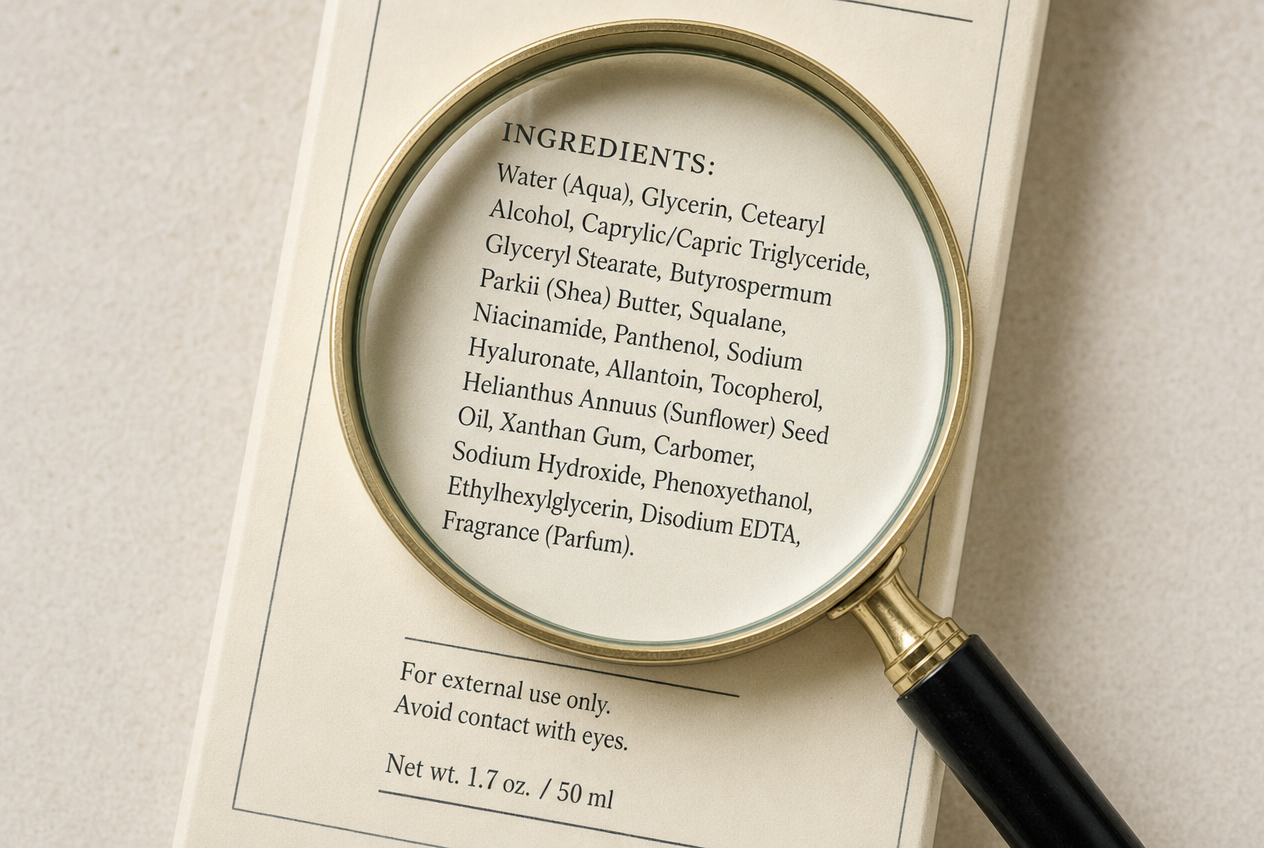
The position of an active on the ingredient list tells you more than the claim on the front of the bottle.
How to Choose a Serum Foundation Honestly
With the evidence in view, here is how to shop the category without paying a premium for marketing alone.
✦
Read the ingredient position, not just the front label
An active listed near the end of the ingredient list is present in a small amount. If niacinamide is the selling point but appears last, the claim is doing more work than the formula. Clinique and Armani Beauty both publish full ingredient lists worth reading closely.
✦
Avoid doubling up on the same active
If your serum already contains niacinamide, a niacinamide foundation on top can be more than your skin needs. Layering the same active repeatedly raises the risk of irritation, especially over a full day of wear. Match the foundation to a gap in your routine instead.
✦
Prioritise fit over ingredient count
A foundation with one well-chosen active suited to your skin wins. It beats one boasting a long list you do not need. As the Belldiva skin barrier repair guide covers, more actives is not the same as better skin. Charlotte Tilbury offers well-formulated options here.
✦
This applies to everyone, not just women
A tinted serum foundation is an easy entry point into complexion products. It suits men who want light, natural coverage. The same evidence and the same cautions apply equally. Brands like Lumin and Brickell build tinted complexion products with this in mind.
At Belldiva, we would rather tell you where a trend delivers and where it stops than sell you a promise the evidence cannot keep.
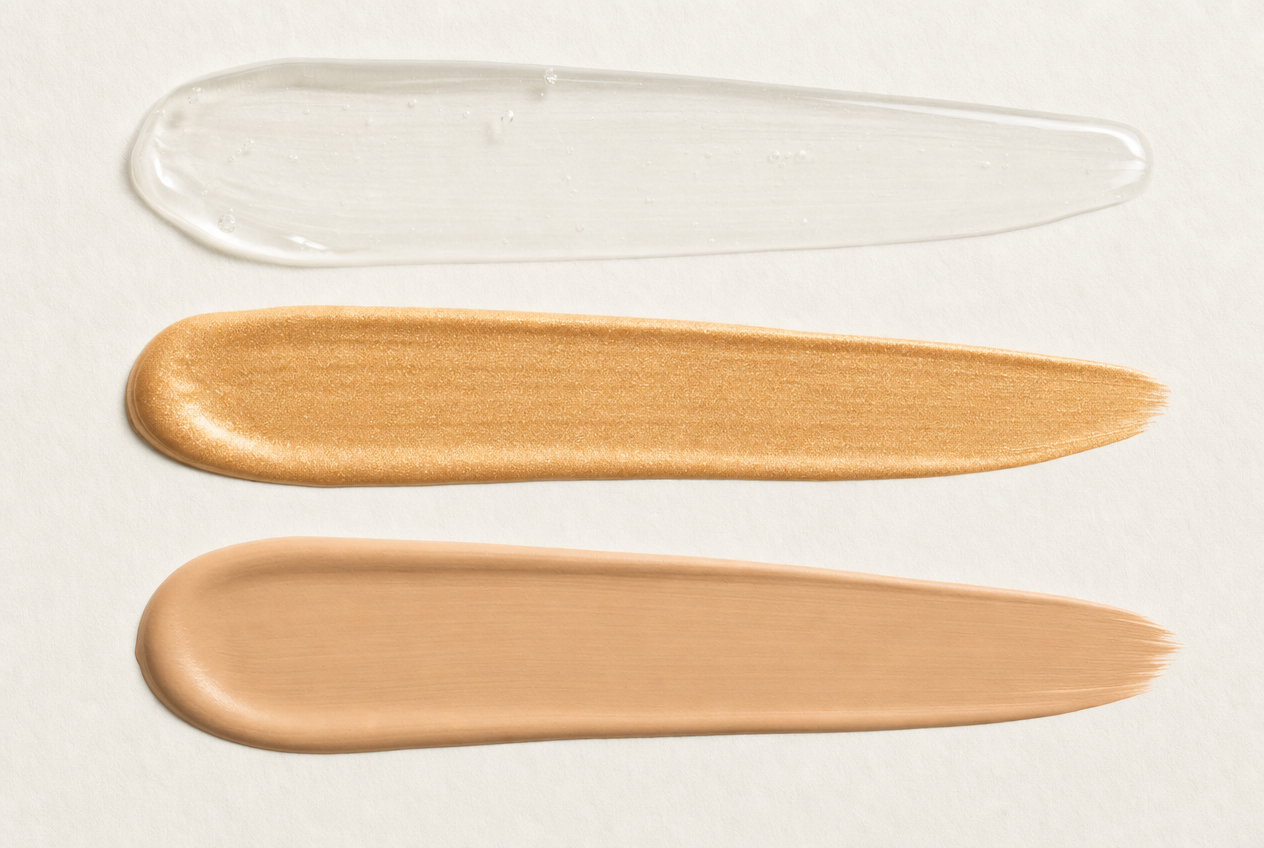
The best serum foundation is matched to your skin and your existing routine. It is not the one with the longest ingredient list.
How a Serum Foundation Fits the Rest of Your Routine
A hybrid product only makes sense in the context of everything else you already do for your skin.
Layer it last, over your actual treatment
The logic is simple once the concentration point lands. Your treatment serum does the heavy lifting underneath, applied to clean skin where it can absorb properly. As the Belldiva skincare routine guide lays out, order and absorption drive results. The serum foundation then adds coverage and a modest bonus on top.
Order matters here. A dedicated active applied first, to bare skin, will always outperform the same active suspended in pigment. The foundation is the finish, not the foundation of the routine.
Do not forget sun protection
One caution deserves its own line. A serum foundation is not a sunscreen, even when it lists an SPF. You never apply enough of it to reach the labelled protection. Keep a dedicated sunscreen underneath regardless.
A Sensible Order of Application
Do this
Treatment serum on clean skin ✓
Dedicated sunscreen next ✓
Serum foundation as the final layer ✓
Avoid this
Relying on foundation SPF alone ✗
Skipping serum because makeup has actives ✗
Stacking the same active in every layer ✗
Wealth without wellness is incomplete, and good skin is built on a real routine, not on a single product asked to do everything at once.
Order matters: treatment serum first, then sunscreen, then the serum foundation as the finishing layer.
Common Questions About Serum Foundation
Direct answers to what comes up most, including where the honest answer is a qualified one.
Questions about results and value
Can a serum foundation replace my serum?
No, and no credible source claims it can. The actives sit at lower concentrations than a dedicated treatment, and they compete for space with pigment and film-formers. Use it as a final layer over your serum, never as a swap for it.
Is a serum foundation worth the higher price?
Sometimes, if the added comfort and wear suit your skin. Much of the premium reflects marketing rather than ingredient cost. Judge it on how it feels and performs, not on the length of the active list.
Questions about skin type and serum foundation use
Which skin type benefits most?
Drier or normal skin tends to enjoy the hydrating feel most, thanks to humectants like hyaluronic acid. Oily skin can still do well with a niacinamide-forward, lighter formula. As always, matching the active to your concern matters more than the category name.
Can men use a serum foundation?
Absolutely, and a lightly tinted one is an easy first step into complexion products. The evidence, the cautions, and the layering advice all apply the same way. Skin chemistry does not read the label on the box.
Sources and research references
Marques C, Hadjab F, Porcello A, et al. Mechanistic Insights into the Multiple Functions of Niacinamide: Therapeutic Implications and Cosmeceutical Applications in Functional Skincare Products. Antioxidants. 2024;13(4):425. doi:10.3390/antiox13040425 | Rusic D, Ivic M, Slugan A, et al. Pilot Study on the Effects of a Cosmetic Serum Containing Niacinamide, Postbiotics and Peptides on Facial Skin in Healthy Participants: A Randomized Controlled Trial. Life. 2024;14(12):1677. doi:10.3390/life14121677
Circana. Makeup Consumer Report, 2025 (consumer demand for makeup and skincare hybrids). | LookFantastic. Spring/Summer 2026 Trend Report (ingredient search growth: peptides, retinal, niacinamide). | Expert commentary on skincare-infused makeup efficacy and active concentration, dermatology feature, 2025.
The information in this guide is for educational purposes and reflects research current to mid-2026. It does not constitute medical advice. Please consult a qualified dermatologist for concerns specific to your skin.
Rooted in Care. Refined in You.
Explore Belldiva’s Curated Makeup Collection
Over 70 luxury brands across makeup, skincare, and wellness. Every brand chosen for genuine excellence and real results.
Belldiva’s Curated Beauty and Wellness Brands
All Belldiva Brands
Huda Beauty
Charlotte Tilbury
Sephora
MAC
Dior
Katini Skin
Ultra Violette
NYX Cosmetics
The Ordinary
Verb Products
BK Beauty
Prada Beauty
Estée Lauder
Vasanti Cosmetics
Brickell
Lumin
Blu Atlas
Liomen
Jaxon Lane
Beardbrand
Scotch Porter
Bevel
Menfirst
Atlas
SkinCeuticals
Lululemon
Mindful
Headspace
Calm
Fitbit
MyFitnessPal
Noom
Peloton App
Organifi
Ritual
HUM Nutrition
Nike
YSL (Saint Laurent Beauty)
Lancôme
Clinique
NARS
Elizabeth Arden ✦
Victoria Beckham Beauty
Make Up For Ever
Valentino Beauty
Bobbi Brown
Shiseido
Benefit Cosmetics
Smashbox
Kylie Cosmetics
Urban Decay
Sigma Beauty
Stila ✦
Clarins
Tarte Cosmetics
PUR Cosmetics
Glossier
Elemis London
Kiehl’s
Murad
Paula’s Choice
Viori Beauty ✦
Life Extension
Lumen
Fiji Water
Anastasia Beverly Hills
Serious Skincare
Qure Skincare
Armani Beauty
Dr. Brandt ✦
serum foundation
skinification
skincare makeup
niacinamide
hybrid makeup
complexion
makeup trends
Belldiva makeup