Summer Hair Damage: What the Science Says
Summer hair damage differs from sun damage to skin in one decisive way, and understanding it changes what you should expect from every product promising repair.
Haircare
UV and Chlorine
Men & Women
By Belldiva Editorial • 2026 • 12–14 min read
By the end of a warm season, hair often tells the story of where it has been. Ends that split more readily. Colour that has drifted.
A texture catches on the comb where it used to slide. The instinct is to reach for something labelled repair.
Before you do, one fact reframes the entire category. Your skin repairs itself because it is made of living cells. The hair shaft is not.
Every hair emerging past your scalp is biologically inert. It has no mechanism for undoing what has been done to it.
This guide covers what ultraviolet light, chlorine, and salt actually do to the hair fibre. It explains what genuinely helps once the damage exists. It also shows where the word repair does more marketing than science.
A Note on the Evidence in This Guide
Hair science works differently from clinical medicine, and it is worth knowing why. Nobody can randomly assign people to a summer, so this field relies on laboratory work: hair fibres exposed to controlled light, then examined under electron microscopy and measured for protein loss and tensile strength.
That means you will not find large patient trials here. What you will find is consistent agreement across many independent laboratory studies, drawn together in review articles. We have sourced this guide to that review-level consensus rather than to any single small experiment.
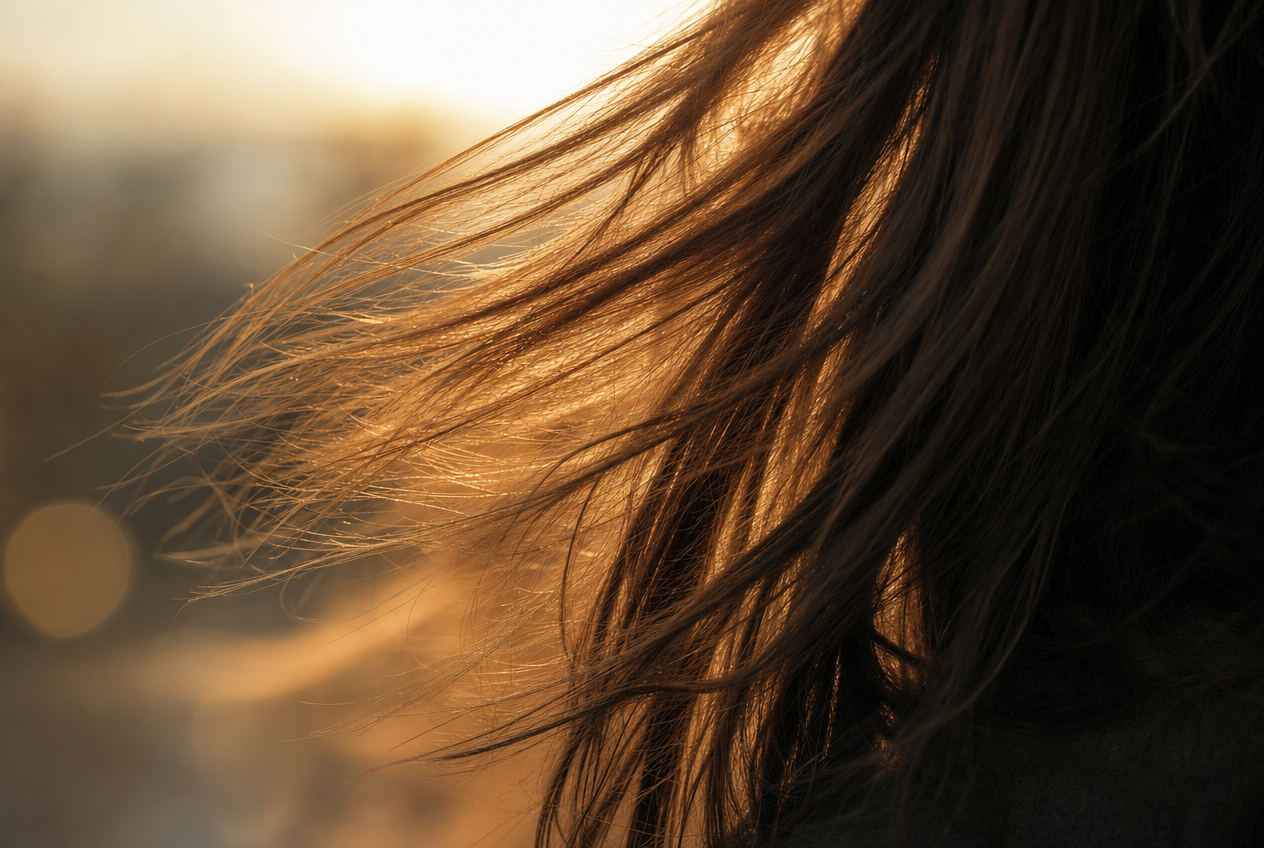
The ends have been exposed for far longer than the roots. That is why the damage rarely looks evenly distributed.
How Summer Hair Damage Actually Happens
Three separate mechanisms, each documented, and each doing something different to the fibre.
Ultraviolet light breaks the protein
Hair is largely keratin, held together by disulphide bonds between cysteine residues. Those bonds are what give a strand its tensile strength. Shorter wavelength ultraviolet light attacks them directly.
A 2026 critical review in the Journal of Photochemistry and Photobiology examined how researchers measure this damage. Tryptophan is the amino acid most used as a marker, because its structure absorbs ultraviolet strongly. Its breakdown signals that protein damage is under way.
The damage that feeds itself
Here the review describes something genuinely unsettling. When tryptophan degrades, it produces two compounds called kynurenine and N-formylkynurenine. Both are themselves photosensitisers.
In other words, the products of sun damage make the hair more reactive to further sun damage. The review notes these compounds can perpetuate the degradation process. A summer of exposure does not simply add up. It compounds.
Researchers can see the consequences directly. Electron microscopy reveals cuticle delamination, chipping, and voids opening within the cortex as protein and lipid fragments are lost.
Chlorine, salt, and why pools are worse
Chlorine is an oxidising agent, which is precisely why it disinfects water. That chemistry does not distinguish between bacteria and keratin. It degrades the protein and lifts the cuticle.
There is a pH problem alongside it. Pool water typically sits well above the scalp’s natural acidity, which disrupts the acid mantle protecting your scalp. Sea water is gentler, though salt still draws moisture from the fibre and leaves the cuticle rough.
Combining them is worse than either alone. Research on chlorinated water under ultraviolet exposure tested both together. The two intensify colour change and structural damage beyond what each produces alone.
Living cells in the hair shaft, which is why it cannot repair itself the way skin does
Tryptophan breakdown products that act as photosensitisers, accelerating further damage
Separate mechanisms at work over a summer: protein loss, pigment oxidation, and lipid depletion
Sun damage to hair creates the conditions for more sun damage. The byproducts of the reaction are themselves light sensitive.
Why Repair Is the Wrong Word
This section will save you money, which is not something the seasonal marketing tends to offer.
The fibre cannot heal
Skin recovers because living cells replace damaged ones. The hair shaft has no such capacity, being composed of dead keratinised material. Damage therefore accumulates in the strand until the affected section is cut away.
This is not a reason for despair, but it does reset expectations. A treatment cannot rebuild a broken disulphide bond in the way a wound closes.
What products genuinely do
Good treatments work by substitution rather than restoration. Proteins and conditioning agents fill gaps in a compromised cuticle. That temporarily smooths the surface and improves how the fibre behaves.
That effect is real and worth having. Hair looks better, tangles less, and breaks less under tension. Still, it is cosmetic patching rather than biological healing, and it washes out over time.
What the Evidence Supports vs What It Does Not
Well supported
Ultraviolet degrades keratin and oxidises pigment
Chlorine and ultraviolet together worsen both
Treatments improve appearance and reduce breakage
Overstated
That any product reverses structural damage
That split ends can be permanently mended
That one treatment undoes a whole season
Improving how damaged hair looks and behaves is a genuine achievement. It is simply a different claim from repair.
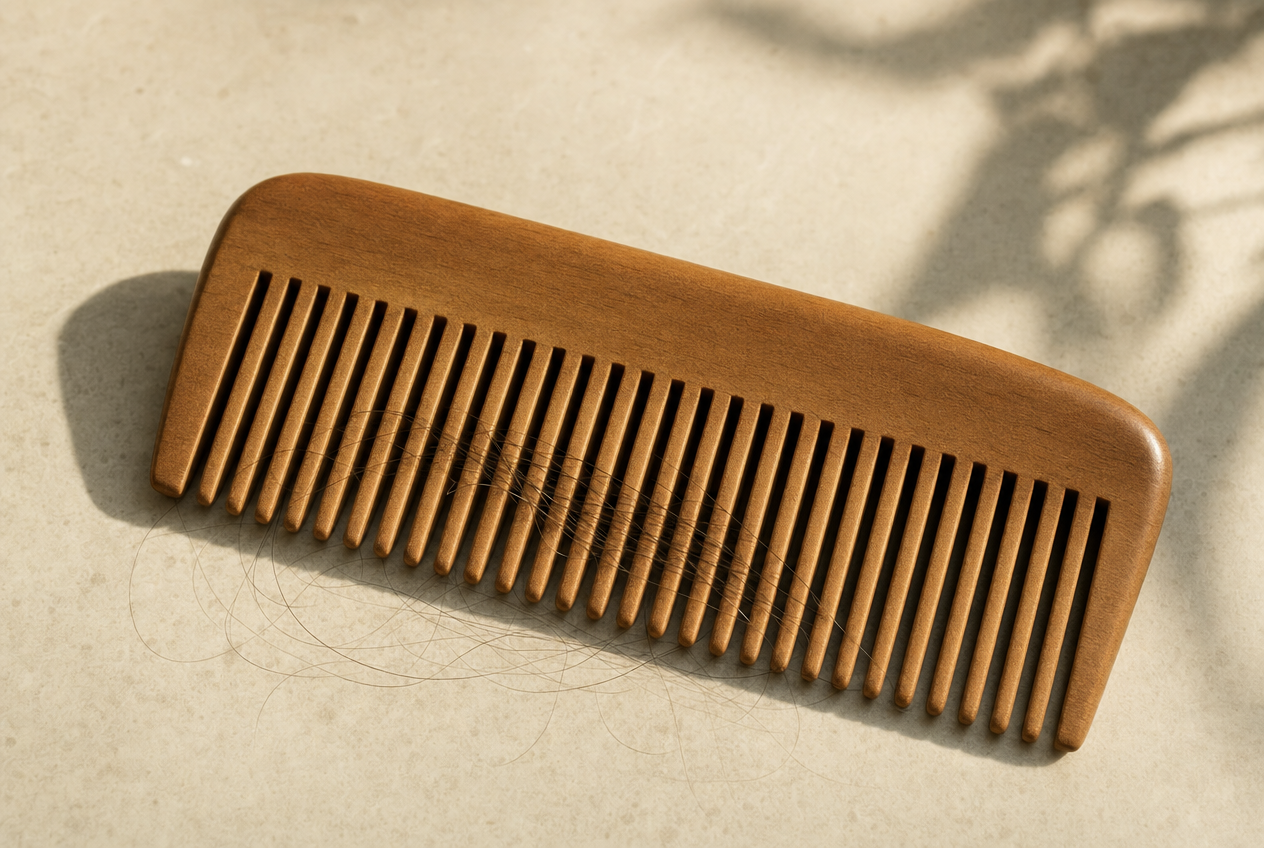
Once the cuticle has gone from a section of strand, no treatment puts it back. Cutting is the only removal.
Recovering From Summer Hair Damage
Given the fibre cannot heal, a sensible approach manages what exists and protects what grows next.
✦
Cut the ends that are past saving
This is the only genuine removal of damage available, so it belongs first rather than last. A split travels upward along the strand if left, taking healthy fibre with it. Trimming stops that progression. The Belldiva hair longevity guide covers the longer view.
✦
Replace what the season stripped out
Ultraviolet exposure depletes hair lipids, and conditioning treatments substitute for what was lost. Expect improvement in feel and manageability rather than structural restoration. Verb Products and Viori Beauty ✦ both formulate for this.
✦
Do not forget the scalp
Unlike the hair shaft, your scalp is living tissue and does recover. It also took ultraviolet exposure all season, often unprotected. The Belldiva scalp health guide covers what actually helps there.
✦
Rinse before you swim, not only after
Hair saturated with clean water absorbs considerably less pool or sea water. It is the simplest protective measure available and costs nothing. Worth carrying into next season rather than filing away.
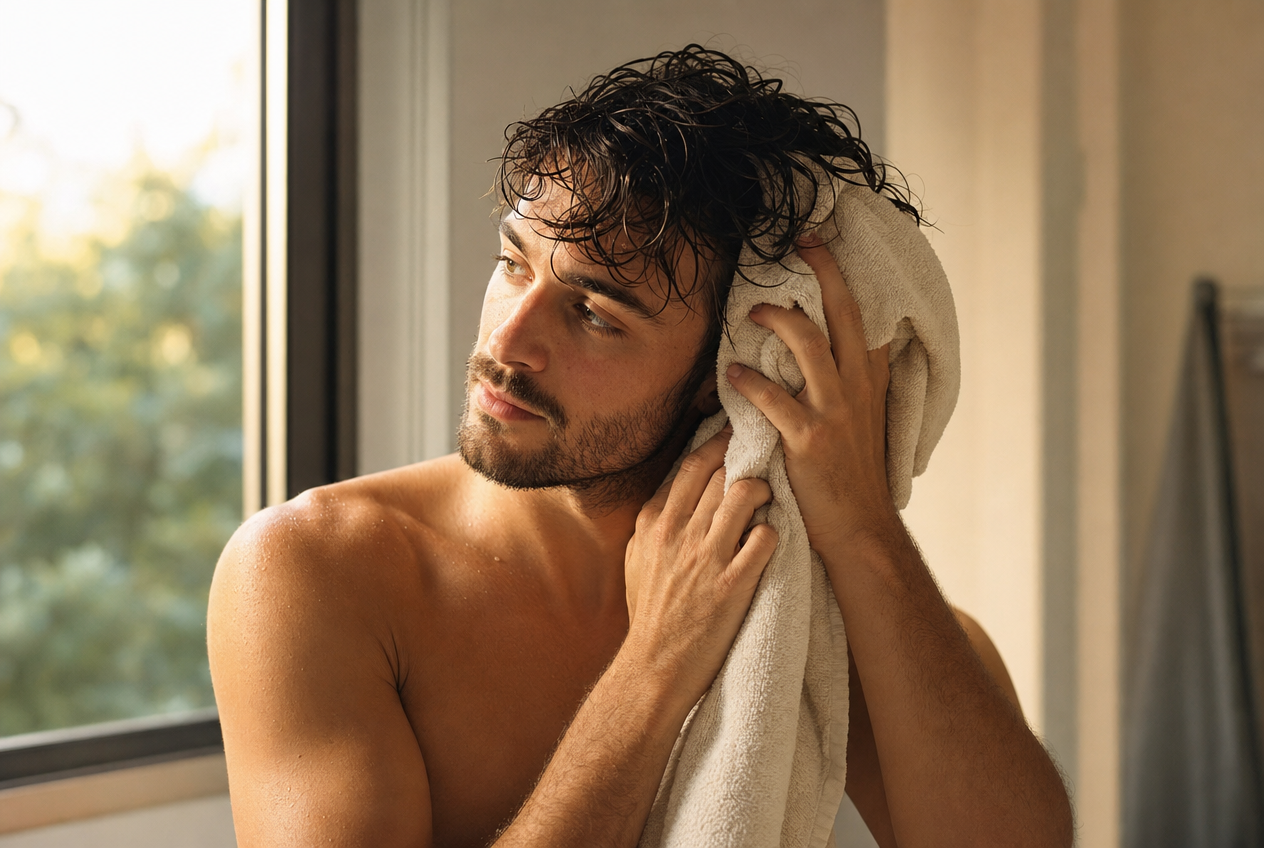
The scalp is living tissue and recovers. The strand is not, and does not. Treat them as two different projects.
Wealth without wellness is incomplete, and we would rather explain why a product cannot do what the label promises than sell you the promise.
Common Questions About Summer Hair Damage
Direct answers to what comes up most, including where the honest response is that nothing will fix it.
Questions about repair and treatments
Can a bond building treatment reverse the damage?
Those products work on chemistry within the fibre and can genuinely improve strength and feel. Describing that as reversal overstates it, since the shaft has no living cells to rebuild structure. Meaningful improvement is a fair claim, and full restoration is not.
Do I really have to cut the damaged ends?
If the ends have split, yes, because a split travels upward and costs you healthy length over time. Treatments can seal the appearance temporarily, which is useful between appointments. Cutting remains the only permanent removal.
Questions about prevention and colour
Why did my colour go brassy over the summer?
Longer wavelength ultraviolet penetrates to the cortex and oxidises melanin, which fades natural pigment and shifts artificial colour. Chlorine accelerates it further. Colour-treated hair tends to show this soonest, since the cuticle is already more permeable.
Does this affect men differently?
The fibre chemistry is identical regardless of sex. Shorter hair often shows less accumulated damage simply because it is cut more frequently. Scalp exposure tends to be higher though, particularly where hair is thinning.
Sources and research references
Daniels G, Pedriani S, Searing C, et al. Measuring oxidative damage to human hair from solar radiation and pollution: A critical review. Journal of Photochemistry and Photobiology. 2026;34:100292. doi:10.1016/j.jpap.2026.100292 | Fernández E, et al. Photodamage determination of human hair. Journal of Photochemistry and Photobiology B: Biology. 2012;106:101-106
Ross AB, Maes E, Lee EJ, et al. UV and visible light exposure to hair leads to widespread changes in the hair lipidome. International Journal of Cosmetic Science. 2022;44(6):672-684. doi:10.1111/ics.12810 (pilot study, laboratory hair samples) | Hirai T, et al. Human hair keratin responds to oxidative stress via reactive sulfur and supersulfides. Advances in Redox Research. 2024;10:100091
Hair colour damage caused by exposure to chlorinated water in the presence of ultraviolet radiation. Laboratory study of chlorinated water at controlled pH with and without ultraviolet exposure | Performance and mechanism of hydrolysed keratin for hair photoaging prevention. 2025
The information in this guide is for educational purposes and reflects research current to mid-2026. Hair damage research is predominantly laboratory based rather than clinical, as noted above. Please consult a trichologist or dermatologist regarding hair loss, scalp irritation, or any concern specific to you.
Rooted in Care. Refined in You.
Explore Belldiva’s Haircare Collection
Over 70 luxury brands across haircare, skincare, and wellness. Every brand chosen for genuine excellence and real results.
Belldiva’s Curated Beauty and Wellness Brands
All Belldiva Brands
Huda Beauty
Charlotte Tilbury
Sephora
MAC
Dior
Katini Skin
Ultra Violette
NYX Cosmetics
The Ordinary
Verb Products
BK Beauty
Prada Beauty
Estée Lauder
Vasanti Cosmetics
Brickell
Lumin
Blu Atlas
Liomen
Jaxon Lane
Beardbrand
Scotch Porter
Bevel
Menfirst
Atlas
SkinCeuticals
Lululemon
Mindful
Headspace
Calm
Fitbit
MyFitnessPal
Noom
Peloton App
Organifi
Ritual
HUM Nutrition
Nike
YSL (Saint Laurent Beauty)
Lancôme
Clinique
NARS
Elizabeth Arden ✦
Victoria Beckham Beauty
Make Up For Ever
Valentino Beauty
Bobbi Brown
Shiseido
Benefit Cosmetics
Smashbox
Kylie Cosmetics
Urban Decay
Sigma Beauty
Stila ✦
Clarins
Tarte Cosmetics
PUR Cosmetics
Glossier
Elemis London
Kiehl’s
Murad
Paula’s Choice
Viori Beauty ✦
Life Extension
Lumen
Fiji Water
Anastasia Beverly Hills
Serious Skincare
Qure Skincare
Armani Beauty
Dr. Brandt ✦
summer hair damage
haircare
UV damage
chlorine
split ends
keratin
scalp health
Belldiva haircare