Why Your Sunscreen Breaks You Out, and What to Use Instead
The link between sunscreen and acne is real, but not for the reason the ingredient lists claim. The science is more useful, and more surprising, than the blacklists suggest.
Acne
Summer Skin
Men & Women
By Belldiva Editorial • 2026 • 12–14 min read
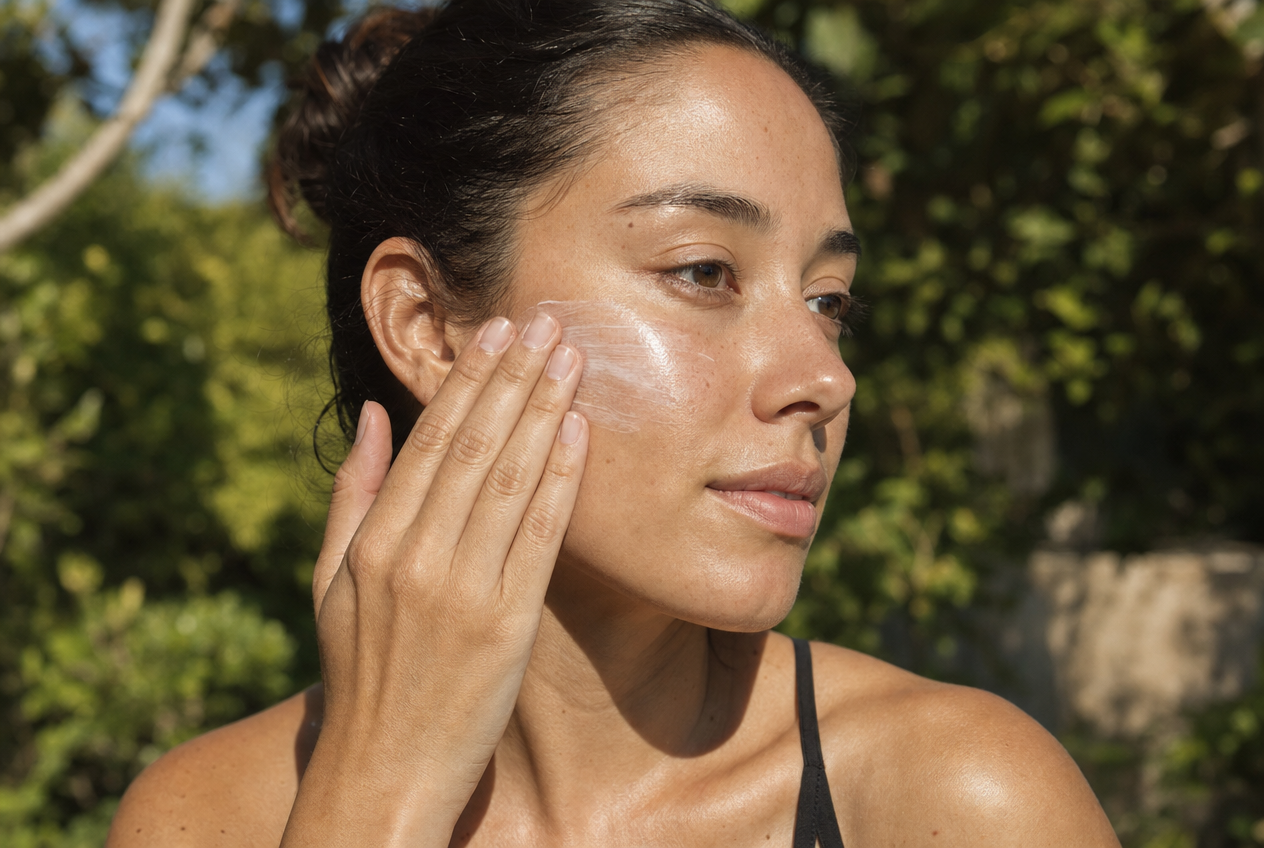
You apply sunscreen faithfully, and your skin punishes you for it. Fresh breakouts appear along the cheeks and forehead within days. The obvious conclusion is that the sunscreen caused them, and the obvious fix is to stop.
That conclusion is mostly wrong, and the fix is genuinely dangerous. The relationship between sunscreen and acne is real, but the cause is rarely what the internet claims. It is almost never the UV filters. The ingredient blacklists people quote rest on science that has not held up.
This guide explains what actually breaks you out and why the comedogenic ingredient lists are unreliable. It also shows how to choose a sunscreen you can wear every day. It also covers a common lookalike that is not acne at all. Every clinical claim here is drawn from peer-reviewed dermatology, named so you can check it.
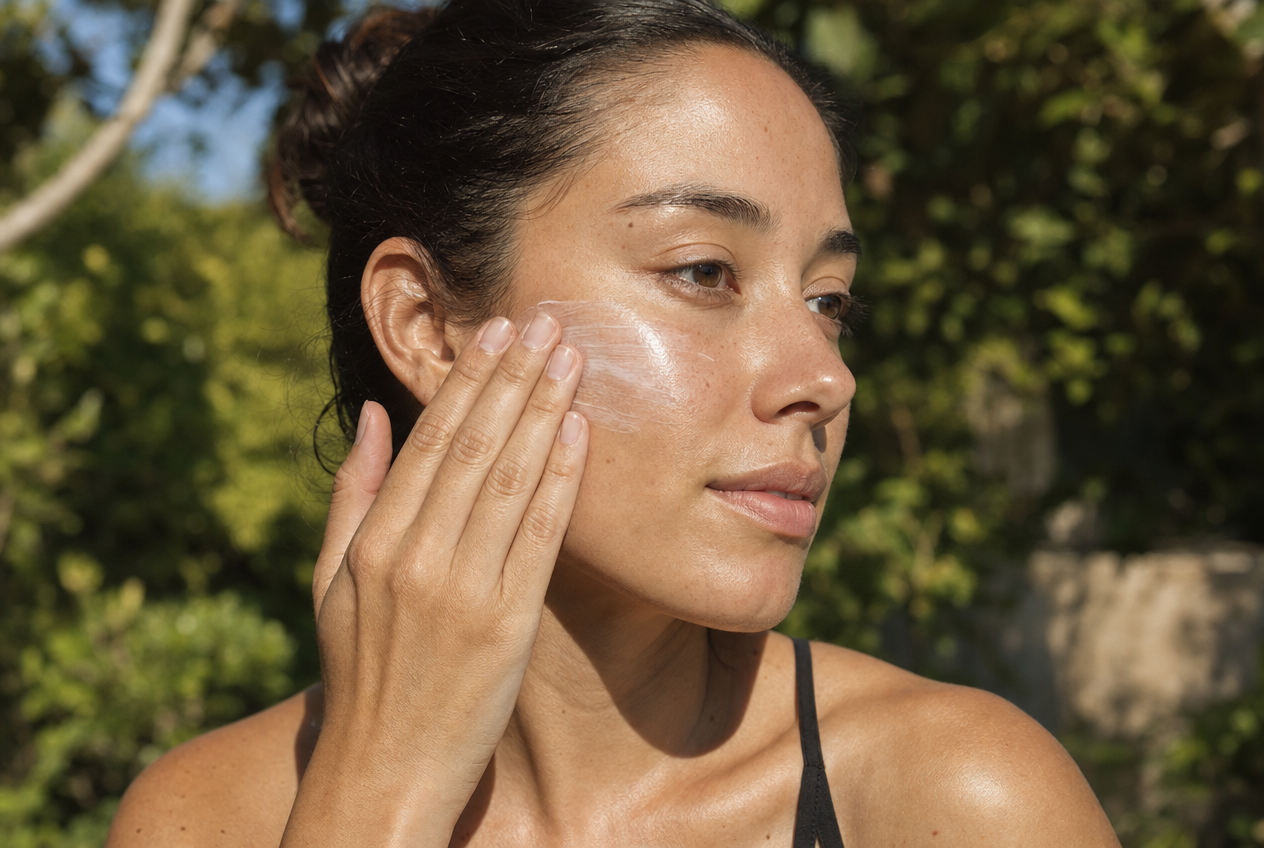
The problem is rarely the sunscreen itself. It is far more often the base formula, the weather, or a condition that only looks like acne.
What the Sunscreen and Acne Link Really Is
The honest answer separates the active filters from the formula they sit in, and those are two very different things.
The filters are usually not the problem
Dermatologists are consistent on this point. The active UV filters, whether mineral or chemical, are usually not what causes a breakout. Zinc oxide in particular carries documented anti-inflammatory properties.
What breaks people out is usually the base. A sunscreen is mostly the emollients, oils, and thickeners that carry the filters, and those ingredients vary enormously. A heavy, occlusive base on already oily skin is the common trigger.
This has a clinical name
The pattern is well documented. Dermatologists Kligman and Mills coined the term acne cosmetica in 1972. It describes breakouts driven by cosmetic products rather than by hormones or bacteria. It typically shows as small, non-inflamed bumps where product is applied.
Heat and humidity make this worse. A heavy formula that behaves well in winter can seal sweat and oil against the skin in summer. That is why the sunscreen and acne complaint spikes in the warmer months.
Year dermatologists Kligman and Mills first defined acne cosmetica, product-driven breakouts
Regulatory standards governing the term non-comedogenic, according to a 2025 JAAD Reviews analysis
Broad-spectrum minimum dermatologists recommend for daily use, breakouts or not
The sunscreen rarely causes the breakout. The base formula, the summer heat, and a common lookalike condition do most of the damage people blame on SPF.
Why the Comedogenic Ingredient Lists Mislead
This is the part that surprises people, because it undercuts advice repeated across almost every skincare article.
The famous ratings came from rabbits
The comedogenic scale you see everywhere has a shaky origin. It traces to a 1970s test that applied ingredients to the inside of a rabbit’s ear. That site forms comedones very readily. A 2025 review in JAAD Reviews examined this literature in full.
The review found the rabbit model unreliable for human skin. Rabbit ears react far more strongly than human faces. Many ingredients that scored high in rabbits caused little trouble in people. Kligman himself later confirmed this mismatch.
Dilution and formulation change everything
One finding matters more than any ingredient list. Kligman noted that substances which are strongly comedogenic when tested raw become non-comedogenic once diluted into a finished product. Concentration is the deciding factor.
Testing a single isolated ingredient therefore tells you very little. A formula is a blend. The same oil that clogs pores at full strength may be perfectly fine at two percent. The finished product is what your skin actually meets.
Non-comedogenic is not a regulated word
Here is the claim worth remembering. The JAAD review notes there is no standardised testing behind the label and no regulatory oversight of it. A brand can print non-comedogenic on anything.
This does not make the term worthless, but it does make it a starting point rather than a guarantee. Treat it as a signal of intent. Then judge the product on how your own skin responds over a few weeks.
What the Evidence Supports vs What It Does Not
Well supported
A heavy base can trigger acne cosmetica
Finished formula matters more than any single ingredient
Non-comedogenic is an unregulated claim
Overstated
Fixed lists of ingredients everyone must avoid
Comedogenic ratings as precise scores
The idea that UV filters themselves cause acne
The mechanism behind sunscreen and acne is real. The confident ingredient blacklists attached to it usually are not.

An ingredient near the end of a long list sits at a tiny concentration. Position tells you more than the name alone.
The Lookalike That Is Not Acne at All
A large share of summer breakouts blamed on sunscreen are a different condition entirely, and it needs the opposite treatment.
Fungal acne is not acne
The condition is called Malassezia folliculitis, and it is caused by a yeast rather than by clogged pores. A 2026 review in the Journal of Drugs in Dermatology notes it is frequently mistaken for ordinary acne. It appears as small, itchy, uniform bumps.
The clues are worth knowing. Fungal folliculitis tends to itch, stays uniform in size, and clusters on the forehead, chest, and back. Ordinary acne varies in size and rarely itches in the same way.
How this mimics the sunscreen and acne pattern
The same review lists hot, humid weather and follicle occlusion as risk factors. This yeast feeds on certain skin lipids, so a rich sunscreen worn in the heat can encourage it. That is why it reads as a sunscreen breakout.
The treatment differs completely, which is why the distinction matters. Standard acne products do little for it, and it responds instead to antifungal care. If itchy uniform bumps persist, a dermatologist can confirm it quickly.
If your summer breakout itches and every bump looks the same, it may not be acne. Treating it as acne is why it never clears.
What to Use Instead of Skipping Sunscreen
The fix for sunscreen and acne is never going without. It is choosing and using a better formula.
✦
Choose a lighter base for hot weather
The base matters more than the filter type. Look for fluid, gel, or lightweight lotion textures rather than thick creams designed for the body. A lighter vehicle sits on oily summer skin without sealing it. Ultra Violette and Paula’s Choice both build light daily formulas.
✦
Consider a mineral filter for reactive skin
Zinc oxide sits on the surface and carries anti-inflammatory properties, which can suit easily irritated skin. It is not automatically better, since a heavy mineral cream still clogs. A light zinc formula is a sound option to trial. SkinCeuticals offers mineral options.
✦
Cleanse properly at the end of the day
Sunscreen, sweat, and sebum left on overnight are a bigger driver of breakouts than the formula itself. A thorough evening cleanse clears the day without stripping. The Belldiva skin barrier repair guide covers gentle cleansing that protects the barrier.
✦
Introduce one product at a time
Since formula and individual response decide everything, test methodically. Add a new sunscreen on its own and give it two to four weeks before judging. This applies equally to men, whose oilier skin often needs the lighter option. The Belldiva men’s skincare guide explains why.

A lighter fluid or gel base is often the whole solution, no ingredient blacklist required.
Wealth without wellness is incomplete, and no complexion goal is worth trading away the daily sun protection your skin depends on.
Common Questions About Sunscreen and Acne
Direct answers to what comes up most, including where the honest response is to see a professional.
Questions about cause and choice
Should I stop wearing sunscreen if it breaks me out?
No. The daily protection sunscreen provides against sun damage far outweighs a manageable breakout. The right response is to change the formula, not abandon protection. A lighter base usually resolves the problem.
Is mineral sunscreen always better for acne?
Not always. Zinc oxide has helpful anti-inflammatory properties, but a thick mineral cream can still clog pores. A lightweight formula matters more than whether it is mineral or chemical. Judge the base, not just the filter.
Questions about ingredients and persistent breakouts
Can I trust a comedogenic ingredient checker?
Use it loosely at best. Those checkers rate isolated ingredients using data that does not translate well to finished formulas or to your skin. An ingredient low on a list sits at a concentration too small to matter. Your own trial over a few weeks is more reliable.
What if nothing I try stops the breakouts?
See a dermatologist, since persistent breakouts often point to something other than sunscreen. Fungal folliculitis, hormonal acne, and rosacea all get blamed on SPF. A professional can identify the real cause and save you months of guesswork.
Sources and research references
Comedogenicity in cosmeceuticals: a review of clinical relevance, regulatory gaps, and future directions. JAAD Reviews. 2025 | Kligman AM, Mills OH. Acne cosmetica. Archives of Dermatology. 1972;106(6):843-850
Malassezia folliculitis presentation, diagnosis, and treatment: a review of fungal acne. Journal of Drugs in Dermatology. 2026 | Draelos ZD, DiNardo JC. A re-evaluation of the comedogenicity concept. Journal of the American Academy of Dermatology. 2006
The information in this guide is for educational purposes and reflects research current to mid-2026. It does not constitute medical advice. Please consult a qualified dermatologist for persistent or painful breakouts, or any skin concern specific to you.
Rooted in Care. Refined in You.
Explore Belldiva’s Curated Skincare Collection
Over 70 luxury brands across skincare, makeup, and wellness. Every brand chosen for genuine excellence and real results.
Belldiva’s Curated Beauty and Wellness Brands
All Belldiva Brands
Huda Beauty
Charlotte Tilbury
Sephora
MAC
Dior
Katini Skin
Ultra Violette
NYX Cosmetics
The Ordinary
Verb Products
BK Beauty
Prada Beauty
Estée Lauder
Vasanti Cosmetics
Brickell
Lumin
Blu Atlas
Liomen
Jaxon Lane
Beardbrand
Scotch Porter
Bevel
Menfirst
Atlas
SkinCeuticals
Lululemon
Mindful
Headspace
Calm
Fitbit
MyFitnessPal
Noom
Peloton App
Organifi
Ritual
HUM Nutrition
Nike
YSL (Saint Laurent Beauty)
Lancôme
Clinique
NARS
Elizabeth Arden ✦
Victoria Beckham Beauty
Make Up For Ever
Valentino Beauty
Bobbi Brown
Shiseido
Benefit Cosmetics
Smashbox
Kylie Cosmetics
Urban Decay
Sigma Beauty
Stila ✦
Clarins
Tarte Cosmetics
PUR Cosmetics
Glossier
Elemis London
Kiehl’s
Murad
Paula’s Choice
Viori Beauty ✦
Life Extension
Lumen
Fiji Water
Anastasia Beverly Hills
Serious Skincare
Qure Skincare
Armani Beauty
Dr. Brandt ✦
sunscreen and acne
sunscreen breakouts
comedogenic
acne cosmetica
fungal acne
summer skincare
SPF
Belldiva skincare